ROAMOPEDIA
Golden Roof
Austria’s Innsbruck: Unveil the Gilded Legacy at the Golden Roof in the Heart of Old Town’s Charm.

Austria’s Innsbruck: Unveiling the Golden Roof’s Hidden Gems

Austria, a small landlocked country in Central Europe, is known for its rich history, beautiful architecture, and stunning landscapes. Among its many attractions, the picturesque city of Innsbruck stands out as a true gem, nestled in the heart of the Austrian Alps. Innsbruck, the capital of the federal state of Tyrol, is a vibrant city that offers a perfect blend of urban sophistication and alpine charm. A stroll through its historic Old Town (Altstadt) reveals a treasure trove of architectural wonders, one of which is the remarkable Golden Roof (Goldenes Dachl) – a famous landmark that has stood the test of time and continues to captivate visitors with its ornate beauty.

The Golden Roof, with its shimmering tiles and intricate design, is not just an architectural marvel, but also a symbol of Innsbruck’s rich history, dating back to the late 15th century. It was commissioned by the Holy Roman Emperor Maximilian I, who ruled over Austria from 1493 to 1519. Known for his strong affinity for the arts, Maximilian I sought to leave a lasting impression on his beloved city of Innsbruck, and the Golden Roof was to be his crowning achievement.

Constructed between 1497 and 1500, the Golden Roof was initially intended to serve as a royal box from which Maximilian I and his wife, Bianca Maria Sforza, could observe festivals, tournaments, and other events taking place in the square below. To achieve this grand vision, the Emperor enlisted the help of master builder Nikolaus Turing, who designed and supervised the construction of this unique structure.

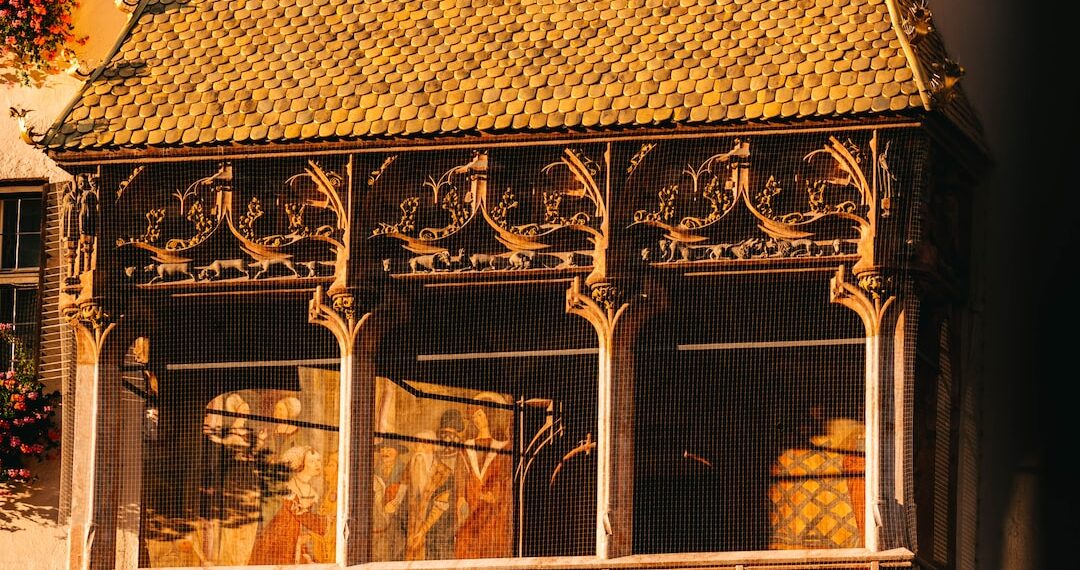
The Golden Roof consists of a three-story balcony, which is supported by a series of intricately carved wooden columns. The real showstopper, however, lies in the roof itself: an awe-inspiring expanse of 2,657 fire-gilded copper tiles, which, when struck by sunlight, create a dazzling display of golden brilliance. This magnificent feature was not only meant to serve as a testament to the Emperor’s wealth and power but also to symbolize the city’s prosperity and prestige.

In addition to its opulent exterior, the Golden Roof also boasts an impressive array of decorative elements, which provide a fascinating insight into the art and culture of the late medieval period. The wooden balustrades are adorned with a series of painted frescoes, which depict various scenes from the life of Maximilian I, as well as his coat of arms and those of his two wives, Mary of Burgundy and Bianca Maria Sforza.

One of the most striking features of the Golden Roof is the large central bay, which is flanked by two smaller bays on either side. The central bay features an exquisite relief of the Emperor himself, surrounded by various saints and Biblical figures, as well as the coat of arms of the Holy Roman Empire. This central relief is framed by a pair of intricately carved wooden columns, which are topped with statues of two giants, symbolizing the strength and power of the Emperor.

The smaller bays on either side of the central relief showcase a fascinating array of sculptures, which include representations of the Emperor’s ancestors, as well as various mythological figures and allegorical scenes. These sculptures serve as a testament to the skill and creativity of the artists who worked on the Golden Roof, and they continue to captivate visitors with their exquisite detail and craftsmanship.

The Golden Roof is not just a stunning architectural masterpiece, but also a living museum, offering a glimpse into the past and providing valuable insights into the history and culture of Innsbruck and the Austrian Empire. Today, the Golden Roof houses a small museum, which showcases a collection of artifacts and exhibits that tell the story of the landmark’s history, as well as that of Emperor Maximilian I and his court.

Visitors to the museum can view a range of fascinating items, including medieval weapons, armor, and clothing, as well as intricate wood carvings, paintings, and other decorative objects. The museum also offers a multimedia presentation, which provides a vivid and engaging account of the Golden Roof’s history, as well as the life and times of the enigmatic Emperor who commissioned its construction.

The Golden Roof is not just a must-see attraction for those visiting Innsbruck; it is also a focal point of the city’s vibrant cultural scene. Throughout the year, the area surrounding the Golden Roof comes alive with a diverse array of events and activities, including concerts, theatrical performances, and art exhibitions. Moreover, during the festive season, the Golden Roof serves as the backdrop for Innsbruck’s famous Christmas market, which attracts visitors from far and wide, who come to enjoy the festive atmosphere and sample the city’s culinary delights.

Innsbruck’s Old Town, with its narrow cobbled streets and beautifully preserved medieval buildings, offers a captivating setting in which to explore the city’s rich history and vibrant culture. The Golden Roof, with its gleaming tiles and intricate design, serves as a testament to the city’s artistic heritage and provides a unique landmark that continues to inspire and captivate visitors from around the world.

As you wander through the winding streets of Innsbruck’s Old Town, it is impossible not to be struck by the beauty and grandeur of the Golden Roof. This iconic landmark, with its rich history and stunning design, serves as a powerful reminder of Innsbruck’s past and a symbol of its ongoing cultural vitality. Whether you are a history buff, an art enthusiast, or simply someone who appreciates beautiful architecture, the Golden Roof is sure to leave a lasting impression and provide a memorable highlight of your visit to Innsbruck.

  • Print
  • +-
    Font Size