Exploring Brazil’s Diverse Landscape: Mountains, Beaches, Forests, and Deserts
“Discover Brazil’s diverse landscape: from the Amazon rainforest to the sandy beaches of Rio de Janeiro, there’s something for every nature lover.”
Exploring Brazil’s Diverse Landscape: Mountains, Beaches, Forests, and Deserts
Brazil is a country that is known for its diverse landscape. From the towering mountains to the sandy beaches, lush forests, and arid deserts, Brazil has it all. The geography of Brazil is unique and varied, making it an ideal destination for travelers who are looking for adventure and exploration.
One of the most prominent features of Brazil’s landscape is its mountains. The country is home to the Serra do Mar mountain range, which runs along the eastern coast of Brazil. These mountains are known for their rugged terrain and stunning views. Hiking is a popular activity in this region, with many trails offering breathtaking vistas of the surrounding landscape. The Serra do Mar also provides a habitat for a variety of wildlife, including monkeys, jaguars, and toucans.
Another notable feature of Brazil’s landscape is its beaches. The country has over 7,000 kilometers of coastline, which is dotted with beautiful beaches. Some of the most popular beaches in Brazil include Copacabana and Ipanema in Rio de Janeiro, Praia do Forte in Bahia, and Jericoacoara in Ceará. These beaches offer a range of activities, from swimming and sunbathing to surfing and kiteboarding. The warm waters of the Atlantic Ocean make Brazil’s beaches a popular destination for tourists from around the world.
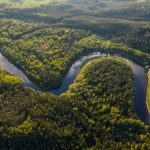
Brazil is also home to some of the world’s largest and most biodiverse forests. The Amazon rainforest covers over 60% of Brazil’s land area and is home to millions of species of plants and animals. The Amazon is a vital ecosystem that plays a crucial role in regulating the Earth’s climate. Visitors to the Amazon can explore the forest on foot or by boat, and can observe a wide range of wildlife, including monkeys, sloths, and macaws. The Amazon is also home to many indigenous communities, who have lived in harmony with the forest for thousands of years.
In addition to the Amazon, Brazil has several other important forest regions, including the Atlantic Forest and the Cerrado. The Atlantic Forest is a coastal forest that stretches from Rio de Janeiro to Rio Grande do Sul. It is one of the most biodiverse forests in the world, with over 20,000 plant species and thousands of animal species. The Cerrado is a savanna-like region that covers much of central Brazil. It is home to a variety of wildlife, including jaguars, anteaters, and armadillos.
Finally, Brazil has several desert regions, including the Lençóis Maranhenses National Park and the Sertão. The Lençóis Maranhenses National Park is a unique landscape of sand dunes and lagoons, located in the state of Maranhão. The Sertão is a semi-arid region that covers much of northeastern Brazil. Despite its harsh conditions, the Sertão is home to a variety of plant and animal species, including cacti and lizards.
In conclusion, Brazil’s diverse landscape offers a wealth of opportunities for adventure and exploration. From the towering mountains to the sandy beaches, lush forests, and arid deserts, Brazil has something for everyone. Whether you are interested in hiking, swimming, or wildlife viewing, Brazil’s geography provides a range of activities to suit your interests. So why not plan your next trip to Brazil and experience the beauty and diversity of this amazing country for yourself?