ROAMOPEDIA
Borobudur Temple
Discover Yogyakarta: Where Borobudur Temple, the world’s largest Buddhist masterpiece, awakens your spirit amidst UNESCO-protected wonders.
“Discover Yogyakarta: Where Borobudur Temple, the world’s largest Buddhist masterpiece, awakens your spirit amidst UNESCO-protected wonders.”
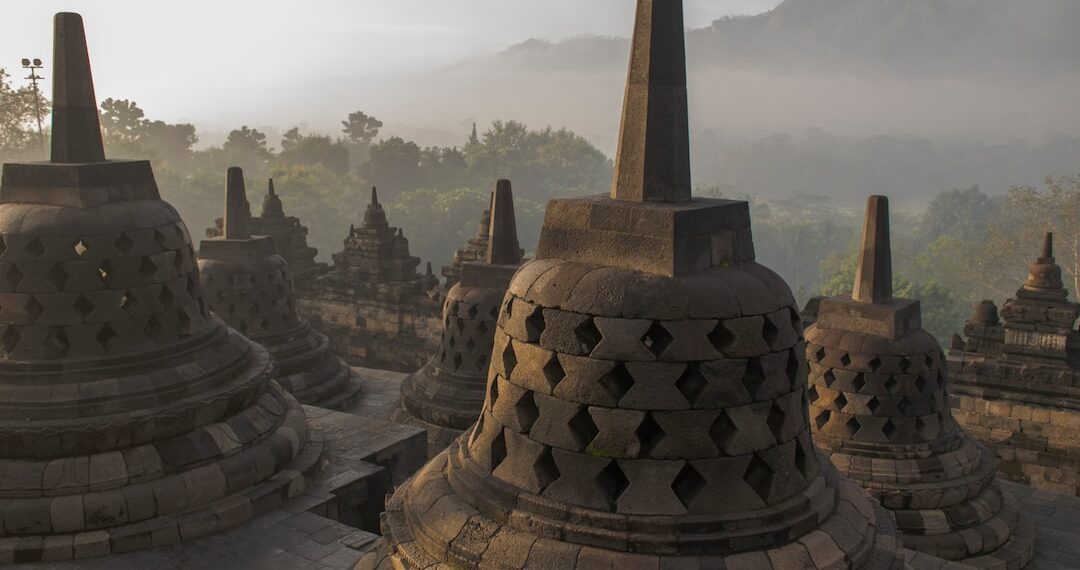
Exploring Indonesia: Discovering Yogyakarta and the Majestic Borobudur Temple

Indonesia, a country well-known for its breathtaking landscapes and rich cultural heritage, is home to an incredible piece of architectural wonder – the Borobudur Temple. This world’s largest Buddhist temple, located in the region of Yogyakarta, is a UNESCO World Heritage site that attracts countless visitors each year. With intricate carvings and stunning architecture, the Borobudur Temple is an awe-inspiring sight to behold.

Constructed during the 8th and 9th centuries by the Sailendra dynasty, the Borobudur Temple is a magnificent testimony to Indonesia’s ancient Buddhist past. The temple is built on a natural hill, which was leveled and then encased in a vast mound of volcanic tuff, a type of rock formed from volcanic ash. The temple is constructed in the shape of a pyramid, with a central dome surrounded by an extensive series of galleries and staircases.

One of the most striking features of the Borobudur Temple is its sheer size. The temple covers an area of around 2,500 square meters and stands at an impressive height of 35 meters. However, it is not just the size that makes this temple a remarkable sight; the intricate carvings and stunning architecture are what truly set this temple apart.

The Borobudur Temple is adorned with over 2,600 relief panels and more than 500 Buddha statues. These carvings depict stories from the life of Buddha as well as scenes from the everyday life of ancient Indonesians. The panels are arranged in a series of terraces, which ascend from the base of the temple to the top, symbolizing the journey from the world of desire to the world of enlightenment.

As you begin your ascent up the temple, you will first encounter the relief panels on the lower terraces. These panels showcase scenes from everyday life in ancient Java, providing a fascinating glimpse into the past. You will see images of people working in the fields, cooking, and engaging in various leisure activities. As you continue your climb, the panels become more focused on the teachings of Buddhism, with the upper terraces depicting the life of Buddha and his journey to enlightenment.

The architecture of the Borobudur Temple is a reflection of the cosmic structure of the universe according to Buddhist cosmology. The temple is built in a series of concentric circles, with each level representing a different stage in the journey to enlightenment. The base of the temple, which is hidden beneath a layer of volcanic tuff, symbolizes the world of desire. The next five levels represent the world of forms, while the top three terraces, which are circular in shape, represent the formless world.

The central dome at the top of the temple is the epitome of this cosmic representation. It is surrounded by 72 Buddha statues, each seated within a perforated stupa, a dome-shaped structure used to house relics or as a place of meditation. The 72 stupas and the central dome symbolize the highest level of enlightenment, known as Nirvana.

The Borobudur Temple is not only an architectural marvel but also an important site for the practice of Buddhism. Every year, thousands of Buddhist pilgrims come to the temple to celebrate Vesak, the most important Buddhist festival. The festival commemorates the birth, enlightenment, and death of Buddha, and the pilgrims walk around the temple, following the path of the relief panels as they meditate on the life of Buddha and his teachings.

The temple has endured a tumultuous history, having been abandoned for centuries and rediscovered in the early 19th century by Sir Thomas Stamford Raffles, a British colonial official. The rediscovery of the temple sparked international interest, and efforts were made to preserve and restore the site. However, it wasn’t until the 1970s that a major restoration project was undertaken with the support of UNESCO. The restoration, which lasted nearly a decade, involved dismantling the entire temple, strengthening the base, and then reassembling the temple piece by piece.

Today, the Borobudur Temple stands as a testament to the artistry and craftsmanship of ancient Indonesia. It is a beloved symbol of Indonesia’s rich cultural heritage and a must-see destination for visitors to the region of Yogyakarta.

While visiting the Borobudur Temple, it is highly recommended that you also explore the nearby Prambanan Temple, another UNESCO World Heritage site. Prambanan is a stunning Hindu temple complex built in the 9th century, featuring tall, pointed towers and intricate carvings. The temple is dedicated to the Hindu Trimurti, the three main gods: Brahma, Vishnu, and Shiva. The combination of both Borobudur and Prambanan offers a unique insight into the religious diversity of ancient Java.

Yogyakarta itself is a vibrant city known for its cultural and artistic traditions. Often referred to as the cultural heart of Indonesia, Yogyakarta is home to many museums, galleries, and performance spaces. The city is also the gateway to the ancient royal court of the Sultanate of Yogyakarta, where you can explore the opulent palace complex of the Kraton and the historic Taman Sari Water Castle.

The rich history and stunning architecture of the Borobudur Temple are just a small part of what makes Indonesia such an enchanting destination. From the bustling streets of Yogyakarta to the serene beauty of the temple itself, a visit to the Borobudur Temple and its surrounding region is an experience not to be missed. So, pack your bags and embark on a journey to discover the incredible wonders that Indonesia has to offer.

  • Print
  • +-
    Font Size