ROAMOPEDIA
Templo Romano
Évora, Portugal: Discover Timeless Elegance at the Roman Temple Ruins
“Évora, Portugal: Discover Timeless Elegance at the Roman Temple Ruins”
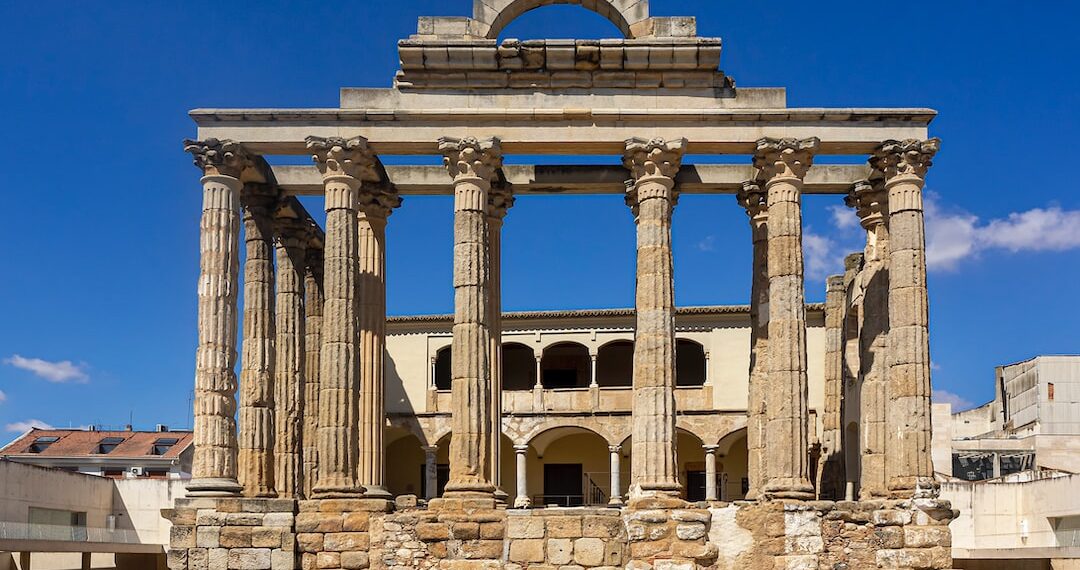
Exploring Portugal’s Évora: Discovering the Well-Preserved Roman Temple Ruins

Tucked away in the southern part of Portugal, the city of Évora is a treasure trove of history, culture, and architectural beauty. This UNESCO World Heritage site is home to a wealth of ancient structures and monuments that have stood the test of time, and among these, the well-preserved Roman temple ruins often referred to as the Templo Romano are a true testament to the architectural prowess of the mighty Roman Empire.

As one meanders through the hilly, narrow streets of Évora, lined with whitewashed houses adorned with bright yellow trim, it’s hard not to feel transported to a different era. The city’s charm is only amplified by the many historical sites that lie within its boundaries, but none quite as striking as the Templo Romano. Perched atop a small hill, the temple is a beacon that draws history buffs and architecture enthusiasts alike, eager to catch a glimpse of the ancient world.

The Templo Romano is often mistakenly referred to as the Temple of Diana, named after the Roman goddess of the hunt, wild animals, and the moon. However, recent archaeological evidence suggests that the temple was more likely dedicated to Jupiter, the king of the Roman gods. Regardless of which deity it was built for, there is no denying the temple’s stunning beauty and its significance as a symbol of the Roman Empire’s presence in Portugal.

Constructed during the first century AD, the temple is a remarkable example of the Corinthian architectural style, characterized by its slender, fluted columns adorned with ornate capitals that feature acanthus leaves and scrolls. The temple’s granite and marble structure was built on a platform that stands nearly 10 feet high, and its 14 remaining columns stretch toward the sky, reaching a height of over 30 feet.

The temple’s striking silhouette is not the only thing that catches the eye; upon closer inspection, one can truly appreciate the intricate craftsmanship that went into creating this monument. The columns, which were once part of a colonnade that surrounded the temple’s cella, or inner chamber, are made up of several stacked drums. These drums were expertly carved and fitted together, showcasing the incredible skill of the Roman architects and builders. The well-preserved nature of the temple’s ruins only serves to emphasize the quality of the materials and techniques used in its construction, allowing us to appreciate the grandeur of this ancient structure even after nearly two millennia.

As one walks around the temple, it’s impossible not to be awestruck by the sheer size of the structure. The platform upon which the temple sits measures approximately 50 feet by 80 feet, and the cella, which was once enclosed by walls and a roof, would have been a grand sight to behold. Although the roof and walls have long since crumbled away, the remains of the temple still exude an air of majesty and power.

In addition to the temple itself, the site also offers glimpses into the lives of the Romans who once inhabited the area. The surrounding grounds are home to the remnants of various other structures, such as a Roman bathhouse, a basilica, and even a cryptoporticus, a subterranean passageway that was used for various purposes, such as storage or as a means to escape the heat of the day. These ancillary buildings provide a fascinating insight into the daily lives of the people who once walked these very streets.

The presence of the Templo Romano in Évora is a testament to the reach and influence of the Roman Empire, which extended far beyond the borders of modern-day Italy. In fact, Portugal was home to numerous Roman settlements, many of which have left behind traces of their existence in the form of ruins and artifacts. The temple is not only an impressive example of Roman architecture, but it also serves as a tangible reminder of the empire’s impact on the history and culture of the region.

The Templo Romano’s survival throughout the centuries is nothing short of miraculous. Over the years, the temple has withstood countless invasions, conquests, and even earthquakes that have left much of the surrounding area in ruins. Yet, somehow, the temple remains standing, a beacon of resilience and a symbol of the enduring legacy of the Roman Empire. Its presence in the heart of Évora serves as a constant reminder of the city’s rich history, which continues to captivate visitors from around the world.

The well-preserved nature of the temple’s ruins can be attributed, in part, to the efforts of the Portuguese government and various organizations that have worked tirelessly to protect and preserve the site. In the 19th century, the temple underwent a significant restoration project, during which many of the columns were re-erected and the platform was stabilized. This effort not only ensured the temple’s continued existence but also allowed for a more accurate understanding of its original appearance.

Today, the Templo Romano stands proudly as one of the most well-preserved Roman temple ruins in the world, and it continues to draw visitors who are eager to explore the remnants of this once-great empire. As one stands in the shadow of these ancient columns, it’s easy to imagine the grandeur and power that the temple once represented.

As you stroll through the enchanting streets of Évora, it’s clear that the city’s history is inextricably intertwined with the Roman Empire. From the well-preserved ruins of the Templo Romano to the many other remnants of Roman settlements scattered throughout the region, the legacy of this ancient civilization is still very much alive. Whether you’re a history buff, an architecture enthusiast, or simply someone who appreciates the beauty of the past, a visit to Évora and its iconic Roman temple is an experience that should not be missed.

  • Print
  • +-
    Font Size