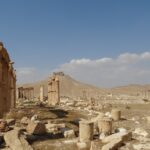
Syria is home to many ancient cities that hold an important place in world history. The city of Dura-Europos is one such city that has managed to preserve its ruins remarkably well. Located on the banks of the Euphrates River, the city is a testament to the rich cultural heritage that once thrived in this region.
The Dura-Europos ruins are a fascinating glimpse into the past. The city was founded in the 3rd century BC by the Seleucids, and it quickly became an important trading center due to its location on the Euphrates River. The city changed hands several times over the centuries, with the Parthians, Romans, and Sassanians all leaving their mark on the city.
One of the most impressive features of the Dura-Europos ruins is the well-preserved synagogue. The synagogue was discovered in 1932 and is believed to be one of the oldest synagogues in the world. The synagogue is decorated with beautiful frescoes depicting scenes from the Old Testament, including the story of Moses and the burning bush. The frescoes are incredibly well-preserved, and they offer a unique insight into the religious beliefs and practices of the Jewish community that once lived in the city.
The Christian community in Dura-Europos was also well-represented, with several churches still visible in the ruins. The most impressive of these is the House-Church, which is believed to be one of the earliest Christian churches in existence. The House-Church is decorated with beautiful frescoes depicting scenes from the New Testament, including the Last Supper. The church also features a baptistery, which is a fascinating glimpse into the early Christian practice of baptism.
The Dura-Europos ruins also feature several temples that were dedicated to various gods and goddesses. The Temple of Bel is perhaps the most impressive of these, with its towering columns and intricate carvings. The temple was dedicated to the god Bel, who was the chief god of the Babylonian pantheon. The temple is a testament to the religious diversity that once existed in Dura-Europos, with several different religions coexisting peacefully in the city.
The city of Dura-Europos was also home to a thriving military community. The city was strategically located on the border between the Roman and Sassanian empires, and it was the site of several important battles. The city was heavily fortified, with walls that were up to 22 feet thick in some places. The ruins of the military quarters are still visible in the city, and they offer a fascinating glimpse into the daily life of the soldiers who once lived and worked in the city.
Despite its rich cultural heritage, the city of Dura-Europos was eventually abandoned and forgotten. The exact reasons for the city’s demise are unclear, but it is believed that a combination of factors, including natural disasters and invasions by foreign armies, contributed to its downfall. The city was eventually buried by sand and forgotten for centuries, until it was rediscovered in the early 20th century.
Today, the Dura-Europos ruins are a popular tourist destination, attracting visitors from all over the world who come to marvel at the city’s well-preserved ruins. The ruins offer a fascinating glimpse into the past, and they serve as a reminder of the rich cultural heritage that once thrived in this region. Despite the many challenges facing Syria today, the Dura-Europos ruins remain a testament to the resilience and enduring legacy of this ancient city.