Why go
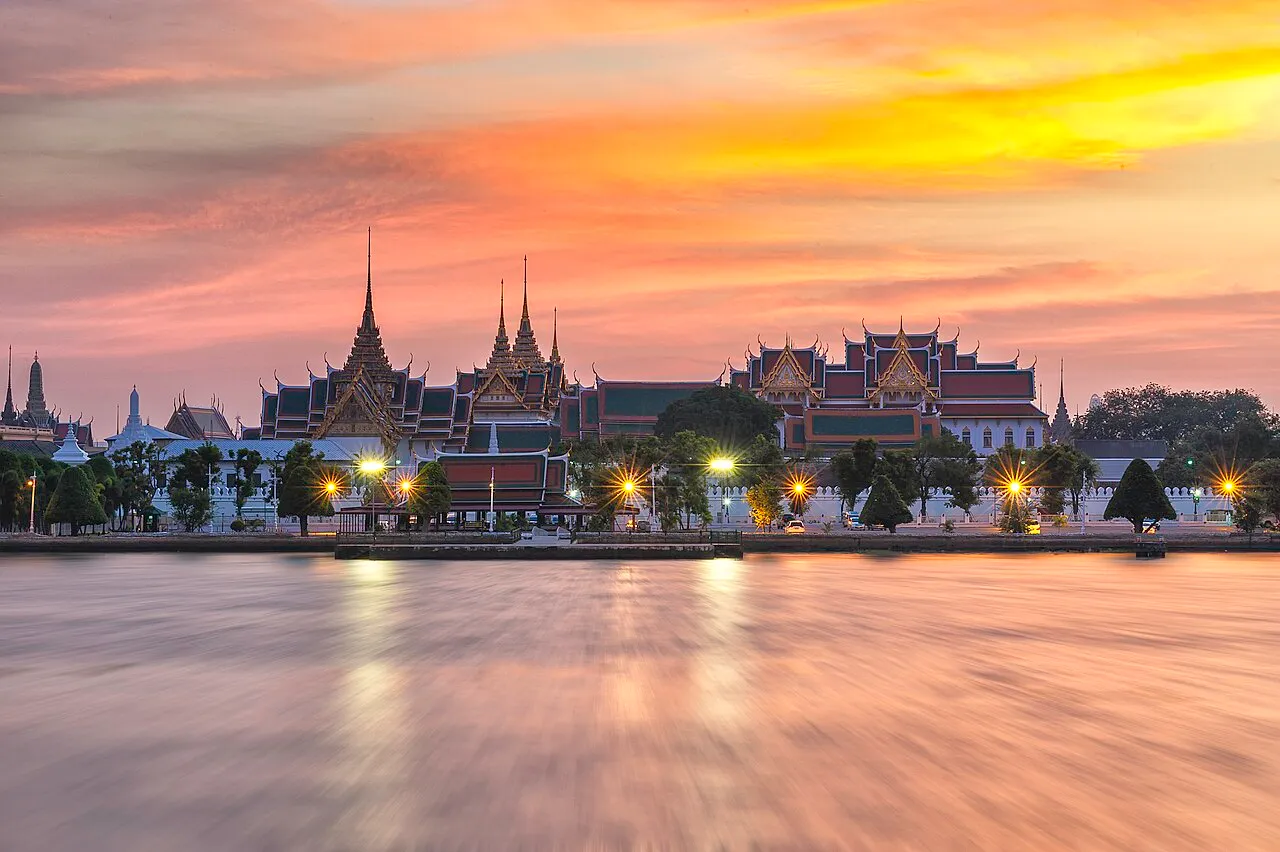
Rama I ordered construction of the palace on 6 May 1782, on the river bank opposite the old capital, and moved in before it was finished on 10 June 1782: three days later he held an abbreviated coronation on 13 June 1782, with the full traditional ceremony following once the halls were ready, in 1785. That founding moment is the reason Bangkok is the capital at all, and the palace is still the clearest place to see it. The site remains the property of the crown, currently King Vajiralongkorn (Rama X), even though the royal family stopped living here around 1925 and moved to Chitralada Palace instead.
The complex is roughly rectangular, walled on all four sides, and covers about 218,400 square metres split into the Outer Court, the Middle Court, the Inner Court and the temple grounds. You do not need Thai history to enjoy the walk, but knowing that division helps: the Outer Court held government offices, the Middle and Inner Courts were for the king’s household, and the temple sits apart from all of it, on its own consecrated ground.
What you will see
The temple everyone comes for is Wat Phra Kaew, the Temple of the Emerald Buddha, completed in 1783 as a royal chapel rather than a working monastery, which is why it has no resident monks. The Emerald Buddha itself is small and sits high on a gilded altar, and the King changes its robes three times a year, one set for summer, one for the rainy season and one for winter, as the palace itself explains. The statue’s size means photos rarely do it justice; come for the setting and the ceremony around it rather than expecting a close-up view.
Beyond the temple, the Chakri Maha Prasat throne hall is the building that best shows what the palace is really about: a Thai roofline sitting on a European-style base, begun on 7 May 1876 and finished in 1882 to mark the Chakri dynasty’s first century in power. It is a deliberate hybrid, built at a moment when Siam was staying independent partly by looking European. The grounds also hold the Queen Sirikit Museum of Textiles, housed in the Ratsadakorn-bhibhathana Building, which is worth the extra half hour if royal dress and weaving interest you at all. Altogether the palace draws more than eight million visitors a year, so expect crowds at the main gate and inside Wat Phra Kaew regardless of when you come.
Visiting: hours, admission, booking
Current opening hours and the adult admission price are in the facts box on this page; Thai nationals enter free with ID. What the box does not show is what the ticket covers beyond the palace itself: it also gets you into Dusit Palace, valid for seven days from your visit, so it is worth planning both on the same trip. An audio guide is available for an extra 200 baht if you want the detail without a group tour.
The dress code is enforced at the gate, not just recommended: women must cover their upper arms and legs to at least the thigh, and men need long trousers and at least a t-shirt. If you turn up in shorts or a sleeveless top, a sarong is available with a 200 baht refundable deposit, or you can buy something to wear from one of the stalls nearby for 100 to 300 baht. One warning worth repeating: anyone outside the gates telling you the palace is closed for a holiday or private event is running a well-known scam to steer you toward a tuk-tuk and a gem shop; ignore them and walk up to the ticket window yourself.
Getting there
The palace address is Na Phra Lan Road, Phra Nakhon, on Rattanakosin Island in the old city. The MRT’s Sanam Chai station, which opened in 2019, puts you within walking distance and is the most reliable way in given Bangkok traffic. The river option is the Chao Phraya Express Boat: take the BTS to Saphan Taksin, then an orange-flag boat to Tha Chang pier for 15 baht, a ride of about 30 minutes from the Skytrain. Ordinary buses 25 and 47 also stop nearby, but they sit in the same traffic as everyone else, so treat them as a backup rather than a first choice.
Nearby
Wat Pho, with its reclining Buddha, is a short walk south of the palace and pairs naturally with a Grand Palace morning. Across the river, the spires of Wat Arun are visible from the palace walls and reachable by a short cross-river ferry. For the rest of the old city’s temples, markets and river transport, see the Bangkok city guide, which covers how to string a full day together around Rattanakosin.