Why go
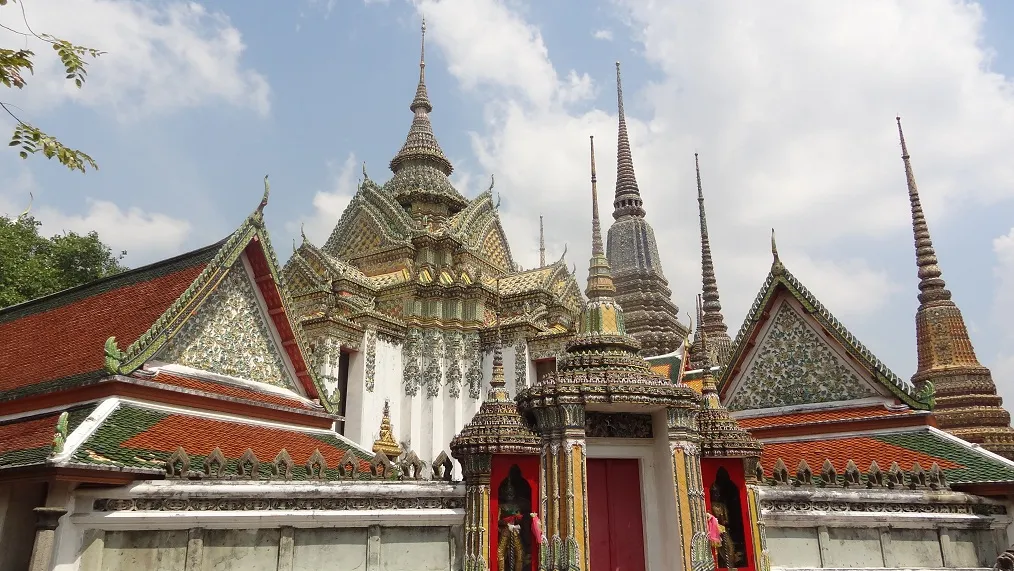
Wat Pho holds Bangkok’s most recognisable religious statue, the Reclining Buddha, inside one of the largest and oldest temple complexes in Bangkok, on Rattanakosin, the old royal island. King Rama I ordered the site rebuilt on an earlier Ayutthaya-period temple in 1788, a project that took more than seven years to finish. In 1801 the complex was renamed Wat Phra Chetuphon Vimolmangklavas; its present name, Wat Phra Chetuphon Vimolmangklararm, dates from the reign of Rama IV. The grounds cover 80,000 square metres1 directly south of the Grand Palace, and hold four great chedis, dozens of smaller ones and Thailand’s largest collection of Buddha images.
You do not need any grounding in Thai Buddhism to get something out of a visit. The Reclining Buddha’s scale alone is worth the trip, the working massage school on site connects the temple to a living Thai tradition rather than a purely historical one, and the grounds are large enough that even a crowded morning leaves quiet corners to walk through.
Most of what you see today dates from Rama III’s reign, not Rama I’s original rebuilding. Starting in 1832, he oversaw a renovation that took 16 years and seven months to complete, enlarged the grounds to 56 rai (9 hectares)1, and either built or rebuilt most of the structures now standing on site. The scale of that project is one reason Wat Pho reads less like a single temple than a walled complex of halls, cloisters and chedis.
What you will see
Chetuphon Road cuts the complex into two walled compounds1. The northern one, the phutthawat, is the part you visit: it holds the ordination hall, the Reclining Buddha and the finest buildings. The southern one, the sankhawat, houses the monks’ living quarters and a school.
The Reclining Buddha is the reason most people come. Rama III built the statue and its chapel in 1832, the same year he began enlarging the temple grounds. It measures 46 metres long and 15 metres high, a brick core shaped with plaster and then gilded, and shows the Buddha entering Nirvana. The soles of its feet measure 3 metres high and 4.5 metres long and are inlaid with mother-of-pearl, each divided into 108 panels that depict the auspicious symbols by which the Buddha can be identified, among them flowers, dancers, white elephants, tigers and altar accessories. In the corridor stand 108 bronze bowls1 for the same set of auspicious characters; visitors drop coins into them for good fortune, and the money also helps the monks maintain the temple.
The main ordination hall, or ubosot, is worth seeking out separately. Rama I built it in Ayutthaya style and Rama III later enlarged and rebuilt it in the Rattanakosin style; it was dedicated in 1791. Its teak doors are inset with mother-of-pearl scenes from the Ramayana, and inside, a gilded Buddha image in a gold-copper alloy sits on a three-tiered pedestal of gold and crystal. Rama IV later placed some of Rama I’s ashes under that pedestal, so visitors pay homage to the king and the Buddha in the same place. The perimeter wall around the main complex has sixteen gates1 in total, though only two are open to the public: one on Chetuphon Road and one near the north-west corner.
The statue is not the only reason to stay. Wat Pho holds more than 1,000 Buddha images across the grounds, the largest such collection in Thailand. The Phra Rabiang double cloister alone displays roughly 400 of them, 150 on the inner side and 244 on the outer, selected from 1,200 images that Rama I originally brought together from temples around the country. Elsewhere on the grounds stand four great chedis and 91 smaller ones; the four largest, grouped as the Phra Maha Chedi Si Rajakarn and each standing 42 metres1 high, honour the first four kings of the Chakri dynasty.
Smaller details reward a slow walk. The scripture hall, Phra Mondop, is not generally open to the public because its palm-leaf scriptures need a controlled climate, but the giant guardian figures known as Yak Wat Pho stand in niches beside its gates. Large Chinese stone statues, some of them depicting Europeans, guard gates around the compound; they first reached Bangkok as ballast on ships trading with China. Dotted around the grounds are 24 small rock gardens1, and one of them, the Contorting Hermit Hill, has statues showing massage and yoga positions.
Wat Pho is also known as the birthplace of traditional Thai massage, a discipline still taught and practised on the grounds, and is considered Thailand’s first public university for the lessons its murals and inscriptions gave the general public. Its massage school, established in 1955, was the first school of Thai medicine approved by Thailand’s Ministry of Education, and the temple’s marble illustrations and inscriptions on medicine, health, custom, literature and other subjects were added to UNESCO’s Memory of the World register on 21 February 20081. Two pavilions at the eastern edge of the grounds still work as massage classrooms, and visitors can get a treatment there for a fee.
Visiting: hours, admission, booking
Opening hours and the standard adult admission are in the facts box on this page. What the box does not show is that children under 120cm tall get in free. The massage service keeps the same daily hours as the temple, and the temple’s visit page2 lists its current rates per treatment and length.
Dress politely. The temple’s visitor guidance2 rules out shorts, though trousers are fine, and asks you to take off your shoes before entering any religious building. The same page asks you never to step on a Buddha image, and it bars women from physical contact with monks or novices.
Getting there
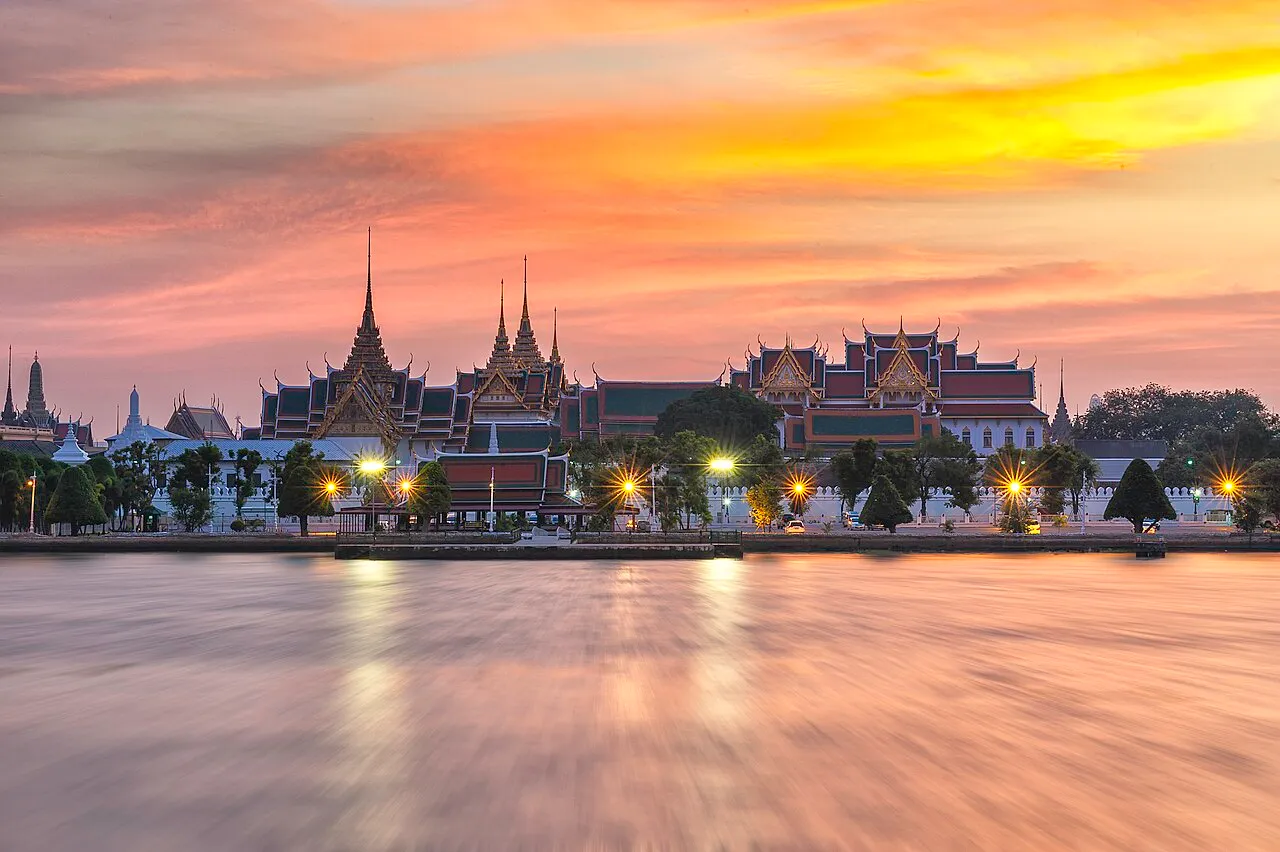
Wat Pho sits on Sanam Chai and Maharaj roads, next to the Grand Palace2, on Rattanakosin island. If you are already at the Grand Palace, walking is the easiest way to reach it. Coming from Wat Arun, which stands on the opposite bank of the Chao Phraya1, you cross the river by ferry; check current routes and piers before you set out, since services change.
Nearby
The Grand Palace is next door, and the two fit easily into the same morning. Wat Arun, the Temple of Dawn, sits across the Chao Phraya and is a short ferry ride from the piers near Wat Pho. For an overview of the neighbourhood and how to fit these sites into a wider Bangkok visit, see the Bangkok city guide.
_Za3zm0.webp)