Why go
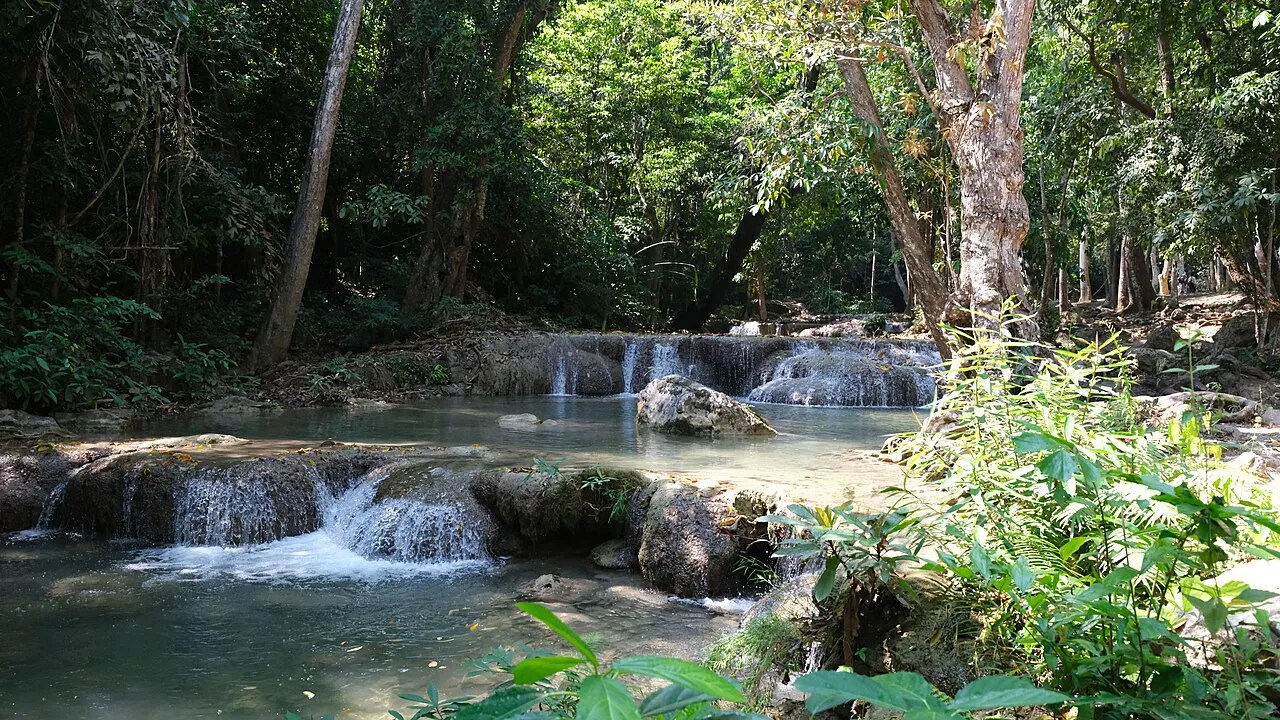
Erawan National Park exists for one waterfall. Erawan Waterfall drops down seven tiers of limestone, each ending in a pool of the clear, mineral-green water the park is known for, and it’s why most visitors make the trip out from Kanchanaburi in the first place. The park itself is older than you might expect: it was established on 19 June 1975 and covers 550 square kilometres of the Tenasserim hills, about 50 km northwest of Kanchanaburi town. The waterfall takes its name from the mythical three-headed elephant Erawan, a comparison that comes from the way water splits into three spouts1 at the highest tier.
Give it most of a day. You’ll want time to walk the full trail, swim at more than one tier, and get back to the bus before the last one leaves.
What you will see
A 1.5 km trail2 of paths and footbridges runs from the visitor centre all the way up to the seventh and highest tier, and you can swim at the first six of them; the last stretch up to the seventh needs some scrambling over rock to reach. Each pool along the way sits at its own shade of green, fed by the tier above, and small fish nibble at your feet in several of them – a free version of the fish spas sold in Thai cities. The lower two tiers are the easiest to reach and busiest as a result; the higher you climb, the fewer people you’ll share the water with.
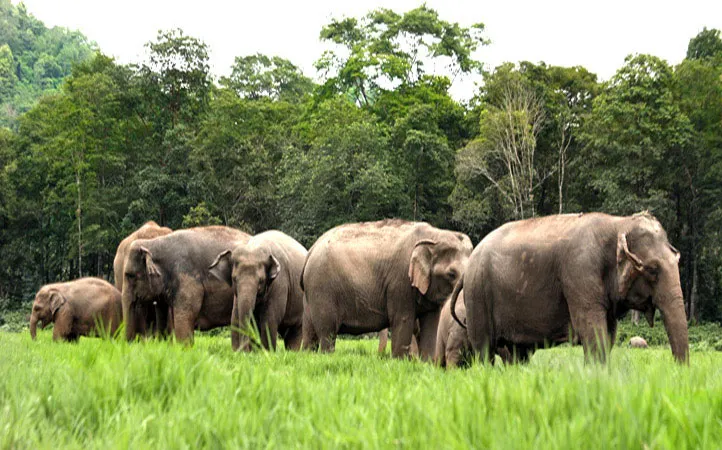
The forest around the falls is mostly mixed deciduous woodland, with smaller pockets of dry evergreen and dry dipterocarp forest, and it supports a surprising amount of wildlife for a day-trip park: 237 recorded bird species, 14 mammal species that include Asian elephants, gibbons and bears (rarely seen by day visitors), plus reptiles and amphibians. Away from the waterfall, the park also holds four limestone caves – Mi, Rua, Wang Badan and Phra That – though only Phra That, 12 km west1 of the visitor centre, is set up for visitors, via a paved path.
Visiting: hours, admission, booking
Current hours and the adult admission price are in the facts box on this page. A few things the box doesn’t cover: the park closes early to new entries, 15:30 rather than the closing time itself, so don’t plan to arrive late in the day. Food is banned beyond the second tier2 to keep monkeys away from the upper pools, and you’ll pay a small deposit on any drink bottle you bring in, refunded if you carry it back out. The park can close for the day during heavy rain, since the trail and footbridges become unsafe.
If you’d rather not walk the first stretch, a golf cart runs from the visitor centre to the lower tiers for 20 baht. Camping is allowed for 30 baht per person a night2, with two- or three-person tents available to rent on site; park bungalows exist too, but book those directly with the park rather than online. Arrive as early in the morning as you can – the lower tiers fill up fast, and weekends, public holidays and Songkran (13–15 April) are worth avoiding altogether.
Getting there
Bus 8170 runs from Kanchanaburi to the park roughly every 50–60 minutes between 08:00 and 17:50, takes about 90 minutes and costs 60 baht each way. You can flag it down anywhere along Saeng Chuto Road rather than going to the bus terminal; the war cemetery is a well-known boarding point. The last bus back to town leaves at 16:303, so keep an eye on the time once you’re a couple of tiers up. If you’re driving or riding, parking costs 30 baht for a car or 20 baht for a motorcycle2, and there are restaurants and cafés around the car park for afterwards.
Nearby
Erawan is the classic day trip from Kanchanaburi, and most visitors base themselves in town rather than staying near the park itself. If you want a quieter alternative with its own waterfalls, caves and hot springs, Sai Yok National Park lies further northwest along the road toward Sangkhlaburi and sees far fewer visitors than Erawan. Back in Kanchanaburi, the Bridge over the River Kwai and the Death Railway sites pair well with a waterfall day: wartime history in the morning, the water in the afternoon.
_Za3zm0.webp)