Exploring the Beauty of Kantajew Temple: A 18th-Century Gem in Bangladesh’s Dinajpur
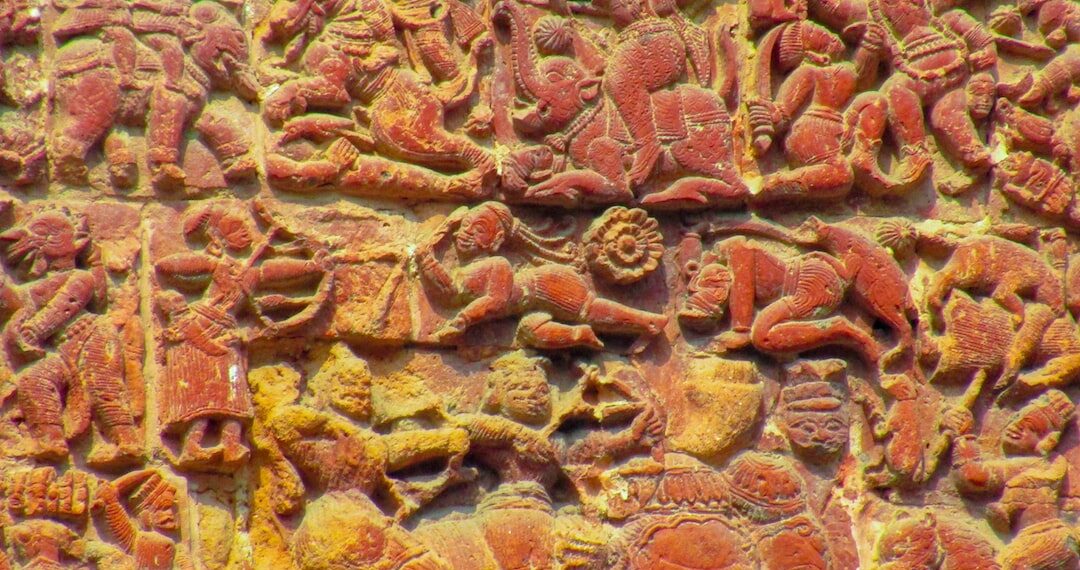
In the northern part of Bangladesh, in the district of Dinajpur, lies a hidden gem of the country’s rich cultural heritage – the Kantajew Temple. This stunning 18th-century Hindu temple is renowned for its intricate terracotta carvings that adorn its walls, depicting religious and mythological scenes.
The Kantajew Temple is considered a masterpiece of the late medieval period in Bengal, reflecting the skill and creativity of the artisans who designed and constructed it. Its name, Kantajew, means “temple of the jewel” and refers to the exquisite beauty of the temple’s architecture and artwork.
Approaching the temple, visitors are greeted by a large gateway or torana, which marks the entrance to the temple complex. The torana is an excellent example of traditional Bengali architecture, with its curved roof and intricate carvings depicting mythical creatures and scenes from Hindu mythology.
Beyond the torana is the main temple structure, which is built on a raised platform and is surrounded by a large courtyard. The temple is made of brick and terracotta, with a towering spire rising from the center of the roof. The spire is adorned with intricate terracotta carvings of Hindu deities and scenes from the Mahabharata and Ramayana.
The walls of the temple are covered with terracotta panels, each depicting a different scene from Hindu mythology. The panels are arranged in horizontal bands, with each band telling a different story or depicting a different aspect of Hinduism. Some of the most striking panels depict the ten avatars of Lord Vishnu, the Hindu god of preservation.
The carvings on the temple walls are not only beautiful but also serve a functional purpose. They act as a kind of visual scripture, telling the stories of Hinduism to those who cannot read or write. They also serve as a form of decoration, adding color and interest to the temple’s walls.
Inside the temple, visitors are greeted by a large hall, which is supported by a series of ornate pillars. The hall is used for worship and is decorated with more terracotta carvings, depicting scenes from Hindu mythology.
The highlight of the temple’s interior is the main shrine, which houses an image of Lord Krishna. The shrine is located in the center of the hall, and visitors can approach it from all sides. The image of Lord Krishna is made of black stone and is adorned with gold and silver ornaments.
The Kantajew Temple is not only a masterpiece of Bengali architecture and art but also a testament to the religious and cultural diversity of Bangladesh. Although the country is predominantly Muslim, there is a rich history of Hinduism and Buddhism in the region, which is reflected in the country’s many temples and archaeological sites.
Visitors to the Kantajew Temple can also explore the surrounding area, which is home to several other historical and cultural sites. One such site is the Ramsagar National Park, which is a large man-made lake surrounded by lush forests. The lake was built in the 18th century as a source of water for the local population and is now a popular spot for boating and picnicking.
Another nearby attraction is the Dinajpur Museum, which houses a collection of artifacts and artworks from the region’s rich cultural history. The museum is located in a restored palace and is a must-see for anyone interested in the history and culture of Bangladesh.
In conclusion, the Kantajew Temple is a stunning example of Bengali architecture and art, with its intricate terracotta carvings depicting religious and mythological scenes. It is a testament to the rich cultural heritage of Bangladesh and is a must-visit for anyone interested in the history and culture of the region.