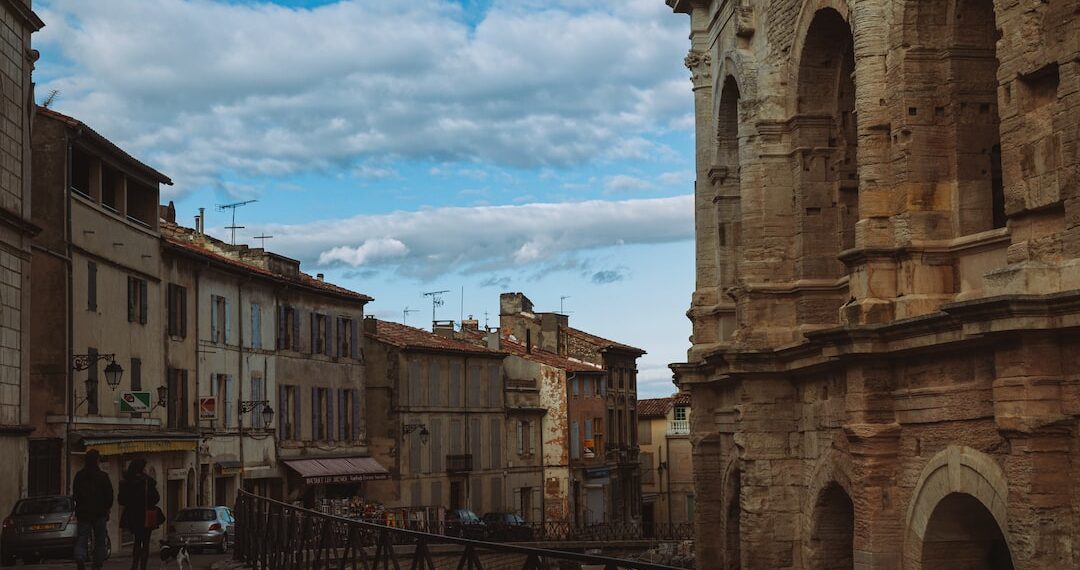
Arles Amphitheatre: Timeless Roman Grandeur, Alive with Modern Performances
“Arles Amphitheatre: Timeless Roman Grandeur, Alive with Modern Performances”
Exploring France: The Historic Arles Amphitheatre and its Role in Modern Events
Arles Amphitheatre, nestled in the heart of the charming French town of Arles, is a stunning testament to the architectural prowess of the Ancient Romans. This majestic structure is a UNESCO World Heritage Site and is considered one of the best-preserved amphitheaters in the world. Not content to merely rest on its historical laurels, this living monument continues to be used for events and performances, making it a vibrant hub of activity in the town.
Built around 90 AD, the amphitheater stands as a reminder of the vast reach of the Roman Empire. It was constructed during the reign of Emperor Augustus, who sought to expand the empire’s territories and establish a lasting legacy. The amphitheater was designed for large-scale entertainment, with the capacity to seat around 20,000 spectators. This made it one of the largest venues in the Roman world, comparable to the famous Colosseum in Rome.
The amphitheater’s impressive size and design were not just for show, however. It was built to host a variety of events, from gladiator fights and chariot races to theatrical productions and religious ceremonies. In this way, it served as a vital center for social and cultural exchange, allowing the people of Arles to come together and share in the experience of these events.
The amphitheater’s construction is a marvel of engineering, with its elliptical shape and tiered seating designed to provide optimal sightlines for all spectators. The outer walls are constructed from large limestone blocks, which have withstood the test of time and still stand strong today. The walls are adorned with intricate carvings and reliefs, showcasing the craftsmanship of the Roman builders. Inside, the amphitheater features a series of tunnels and passageways, which allowed spectators to move about easily and efficiently.
One particularly noteworthy architectural feature is the network of arches and vaults that support the structure. The Romans were pioneers in the use of arches, which allowed them to build larger and more complex structures than previous civilizations. The amphitheater’s arches not only provide an aesthetically pleasing visual element but also play a crucial role in distributing the weight of the structure evenly, ensuring its longevity.
Over the centuries, the amphitheater has undergone several transformations. As the Roman Empire declined, the amphitheater was repurposed for other uses. During the Middle Ages, it was converted into a fortified town, with houses and churches built within its walls. The amphitheater’s original purpose was all but forgotten, and its grandeur lay hidden beneath layers of more recent construction.
It wasn’t until the 19th century that efforts began to restore the amphitheater to its former glory. In an ambitious undertaking, the houses and other structures that had been built inside the amphitheater were gradually removed, revealing the ancient structure beneath. This process of excavation and restoration continued throughout the 20th century, and today, the amphitheater stands as a proud symbol of Arles’ rich history.
Despite its age, the amphitheater continues to play an important role in the cultural life of Arles. It serves as a venue for a wide range of events and performances, from concerts and theatrical productions to bullfights and equestrian displays. In this way, it has come full circle, once again serving as a center for entertainment and community gathering.
The amphitheater is particularly well known for its annual summer festival, Les Rencontres d’Arles, which showcases photography from around the world. This prestigious event draws artists and enthusiasts from far and wide, transforming the amphitheater into a buzzing hive of creativity and inspiration. The juxtaposition of cutting-edge contemporary art within the ancient walls of the amphitheater creates a unique and unforgettable atmosphere.
Another popular event held at the amphitheater is the Great Roman Games, which take place each spring. This event transports visitors back in time, with reenactments of gladiator fights, chariot races, and other spectacles that would have been enjoyed by the ancient Romans. The amphitheater comes alive with the sounds of clashing swords and thundering hooves, providing a thrilling and immersive experience for spectators.
For those who prefer a more serene experience, the amphitheater also offers guided tours, which delve into the history and architecture of the structure. Knowledgeable guides lead visitors through the various levels of the amphitheater, sharing fascinating facts and anecdotes about its construction and the events that took place within its walls. These tours provide a deeper understanding of the amphitheater’s significance, both in its historical context and in its continuing role as a cultural hub in Arles.
The town of Arles itself is a delightful destination, with its charming streets, vibrant markets, and picturesque riverfront. It is well worth taking the time to explore the town, which boasts a rich history and a strong connection to the arts. Arles was once home to the famous painter Vincent van Gogh, who found inspiration in the town’s beautiful surroundings and produced some of his most iconic works during his time there.
In addition to the amphitheater, Arles is home to several other impressive Roman structures, including the ancient theater, the cryptoporticus, and the Alyscamps necropolis. These sites, along with the amphitheater, form part of the Arles, Roman and Romanesque Monuments UNESCO World Heritage Site. This designation highlights the importance of these structures in preserving the history and heritage of the region.
The Arles Amphitheatre is a true gem, a living monument that continues to serve as a gathering place and cultural center for the town of Arles. Its combination of ancient architecture, fascinating history, and ongoing use for events and performances make it a must-visit destination for travelers seeking a unique and enriching experience. As you sit within its ancient walls, you can’t help but be awed by the knowledge that you are sharing in a tradition that stretches back nearly two millennia.