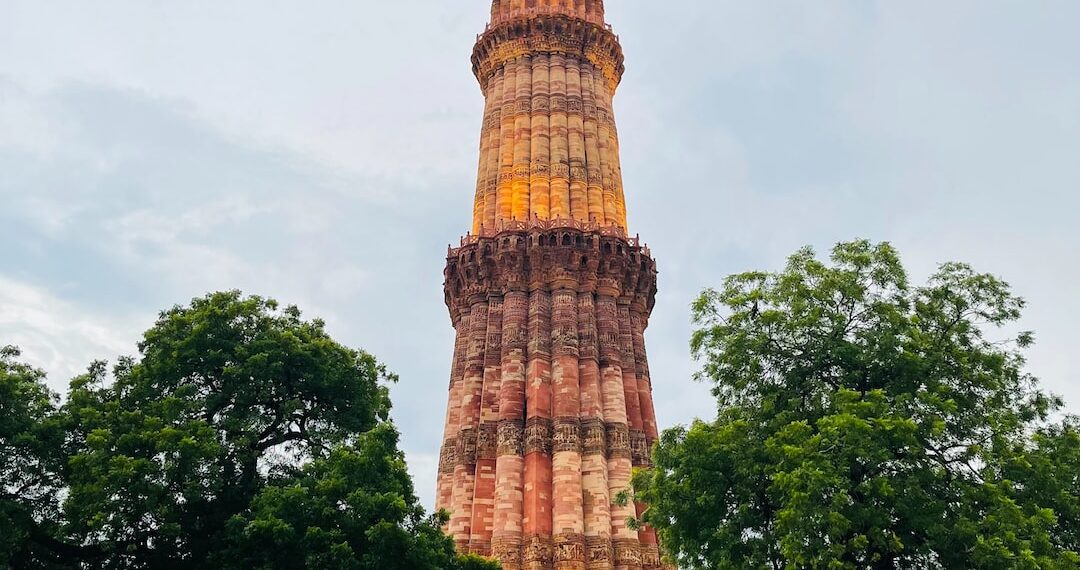
India, a land of many marvels, has always been a hub for architectural wonders and historical landmarks. One such awe-inspiring structure that stands tall amidst the urban landscape of Delhi, the capital city of India, is the Qutub Minar. This majestic tower, a UNESCO World Heritage site, is not only the tallest brick minaret in the world but is also a symbol of the rich history and heritage of India.
Built in the 13th century, the Qutub Minar has a staggering height of 73 meters, making it an outstanding example of Indo-Islamic architecture. The tower is made up of five tapering stories, each adorned with intricate carvings and inscriptions. The lower three stories are made of red sandstone, while the top two are constructed from marble and sandstone. The tower’s design is unique, as its diameter tapers from 14.3 meters at the base to 2.7 meters at the top. Its spiral staircase consists of 379 steps, leading visitors to the top for a breathtaking view of the surrounding cityscape.
Situated in the Qutub complex, the minaret was initially constructed by Qutb-ud-din Aibak, the founder of the Delhi Sultanate, to celebrate the advent of Muslim rule in India. It was later completed by his successor, Iltutmish, and further enhanced by Firoz Shah Tughlaq, who added the fifth and final story to the tower. The Qutub Minar is not only an architectural masterpiece but also a repository of history, bearing testimony to the craftsmanship and vision of its builders.
The Qutub Minar’s carvings and inscriptions are a reflection of the artistic sensibilities of its builders. The tower is adorned with intricate patterns, including bands of inscriptions in the Arabic script that showcase verses from the Quran. The minaret’s walls are also embellished with geometrical and floral motifs, demonstrating the skill and creativity of the artisans who worked on it. The fusion of Indian and Islamic architectural styles is evident in the Qutub Minar, making it a unique monument that stands as a testament to the rich cultural exchange that took place during the Delhi Sultanate period.
The Qutub complex, where the minaret is located, is a treasure trove of historical monuments and architectural wonders. Among the various structures in the complex, the Quwwat-ul-Islam Mosque, which stands adjacent to the Qutub Minar, is a fascinating example of Indo-Islamic architecture. Built by Qutb-ud-din Aibak, the mosque is known for its intricate carvings and inscriptions, which bear a striking resemblance to the ones found on the Qutub Minar. The mosque’s construction began in 1192 and was later extended by Iltutmish and Alauddin Khilji.
Another significant monument in the Qutub complex is the Iron Pillar, an engineering marvel that has stood the test of time. This pillar, which dates back to the 4th century AD, is made of 98% wrought iron and has been remarkably resistant to corrosion despite being exposed to the elements for centuries. The Iron Pillar is believed to have been initially erected in the memory of Chandragupta II, a powerful ruler of the Gupta Empire, and was later moved to its present location by Anangpal, a Tomar king. The pillar’s inscription, written in the ancient Brahmi script, adds to the air of mystery surrounding this enigmatic structure.
The Qutub complex is also home to the Alai Minar, an ambitious project undertaken by Alauddin Khilji, who envisioned building a tower twice the height of the Qutub Minar. However, the construction of the Alai Minar was abandoned after the death of Alauddin, and the incomplete structure now stands as a reminder of the grand plans that never materialized.
As a UNESCO World Heritage site, the Qutub Minar and its surrounding monuments are a source of immense pride for the people of India. The tower, with its awe-inspiring height and intricate carvings, has become an enduring symbol of Delhi’s historical legacy. Every year, thousands of visitors from all over the world flock to the Qutub complex to witness the architectural splendor of this iconic monument and to immerse themselves in the rich history of the Delhi Sultanate period.
In recent years, the Archaeological Survey of India (ASI) has made significant efforts to preserve and maintain the Qutub Minar and its surrounding structures. The minaret, which has withstood the ravages of time and natural disasters, including earthquakes and lightning strikes, is now protected by the ASI, ensuring that future generations can continue to appreciate its architectural magnificence. The ASI has also undertaken restoration work on the other monuments in the Qutub complex, helping to preserve their historical and cultural significance.
While exploring the Qutub complex, visitors cannot help but be captivated by the enchanting beauty of the Qutub Minar. The tower’s imposing presence, coupled with the intricate carvings and inscriptions that adorn its walls, make it a mesmerizing sight to behold. As one stands at the foot of the minaret, it is impossible not to be awestruck by the architectural prowess and vision of its builders.
The Qutub Minar’s lofty height and grandeur have made it an enduring symbol of Delhi’s historical and cultural legacy. This magnificent tower, a testament to the skill and ingenuity of its creators, continues to captivate visitors from all over the world, who flock to the Qutub complex to witness its architectural splendor and to immerse themselves in the rich history of the Delhi Sultanate period.
In conclusion, the Qutub Minar is more than just a tower; it is a symbol of India’s rich history and architectural prowess. This UNESCO World Heritage site, with its awe-inspiring height and intricate carvings, is an enduring testament to the skill and vision of its builders. As the tallest brick minaret in the world, the Qutub Minar stands tall as a reminder of the architectural marvels that India has to offer, beckoning visitors from all corners of the globe to come and explore its fascinating history and timeless beauty.