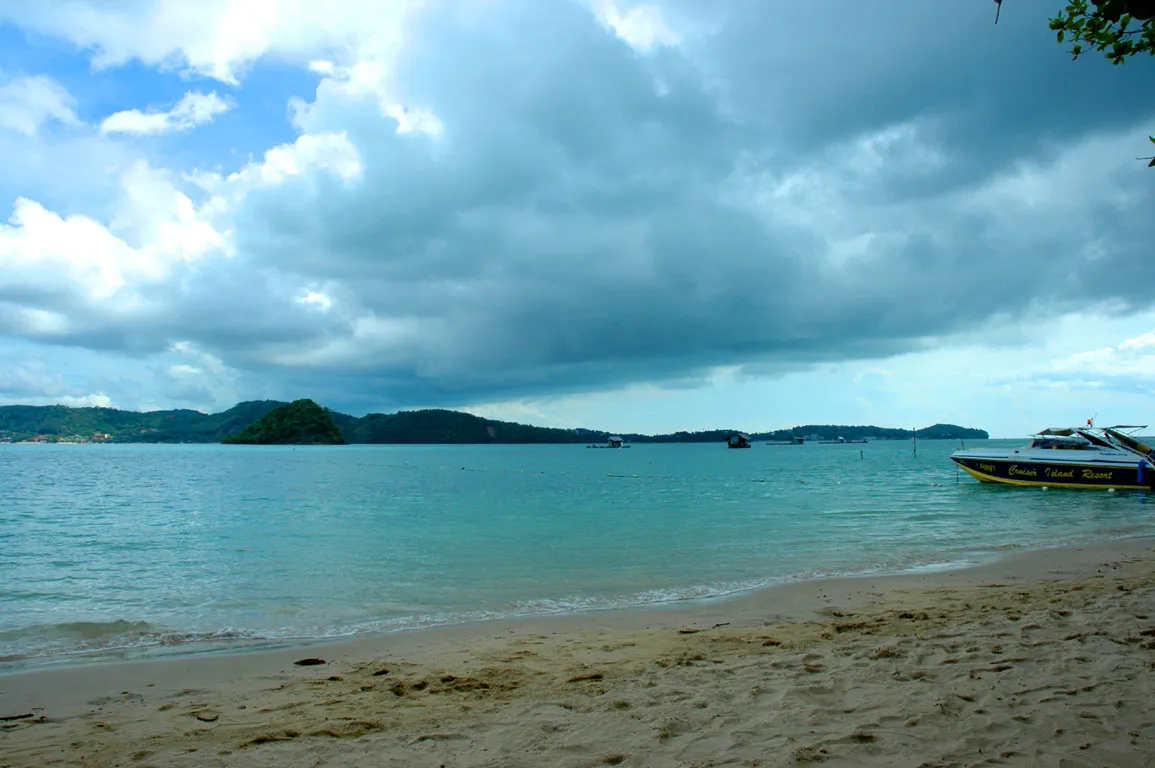
Phuket is Thailand’s largest island, off the country’s Andaman coast, and its most developed beach destination: a mix of resort strips, a historic trading-port town and forested hills in the interior. The airport and the best months to visit are covered in the facts box below. Development is heaviest on the west coast, where the sun sets over the sand; the east side holds the island’s working town and its ferry piers.
Getting oriented
Patong, on the west coast, is Phuket’s biggest and busiest resort strip, built up with hotels, bars and shopping from the beachfront back several streets. South of Patong, Kata, Karon and Rawai are smaller, calmer beach towns with less nightlife. Phuket Town, on the island’s southeast side, is the administrative and historic centre, away from the beach. In the island’s north, near the airport, Nai Yang and the surrounding coast stay quieter and less built-up than the resort strips further south.
Highlights
Patong Beach
Patong’s beach runs 2,850 metres along the town’s west side and is the busiest stretch of sand on the island, backed by hotels, restaurants and dive shops. Its nightlife centres on Bangla Road, a pedestrianised strip of bars and clubs that gets going after dark. The beachfront was badly hit by the 26 December 2004 Indian Ocean tsunami but has been rebuilt since.
Phuket Old Town
East of the resort strips, Phuket Old Town preserves streets of Sino-Portuguese shophouses and mansions built by Hokkien Chinese tin-mining families, mixing Chinese and Portuguese styles into what’s also called Peranakan architecture. The style was already established by the reign of King Rama V (1853–1910), and the best-preserved stretches run along Thalang, Phang Nga, Krabi, Dibuk and Yaowarat roads, now home to cafes, galleries and small museums rather than mining offices.
Big Buddha
The Big Buddha sits on Nakkerd Hill in the island’s south, a seated statue 45 metres tall and 25.45 metres wide, built from concrete faced with white Burmese marble. Construction began in 2004 and continues in stages around the base, but the statue itself has long been finished and open to visitors, who reach it by road up the hill for a view over the south of the island and Chalong Bay.
Getting around
Phuket International Airport sits at Mai Khao in the island’s north, about 32 km from Phuket Town and further still from Patong and the southern beaches, so budget an hour or more for the transfer. Around the island, songthaew pickup trucks run fixed routes from Phuket Town out to the beaches, tuk-tuks charge a flat fee regardless of distance, and motorbike taxis are the cheapest option for short hops, all cheaper the further you are from the tourist strips and worth agreeing on a price before you get in, per Wikivoyage. A day pass on the island’s Smart Bus network, covered in the facts box, is a fixed-price alternative for a day of unlimited rides along its main coastal route.
Where to stay by area
Patong puts you closest to the nightlife and the busiest beach, with the most hotels, restaurants and noise. Kata, Karon and Rawai to the south are quieter, more residential resort towns with their own beaches and an easy ride from Patong. Phuket Town has no beach of its own but the cheapest accommodation and the Old Town’s restaurants and cafes on the doorstep. Near the airport in the north, Nai Yang and neighbouring coast suit a quieter stay with a short transfer on arrival and departure, at the cost of a longer ride to the southern beaches.
Day trips
Phang Nga Bay, between Phuket and the mainland, covers about 400 km² of limestone islands and cliffs, most of it protected as Ao Phang Nga National Park since 1981. Boat tours from Phuket take in Ko Tapu, the narrow rock spire off Khao Phing Kan known as James Bond Island after appearing in The Man with the Golden Gun, and the stilted fishing village of Koh Panyee.
Further out, the Similan Islands are a chain of 11 islands protected as a national park, reachable by speedboat in around 70 minutes from the mainland piers north of Phuket and known for some of Thailand’s clearest diving and snorkelling water. The park closes to visitors every year from 16 May to 15 October during the southwest monsoon.