Why go
The Phi Phi Islands are a group of six islands sitting in the Andaman Sea about 46 km southeast of Phuket, administratively part of Krabi Province rather than Phuket, though Phuket is the busier gateway for day-trippers. The name comes from the Malay Pulau Api-Api, “fiery isle”, after a grey mangrove tree that once grew here, not from any volcanic history. Limestone cliffs, caves and long white beaches make up the whole group, but almost everyone means one of two islands when they say “Phi Phi”: Ko Phi Phi Don, the largest at 10.27 km² and the only inhabited one, with around 2,500 residents in 2018, and Ko Phi Phi Leh, a smaller uninhabited island at 1.27 km² that holds Maya Bay. The whole group sits inside Hat Noppharat Thara-Mu Ko Phi Phi National Park, which covers 242,437 rai (about 38,790 hectares) of land and sea, including Ko Yung and Ko Mai Phai (Bamboo Island) to the north.
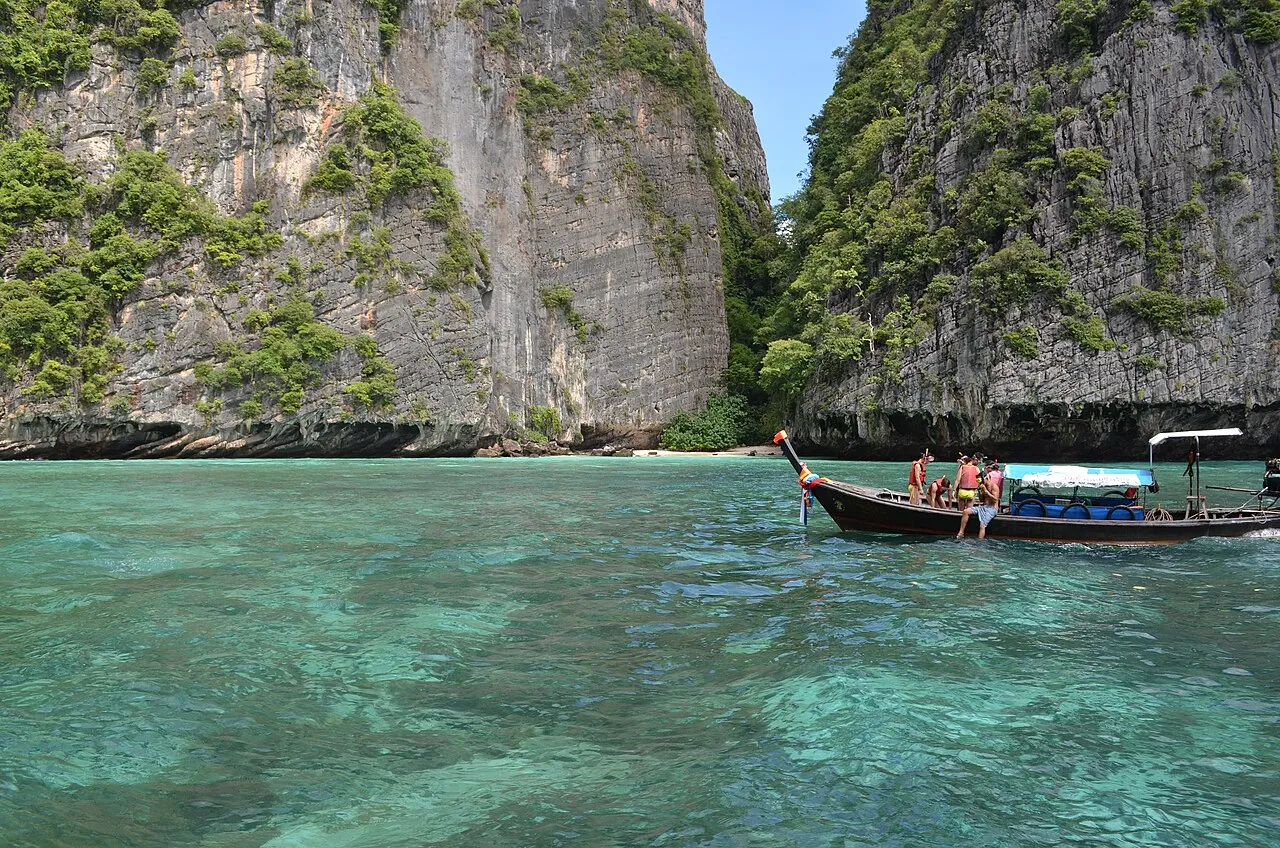
Maya Bay is the reason the islands became a global name: the cove was the film location for The Beach in 2000, and the exposure that followed brought crowds the site could not absorb, up to 5,000 tourists and 200 boats a day at the peak. Thai authorities closed the bay entirely in June 2018 to let the coral recover and reopened it on 1 January 2022 with a visitor cap and a new pier that keeps boats off the reef. The islands also took a direct hit from the 26 December 2004 tsunami, which destroyed roughly 70% of the buildings on Phi Phi Don; volunteers and residents cleared about 23,000 tonnes of debris by mid-2005, and the town has been rebuilt since.
What you will see
Most day trips from Phuket combine three or four stops: Maya Bay itself, now walked to via the pier on its back side rather than landed on by boat; the viewpoint above Phi Phi Don’s twin bays, a climb to about 186 metres that takes 10 to 25 minutes depending on fitness and rewards you with the postcard shot of the island’s hourglass shape; and Monkey Beach, where a resident troop of macaques draws a crowd of its own. The monkeys can bite or become territorial, and local hospitals warn of rabies risk from a bite, so don’t feed them, keep food and bags out of reach, and don’t try to pet them. Bamboo Island (Ko Mai Phai), a smaller sandbar-ringed island north of the main group, is a quieter stop for swimming when Maya Bay is crowded or closed.
Ton Sai Bay, on the narrow isthmus that joins Phi Phi Don’s two halves, is the island’s village hub: the pier, most guesthouses, dive shops and restaurants cluster here, and it’s the usual starting point for a day trip or an overnight stay alike. There are no cars, motorbikes or scooters for general use anywhere on the islands, only emergency vehicles, so getting around on foot, by bicycle or by longtail boat is part of the experience rather than an inconvenience.
Divers and snorkellers have their own reasons to come. Long Beach, close to Phi Phi Don’s main pier, is an easy snorkel, and just offshore at Shark Point, two rocks within swimming distance of the beach, you can expect to see harmless blacktip reef sharks, alongside the leopard sharks, turtles and moray eels that turn up on the reefs around the group more generally. Further out, Anemone Reef, Hin Daeng and the King Cruiser Wreck, a sunken ferry between Phuket and Phi Phi, are established dive sites reached by boat from either island; a PADI Open Water course booked on Phi Phi Don runs around 13,800 baht all-in, while a two-tank fun dive for a certified diver costs closer to 2,500 baht.
Visiting: hours, admission, booking
Current park hours and the foreign-adult admission price are in the facts box on this page; Thai nationals and children pay less, and the note on the box has the full breakdown. What the box doesn’t show is that Maya Bay itself closes separately from the rest of the park every year from 1 August to 30 September to give the coral a break from the high season, so check the dates before you build a Maya Bay stop into a trip in that window. Divers pay an extra fee on top of the standard admission, also detailed on the box.
Nearly everyone visits on a day tour booked from Phuket or Krabi rather than independently, since the park’s boat and pier rules make an organised trip the simplest way to reach Maya Bay itself; if you’d rather do it on your own, a public ferry gets you to Phi Phi Don’s main pier and you can arrange smaller longtail trips to Maya Bay and the dive sites from there.
Getting there
From Phuket, ferries to Phi Phi Don leave Rassada Pier at 09:00, 11:00 (high season only) and 14:30, taking 1.5 to 2 hours and costing around 600 baht one-way bought at the pier, though some guesthouses sell the same ticket cheaper as part of a package. Rassada Pier itself sits about 30 km from central Phuket, roughly 45 minutes by taxi, so factor that transfer into an early departure.
From Krabi, two daily ferries run from Klong Jilard Pier at 09:00 and 14:30, also taking 1.5 to 2 hours, for around 300 baht, a fare that typically includes the ground transport out to the pier. Day-tour boats to Maya Bay and the dive sites run from both directions and pick up from hotels on either island, which is usually easier than coordinating the public ferry with a separate boat charter.
Nearby
Phi Phi Don has its own guesthouses and dive shops if you want more than a day here; high-season rates from October to May run well above the rest of the year, so book ahead if you’re staying overnight in that window. The hot season from January to April generally gives the calmest seas and clearest water for diving and snorkelling, while the rainy season from May to December brings more frequent showers and rougher crossings, though tour boats still run through most of it.
For the wider area, see the Phuket city guide for where to base yourself before a day trip, or the Krabi city guide if you’re coming from that side of the coast.