Exploring Germany: The Iconic Brandenburg Gate in Berlin
The Brandenburg Gate, an iconic symbol of German unity, stands majestically in the heart of Berlin, its storied history and architectural grandeur drawing millions of visitors each year. This neoclassical monument, built in the 18th century, has borne witness to some of the most significant events in European history, from the rise and fall of the Berlin Wall to the reunification of Germany. Today, a visit to the Brandenburg Gate is a must for anyone traveling to Berlin, as it offers a unique opportunity to experience firsthand the fascinating interplay of history, culture, and architecture that defines this vibrant city.
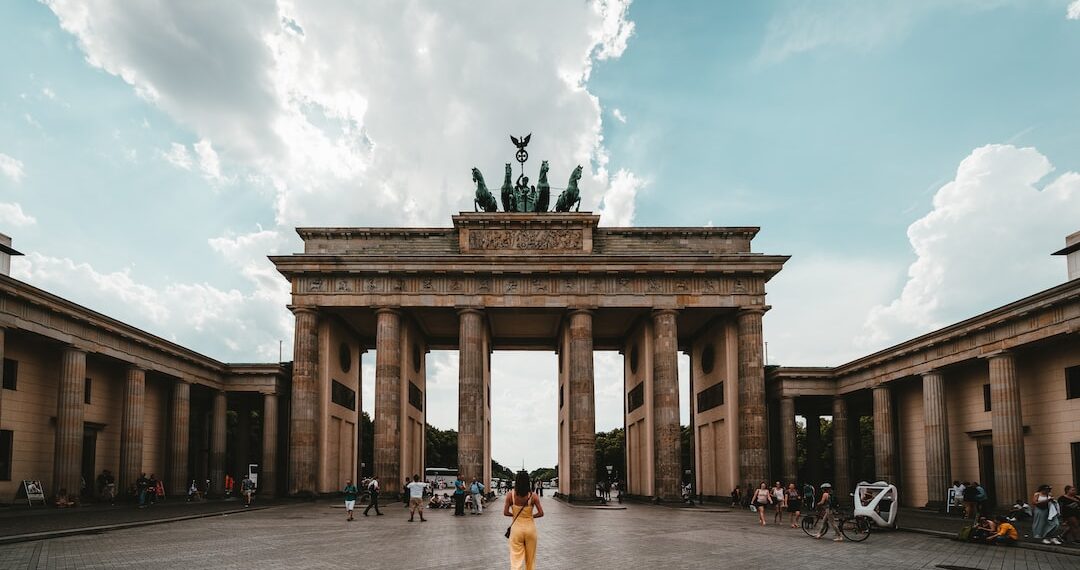
The story of the Brandenburg Gate begins in the late 18th century when King Frederick William II of Prussia commissioned the construction of a grand entrance to the city of Berlin. The gate was designed by architect Carl Gotthard Langhans, who took inspiration from the Acropolis in Athens. Langhans’ design features a series of six Doric columns, which support a massive horizontal entablature adorned with reliefs and sculptures. The gate is crowned by a magnificent statue known as the “Quadriga,” which depicts the goddess of victory driving a chariot drawn by four horses.
Over the years, the Brandenburg Gate has played a central role in the political and cultural life of Berlin. In 1806, after Napoleon’s victory over the Prussian army, the French emperor ordered the Quadriga to be removed and brought to Paris as a symbol of his triumph. However, the statue was returned to Berlin in 1814 after Napoleon’s defeat, and the goddess of victory was transformed into a symbol of peace, holding an olive branch in her hand.
In the early 20th century, the Brandenburg Gate became a potent symbol of German nationalism, as the country sought to assert itself on the world stage. During World War II, the gate sustained significant damage from Allied bombings, but it managed to survive the conflict, albeit in a battered state. Following the war, Berlin found itself divided between East and West, and the Brandenburg Gate became a poignant emblem of this division.
With the construction of the Berlin Wall in 1961, the Brandenburg Gate was sealed off from the public, situated in the heavily fortified no man’s land between East and West Berlin. For nearly three decades, the gate stood as a mute witness to the tensions between the Soviet Union and the Western powers, and it became a potent symbol of the Cold War.
The Brandenburg Gate’s most memorable moment in recent history came on November 9, 1989, when the Berlin Wall fell, and the city was reunited. The gate was opened to the public once more, and tens of thousands of people flocked to the site to celebrate the end of the Cold War and the beginning of a new era of peace and unity. In the years that followed, the Brandenburg Gate became an iconic symbol of German reunification, as well as a poignant reminder of the city’s turbulent past.
As one of Berlin’s most recognizable landmarks, the Brandenburg Gate attracts millions of visitors each year. Tourists flock to the site to admire its impressive architecture, soak up the palpable sense of history, and perhaps even pose for a photo with one of the many “Trabi” cars that have been colorfully painted and repurposed as a symbol of freedom and creativity in the post-Wall era.
The area surrounding the Brandenburg Gate is also steeped in history and culture. To the west of the gate lies the Tiergarten, Berlin’s largest park, which offers a tranquil oasis amidst the hustle and bustle of the city. To the east, one can find the historic Unter den Linden boulevard, which is lined with stately buildings and museums, including the Humboldt University, the State Opera, and the Zeughaus, which houses the German Historical Museum.
A stone’s throw away from the Brandenburg Gate is the Reichstag building, which serves as the seat of the German parliament. This impressive edifice, with its striking glass dome designed by architect Sir Norman Foster, is another must-see attraction for visitors to Berlin. The Reichstag’s rooftop terrace offers stunning panoramic views of the city, including the Brandenburg Gate, the Tiergarten, and the Fernsehturm, Berlin’s iconic TV tower.
In recent years, the area around the Brandenburg Gate has become a popular venue for public events and celebrations. Every New Year’s Eve, hundreds of thousands of people gather at the gate to ring in the new year with a spectacular fireworks display. The gate also serves as the backdrop for numerous concerts, parades, and sporting events throughout the year, cementing its status as a focal point of Berlin’s cultural life.
In conclusion, the Brandenburg Gate is much more than just an architectural masterpiece or a historical monument; it is a living, breathing symbol of the city of Berlin and the broader story of Germany. From its origins as a symbol of Prussian grandeur to its current role as an emblem of unity and peace, the gate has evolved and adapted to the changing fortunes of the city it calls home. Today, a visit to the Brandenburg Gate offers a unique and unforgettable opportunity to experience the rich tapestry of Berlin’s history, culture, and spirit.