ROAMOPEDIA
Zwinger Palace
Discover Dresden’s Zwinger Palace: Baroque Beauty, Artistic Treasures, and Enchanting Gardens Await
“Discover Dresden’s Zwinger Palace: Baroque Beauty, Artistic Treasures, and Enchanting Gardens Await”
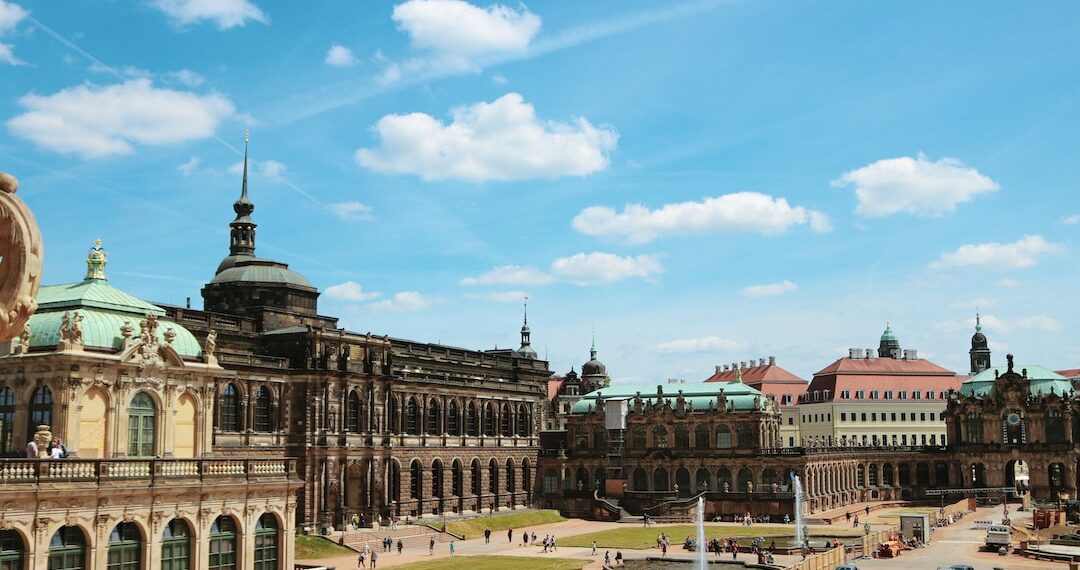
Discovering Dresden: A Journey Through Zwinger Palace’s Baroque Beauty and Cultural Treasures

Nestled in the heart of Dresden, Germany, the Zwinger Palace stands as a magnificent testimony to the pinnacle of Baroque architecture and design. This beautiful Baroque palace, with its museums, art galleries, and stunning gardens, is a superb destination for anyone looking for a leisurely, culture-filled stroll through one of Germany’s most enchanting cities.

Constructed in the early 18th century, the Zwinger Palace was originally designed by court architect Matthäus Daniel Pöppelmann and sculptor Balthasar Permoser as a space for court festivities and tournaments. However, throughout its rich history, the palace has served various purposes, from a prestigious orangery to a porcelain collection showcase, and today, it is one of Dresden’s most popular tourist attractions.

As you approach the palace, the first thing that strikes you is the grandiosity of its architecture, a harmonious blend of Baroque and Rococo styles. The intricate details of the numerous sculptures adorning the palace’s exterior, the sweeping curves of its many arches, and the delicate ornamentation of its numerous alcoves and niches are all a testament to the exquisite craftsmanship and artistic mastery of its creators.

As you enter the Zwinger Palace, you will find yourself in the breathtaking courtyard, surrounded by sweeping, arcaded galleries adorned with more than 2,000 sculptures representing the four elements, the changing seasons, and various mythological figures. Walking through these galleries, you can’t help but marvel at the sheer scale and beauty of this remarkable space, which is said to have been inspired by the Italian Renaissance.

One of the main attractions within the Zwinger Palace complex is the Old Masters Picture Gallery (Gemäldegalerie Alte Meister), which houses an exceptional collection of European art from the 15th to the 18th centuries. As you wander through the gallery’s spacious rooms, you will encounter works by some of the most celebrated artists in history, including Raphael, Titian, Rembrandt, Rubens, and Vermeer. Among the gallery’s many treasures is Raphael’s famous “Sistine Madonna,” an incredibly delicate and emotional painting that has become one of the most recognized and admired works of art in the world.

Another must-see attraction within the Zwinger Palace is the Porcelain Collection (Porzellansammlung), which boasts one of the most extensive and exquisite collections of porcelain in the world. The collection, which comprises more than 20,000 objects, offers a fascinating journey through the history of this delicate material, from its origins in China to its widespread popularity in Europe. Among the collection’s highlights are numerous pieces of Meissen porcelain, a world-renowned brand that has been produced in the nearby town of Meissen since the early 18th century and has become synonymous with the highest quality and craftsmanship.

The Zwinger Palace is also home to the Royal Cabinet of Mathematical and Physical Instruments (Mathematisch-Physikalischer Salon), a fascinating museum that houses an impressive collection of scientific instruments, timepieces, and astronomical devices. As you explore the museum, you will be amazed by the ingenuity and precision of these ancient instruments, which were once used by scholars and navigators to make groundbreaking discoveries and chart new territories. The collection includes everything from ornate globes and astrolabes to intricate sundials and telescopes, offering a captivating glimpse into the evolution of science and technology over the centuries.

After exploring the palace’s museums and galleries, you will undoubtedly want to take a leisurely stroll through the stunning gardens that surround the Zwinger Palace. These meticulously manicured gardens are a true oasis of tranquility, offering visitors a peaceful respite from the bustling city beyond its walls. Filled with fountains, statues, and beautifully designed flower beds, the gardens are a perfect place to relax and soak in the palace’s serene atmosphere.

As you wander through the gardens, you will encounter the charming Nymphenbad, or “Bath of the Nymphs,” a Baroque fountain adorned with a series of playful and graceful nymph statues. This enchanting space, with its cascading waters and delicate sculptures, is a popular spot for visitors to pause and take in the beauty of their surroundings.

Another highlight of the Zwinger Palace gardens is the Kronentor, or “Crown Gate,” a magnificent, triumphal arch that serves as the palace’s main entrance. The gate, which is topped by a gilded crown resting on a bed of intricately carved foliage, is a striking example of the palace’s majestic architectural style and a favorite spot for visitors to capture memorable photographs.

As you meander through the gardens, you will also come across the French Pavilion, a delightful, octagonal building that once served as a tea house and orangery. The pavilion’s elegant design, with its tall windows, ornamental columns, and rooftop terrace, is a charming example of the refined taste and sophistication that characterized the Baroque era.

Overall, a visit to the Zwinger Palace is an unforgettable experience that will transport you to a bygone era of opulence and grandeur. With its awe-inspiring architecture, world-class art collections, and stunning gardens, the palace is a must-see destination for any traveler exploring the city of Dresden. Whether you spend an entire day immersing yourself in the palace’s many treasures or simply take a brief, leisurely stroll through its enchanting grounds, you will be captivated by the beauty and history of this remarkable place.

  • Print
  • +-
    Font Size