Contents
The Gambia packs two UNESCO World Heritage sites, several wildlife reserves and a sacred crocodile pool into a country you can cross by road in a few hours. This page sorts the main sights by type, gives the figures that matter and points you to the practical pages for the rest.
Megaliths and the slave-trade coast
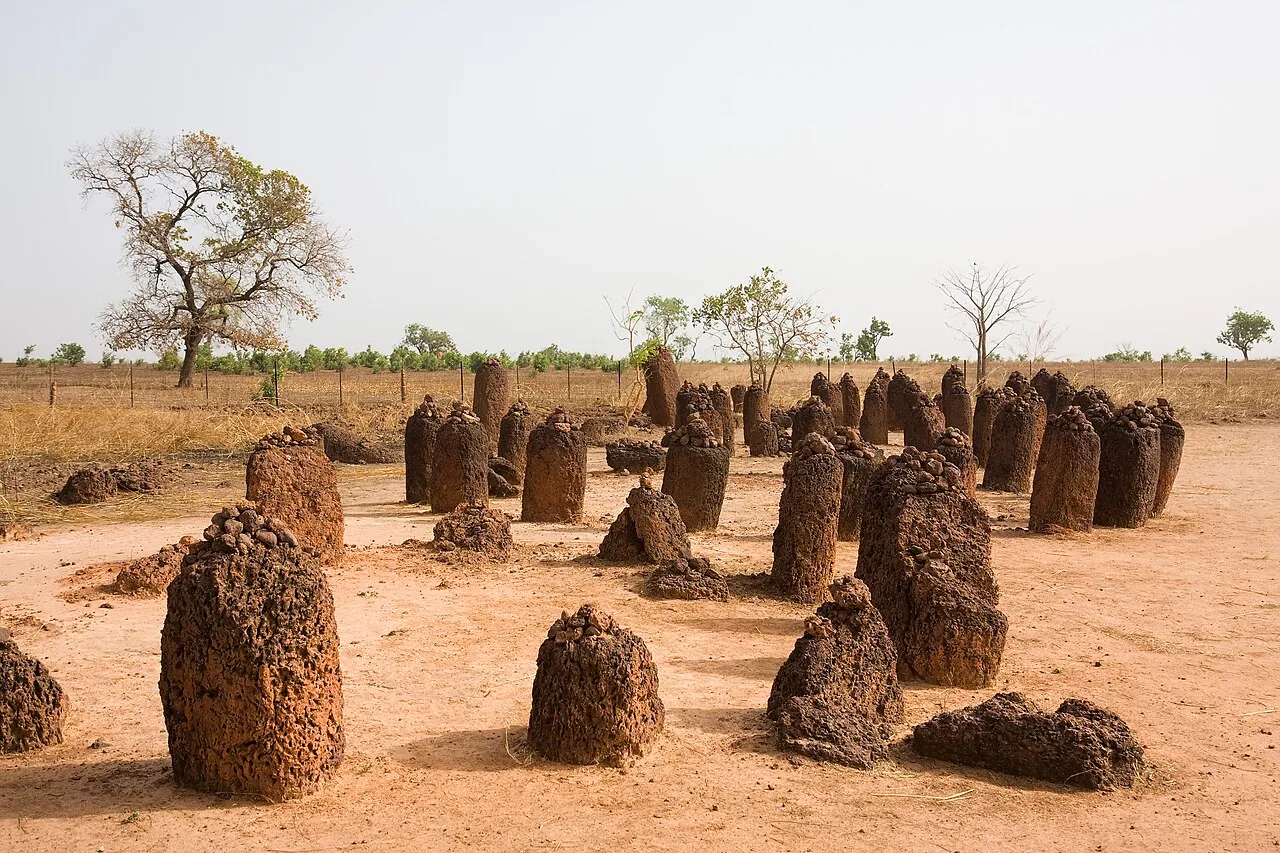
Upcountry near Kuntaur, the Wassu stone circles are the best-known of the Senegambian Stone Circles, a cluster of more than 1,000 laterite stone circles and burial mounds across the Gambia and Senegal that UNESCO inscribed as a World Heritage site in 2006. The stones were raised between the 3rd century BCE and the 16th century CE, with burial mounds at Wassu itself radiocarbon-dated to AD 927–13051. A small site museum explains the finds; Kerr Batch, a second circle group, lies a short drive away.
Kunta Kinteh Island (known as James Island until the government renamed it on 6 February 2011) lies downriver, close to the villages of Juffureh and Albreda, roughly 30 km upriver from Banjul. The island and its related forts were inscribed as a UNESCO World Heritage site in 20032, recognised as the starting point of the first European trade route into inland Africa and a key site in the history of the transatlantic slave trade. Almost everyone visits on a river tour out of the capital or the coastal resorts rather than independently.
Wildlife reserves
Abuko Nature Reserve, south of Banjul, was the country’s first protected wildlife area, gazetted in 1968 after a Gambian wildlife officer campaigned for its formal protection the year before. It covers 107 hectares of gallery forest along the Lamin Stream, home to three monkey species, Nile crocodiles and more than 270 recorded bird species3, enough to earn it Important Bird Area status; an animal orphanage inside the reserve also keeps a resident hyena pack.
On the coast near Kololi, Bijilo Forest Park (the “monkey park”) protects 51.3 hectares of coastal woodland along a 4.5 km nature trail, opened to visitors in 1991 and now drawing more than 23,000 visitors a year. It holds four monkey species, including Temminck’s red colobus, plus over 133 recorded bird species4.
Further inland near Brikama, the privately run Makasutu Culture Forest covers about 1,000 acres of palm forest, mangrove creek and savannah. Two British conservationists began protecting the land in 1992 and opened it to day visitors in 19995; a visit typically combines a guided bush walk with a pirogue trip along the Mandina Bolong creek.
Kachikally Crocodile Pool and Banjul landmarks
The Kachikally Crocodile Pool, in Bakau, is one of three sacred crocodile pools in the Gambia used for fertility rituals, privately kept by the Bojang family. The pool holds an estimated 80 crocodiles6, docile enough that visitors are often allowed to approach and touch them, alongside a small museum of Mandinka artefacts.
In the capital, Banjul’s Arch 22 monument stands 35 metres tall and was built to mark the 22 July 1994 coup that brought Yahya Jammeh to power, opening in 1996. A climb through its three floors7 brings you to a small textile museum and a terrace with views over the city.
Practical tips
- River sites (Kunta Kinteh Island, Juffureh, Albreda) and the inland Wassu circles are a full day each; most visitors book them as a guided tour rather than arranging transport themselves.
- Crocodiles at Kachikally and in the wild at Abuko are a different species each: those at Kachikally are West African crocodiles6, while Abuko’s are Nile crocodiles3.
- Admission is paid in Gambian dalasi at the gate of every site in this guide; card payment is not generally available, so carry small notes. See the costs guide for a sense of everyday prices.
- Pair a wildlife reserve visit with the food guide or where-to-stay guide: Bijilo and Abuko both sit close to the coastal resort strip, so they work well as a half-day add-on rather than a dedicated trip.
What to check before you go
- Current river-tour departure points and durations for Kunta Kinteh Island: boat journey length varies by operator and embarkation point, so confirm the current schedule when you book.
- Opening hours at each site, which are not fixed by law and can shift seasonally; confirm with your guide or hotel tour desk before setting out.
- The culture guide before visiting Kachikally or any ceremony site, since fertility rituals and masquerades are living practices, not performances staged for visitors.
- Heat and hydration if you combine more than one reserve in a day; see the weather guide and health guide for what to prepare for.