Contents
Almost everywhere you will sleep in The Gambia sits in one of two worlds: the licensed hotels, guesthouses and apartments strung along the Atlantic coast, or a handful of upcountry camps and lodges built around the Gambia River. Which one suits you depends on whether you have come for the beach or for the river and its birdlife; most visitors do a few nights of each.
Coast hotels and the Tourism Development Area
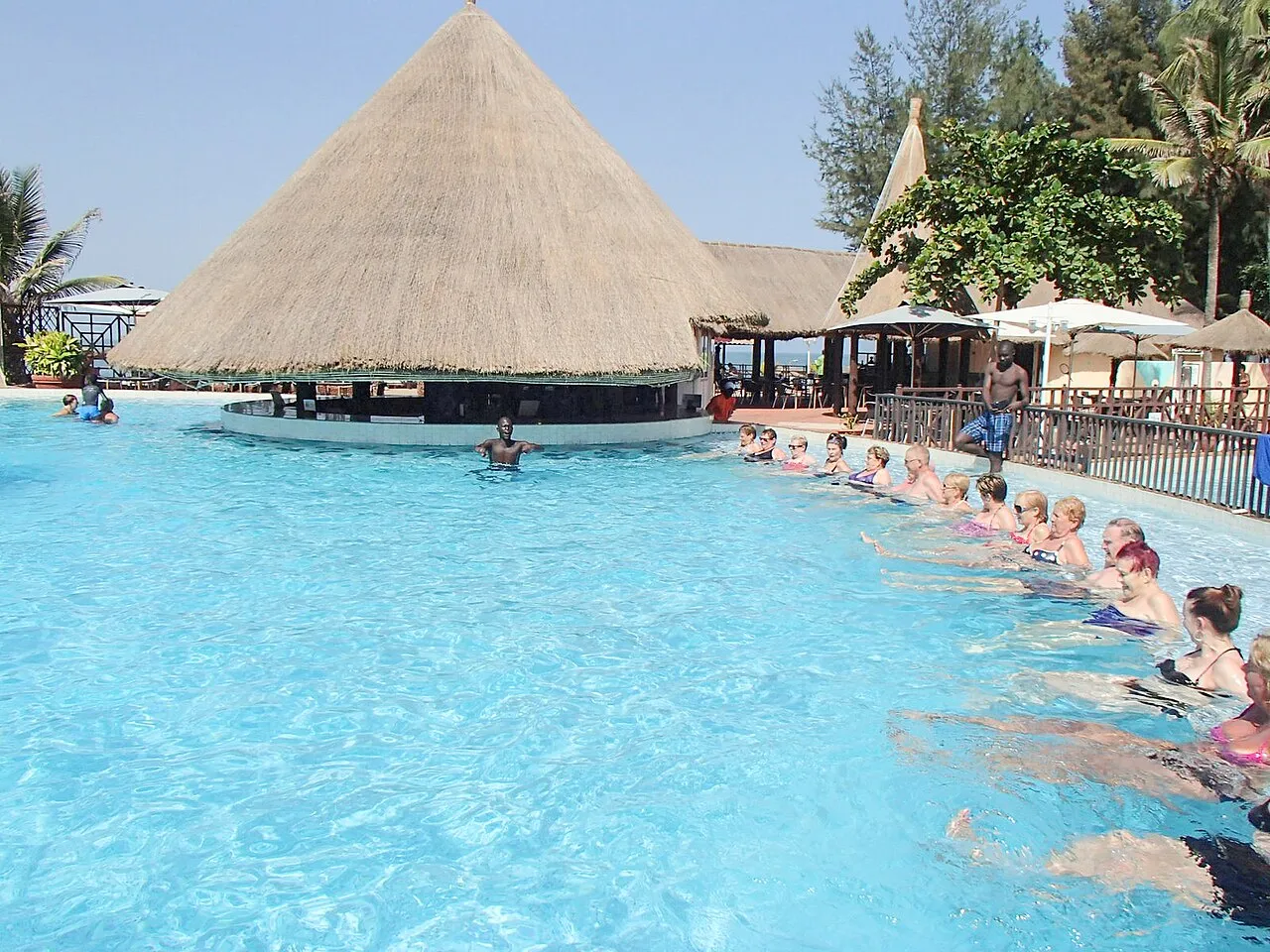
Almost all of the big hotels sit on a 10.5 km stretch of Atlantic coastline1 southwest of Banjul, split across resort areas that run into each other: Bakau, Fajara, Kotu, Kololi (the Senegambia strip) and Bijilo. The government has designated this coastal strip a Tourism Development Area and has courted investment specifically in 4- and 5-star builds, offering land for top-tier hotels at no cost and with minimum bureaucracy. Occupancy swings hard with the weather: hotels run at around 90% full through the cool, dry Northern Hemisphere winter, the main season, and drop to barely 25% the rest of the year as the June–September rains keep most tourists away. Most beds are booked as part of all-inclusive packages sold by tour operators2 rather than independently, which is worth knowing if you plan to book direct instead: you are competing with block bookings, and a quiet-season rate can be considerably softer than a winter one.
Fajara, just inland from the beach, is the exception to the all-inclusive-resort pattern: a quieter, leafier residential area with a good range of smaller hotels and guesthouses at better prices3 alongside some of the country’s better restaurants, for travellers who want to be near the coast without staying inside a resort compound.
Licensing: what makes a place legal to book
Every hotel, guesthouse, lodge or similar lodging in The Gambia needs an operating licence from the Gambia Tourism Board under the GTBoard Act 2011, whether it sits inside the coastal Tourism Development Area or not. The Act’s definition of “hotel” is broad enough to catch guest houses, rest houses, tourist villages and lodging houses, not just conventional hotels, and running one without paying for the licence is an offence carrying a fine of up to GMD 50,000 on conviction. The Tourism Board’s own advice is not to book an unregistered place at all, since you carry the risk of anything that goes wrong4 there yourself; in practice this is easy to avoid, since the mainstream booking platforms mostly list licensed properties.
Guesthouses and budget stays
Serekunda and Bakau, inland from the resort strip, carry most of the budget guesthouses: simple rooms, often with fans rather than air conditioning, at a fraction of a beach hotel’s rate. They are licensed the same way as any hotel under the GTBoard Act above, so the same advice applies: book through a platform or a recommendation, not a tout.
Upcountry: river camps and eco-lodges
Away from the coast, accommodation is built around the Gambia River rather than the beach. Tendaba Camp, around 150 km upriver from Banjul on the south bank near Kiang West National Park, started life as a 1970s hunting lodge and is now a locally run camp with 160 beds5 across standard and riverside rooms, some air-conditioned, plus a pool, bar, restaurant and a Wi-Fi café — a comfortable base for birdwatching and boat trips into the creeks nearby.
Further downriver in Makasutu Forest, Mandina Lodges sits at the other end of the comfort-versus-nature trade-off: nine rooms across four lodge types — one stilted lodge, four floating river lodges, three jungle lodges and one mangrove lodge — built from mahogany with four-poster beds and mosquito nets but deliberately no air conditioning, fridge or Wi-Fi6, run on fans and solar power as a digital-detox stay. Expect composting toilets in the stilted and floating lodges and flushing ones in the jungle and mangrove lodges.
Practical tips
- Book coast hotels for the December–April dry season well ahead; that is also when prices run highest, since it is the only period most hotels fill up.
- A quieter, cheaper stay in Fajara is worth considering over a resort in Kololi or Kotu if you want to be near the beach but outside the busiest strip.
- Ask to see a hotel or guesthouse’s GTBoard licence if you are booking direct and have not heard of the place; a legitimate operator will have no trouble showing it.
- Pack a torch and expect fans rather than air conditioning at most upcountry camps and eco-lodges; mains power is limited away from the coast.
What to check before you go
- Whether your upcountry lodge runs on solar or generator power, and for how many hours a day, if you need to charge devices.
- The cash security and departure tax due on arrival and departure at Banjul airport, in the visa section of the facts box.
- The emergency number and currency are in the facts box.