Nestled in the Menabe region on the western coast of Madagascar, a breathtaking landscape unfolds before your eyes. The sheer beauty of this place is enough to make you feel like you have stepped into a painting, where the sky is a canvas splashed with vibrant colors and the ground is a palette of earthy tones. This is Morondava, a town that invites you to marvel at the awe-inspiring beauty of its natural wonders, specifically the Avenue of the Baobabs.
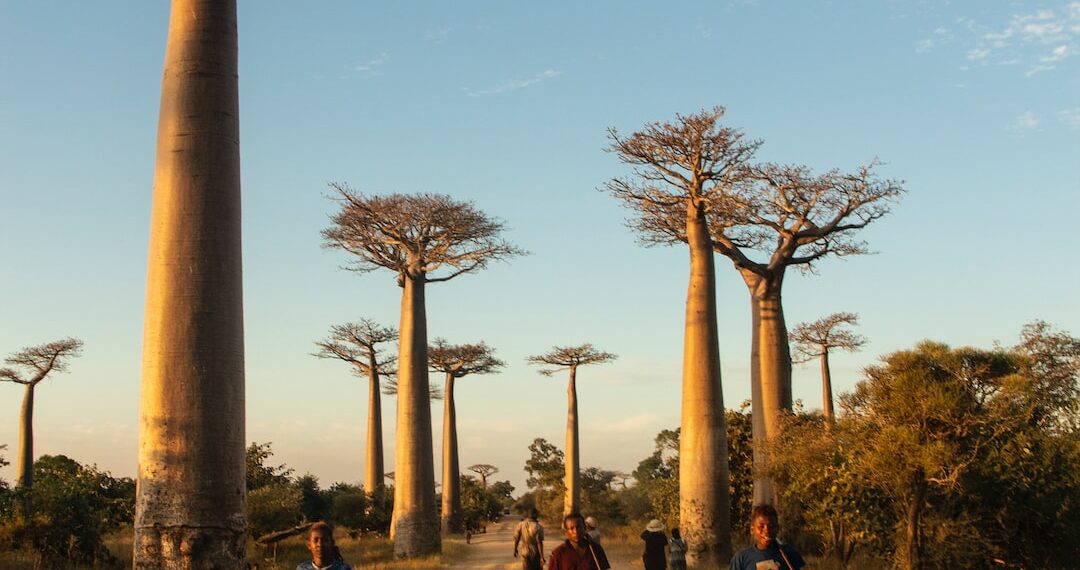
The Avenue of the Baobabs is a captivating dirt road that stretches for about 260 meters (853 feet) and is framed by majestic baobab trees. These giant trees, some of which are over 800 years old, stand tall and proud, reaching heights of up to 30 meters (98 feet). The unique appearance of the baobab trees, with their massive trunks and spindly branches, has earned them the nickname “roots of the sky.” It is no wonder that this stunning avenue is one of the most photographed and visited places in Madagascar.
As you approach the Avenue of the Baobabs, it is hard not to be struck by the grandeur of these ancient trees. The girth of their trunks can span up to 11 meters (36 feet) in diameter, making it impossible for a single person to wrap their arms around one. As you walk along the dirt road, it is easy to feel dwarfed by the towering trees, which cast long shadows on the ground that seem to stretch on for miles. The contrast between the massive trunks and the slender branches that fan out in all directions creates an almost otherworldly atmosphere.
The baobab trees themselves are a testament to the resilience of nature. They have adapted to Madagascar’s harsh climate by storing water in their trunks and dropping their leaves during the dry season to conserve moisture. This incredible adaptation has allowed the baobabs to survive and thrive in their native environment, even through periods of extreme drought. The trees’ ability to withstand such harsh conditions has led to a local belief that they possess a powerful life force, imbuing them with a sense of spiritual significance.
As you continue down the avenue, you may notice that each baobab tree has its own unique shape and character. Some of the trees have smooth, rounded trunks, while others are distinctly angular with protruding roots. The colors of the trunks can also vary, ranging from a soft, silvery grey to a deep, rusty red. The branches of the trees are just as diverse, with some reaching out like delicate tendrils, while others form a tangled mass of gnarled limbs. The combination of these individual characteristics creates a sense of harmony and balance within the avenue, as if each tree is a vital part of a living, breathing organism.
The Avenue of the Baobabs is not merely a visual feast for the eyes; it also offers a sensory experience that engages all of your senses. As you walk along the dirt road, the crunch of the earth beneath your feet echoes through the air, accompanied by the gentle rustling of leaves in the breeze. The scent of the dry, dusty soil mingles with the faint, sweet fragrance of the baobab flowers, creating an aroma that is uniquely Madagascar. And as you run your fingers over the rough, textured bark of the trees, you can almost feel the energy that pulses through their ancient trunks.
During the early morning and late afternoon, the Avenue of the Baobabs is bathed in a warm, golden light that casts a magical glow on the trees. The sunlight filters through the branches, creating intricate patterns of light and shadow on the ground below. As the sun begins to set, the sky is transformed into a masterpiece of vivid hues, ranging from fiery oranges and reds to soft pinks and purples. This kaleidoscope of colors provides a stunning backdrop to the silhouettes of the baobab trees, creating a scene that is truly unforgettable.
The Avenue of the Baobabs is more than just a beautiful landscape; it is also an important part of Madagascar’s cultural heritage. The local people have a deep respect and reverence for the trees, which have played a significant role in their lives for centuries. The baobabs are often used as landmarks, meeting points, and even burial sites for important tribal figures. The trees also have practical uses, as their bark is used to make rope and their fruit is used for food and medicine.
Due to the significance of the Avenue of the Baobabs, efforts have been made to protect and preserve this natural wonder. In 2007, the area surrounding the avenue was declared a protected zone, ensuring that the trees would be safeguarded against deforestation and other threats. Additionally, local communities have been encouraged to participate in conservation efforts, promoting a sense of ownership and responsibility for the protection of the baobabs.
The Avenue of the Baobabs is not only a breathtaking landscape but also a symbol of the enduring spirit of both nature and humanity. It is a place where the ancient trees stand as guardians of time, bearing witness to the centuries that have passed and the countless stories that have unfolded beneath their branches. As you walk along the dirt road, it is impossible not to be moved by the sense of awe and wonder that fills the air, leaving you with a profound appreciation for the beauty and power of the natural world.
In conclusion, the Avenue of the Baobabs in Morondava, Madagascar is a truly remarkable destination that offers visitors a unique and unforgettable experience. The majestic baobab trees that line the dirt road create a breathtaking landscape that is rich in history, culture, and natural beauty. Whether you are a seasoned traveler or a first-time visitor to Madagascar, the Avenue of the Baobabs is a must-see attraction that will undoubtedly leave you with lasting memories and a newfound appreciation for the wonders of our planet.