Contents
Zambia’s sights fall into two groups: Victoria Falls and the Zambezi activities built around it at Livingstone, and a handful of national parks that between them cover walking safaris, canoe safaris and one of the world’s largest mammal migrations. Few visitors see all of it in one trip, so this page sorts the main draws by what kind of experience each one offers.
Victoria Falls and Livingstone
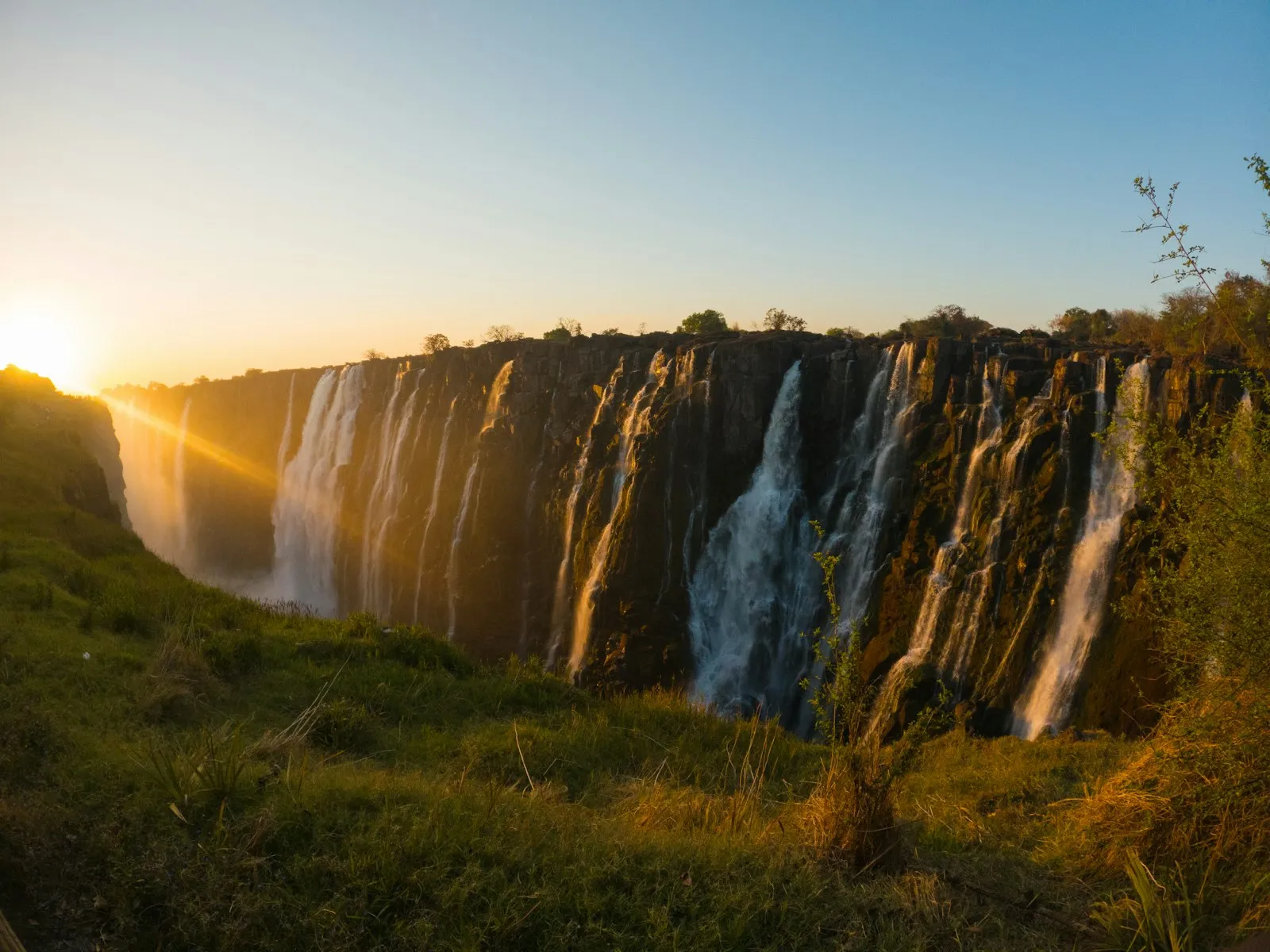
Victoria Falls, where the Zambezi drops into the gorge that forms the border with Zimbabwe, is inscribed as Mosi-oa-Tunya / Victoria Falls on the UNESCO World Heritage List since 19891, shared between the two countries. On the Zambian side, entry is through Mosi-oa-Tunya National Park, where foreign visitors pay USD 10 per person per day2 — the cheapest of the named park entry fees, reflecting that most people come for a single viewpoint walk rather than game viewing. Livingstone, the town next to the falls, is built around the gorge below them: whitewater rafting, bungee jumping and sunset cruises on the river above the falls are the standard add-ons, and most visitors base themselves here for two or three nights rather than just a day trip from Lusaka.
South Luangwa National Park: walking safaris
South Luangwa, in the east, is one of Africa’s classic walking-safari destinations, with a dense concentration of leopards along the Luangwa River. Foreign visitors pay USD 25 per person per day2 to enter — the highest of Zambia’s published park fees, alongside Lower Zambezi — which reflects both the park’s reputation and the cost of running the walking-safari camps inside it. The dry season from roughly July to October is rated the best time to visit, since animals concentrate around the river as other water sources dry up.
Lower Zambezi National Park: canoeing and boat safaris
The Lower Zambezi, downstream from Lusaka on the river’s floodplain, pairs canoeing and boat safaris with conventional game drives, and is one of the few places in Zambia where you can get genuinely close to elephants and hippos from the water rather than a vehicle. It shares the top entry fee of USD 25 per person per day2 with South Luangwa. The park faces Zimbabwe’s Mana Pools across the river, so operators on both banks often combine the two in their marketing even though they are separate parks with separate entry fees.
Kafue National Park: Zambia’s largest wilderness
Kafue, in the centre-west, covers about 22,400 km²3, making it Zambia’s largest national park and one of the largest in Africa — yet it sees far fewer visitors than its size would suggest, which is itself part of the appeal if you want a safari without other vehicles around. Entry costs USD 20 per person per day2 for foreign visitors. Its size means camps cluster in a few distinct areas rather than covering the whole park, so it is worth checking which part of Kafue a lodge actually sits in before booking.
Kasanka National Park: the bat migration
Kasanka, a small park in the north, is built around a single annual event: between November and December each year, an estimated 8 to 10 million straw-coloured fruit bats4 gather in the park’s Mushitu swamp forest, widely described as one of the largest mammal migrations on earth by sheer numbers. Entry is USD 10 per person per day2, among the cheapest of the named parks. Outside the migration window the park is a quiet, low-key wildlife stop rather than a big-game destination, so timing a visit to November or December matters here more than at any of Zambia’s other parks.
Practical tips
- Book South Luangwa and Lower Zambezi camps well ahead for the July-to-October dry season, when wildlife viewing is best and demand is highest.
- Only visit Kasanka for the bat migration in a November-to-December window; outside those months there is little reason to prioritise it over Zambia’s bigger parks.
- Confirm entry fees at the gate before you travel: the figures above come from an independent travel portal rather than the Department of National Parks and Wildlife itself, which publishes no machine-readable tariff.
- Combine Victoria Falls with a safari park by light aircraft rather than road — the distances between them are long by car.
What to check before you go
- The current national park entry tariff for the parks on your itinerary, confirmed with DNPW or at the gate, since the figures on this page come from zambiatourism.com rather than the regulator.
- Camp and lodge availability for South Luangwa and Lower Zambezi in the dry season, which books up months ahead.
- The exact bat migration timing for the season you’re travelling, since the window shifts slightly year to year around the stated November-to-December peak.