Why go
Despite its place in this guide’s Banjul section, Kachikally is not in the capital at all: it stands in the old town of Bakau, in Kanifing Municipality, a short trip up the coast from Banjul. It is one of three sacred crocodile pools in the Gambia1, alongside Folonko and Berending, and is kept by a family rather than by any government body. According to the National Centre for Arts and Culture, the pool is a fertility shrine: women come to it for help conceiving, men to reverse bad luck in business, parents to ask protection for children going through circumcision, and wrestlers to ask for victory. Ousman Bojang, the pool’s current custodian, describes its purpose as bringing peace to the people who visit it2.
The Bojang family1, among Bakau’s founding settlers, still owns and runs the site. Family legend holds that ancestor Ncooping Bojang, one of Bakau’s first settlers, sent his two sons, Tambaasi and Jaali, to help a woman retrieve her child from the well2; she then revealed the rescue had been a test of character, explained that the well’s water had been made to ease child-bearing, and identified herself as the spirit Katchikally before granting the well to the family. That spirit’s name is where the pool gets its own.
What you will see
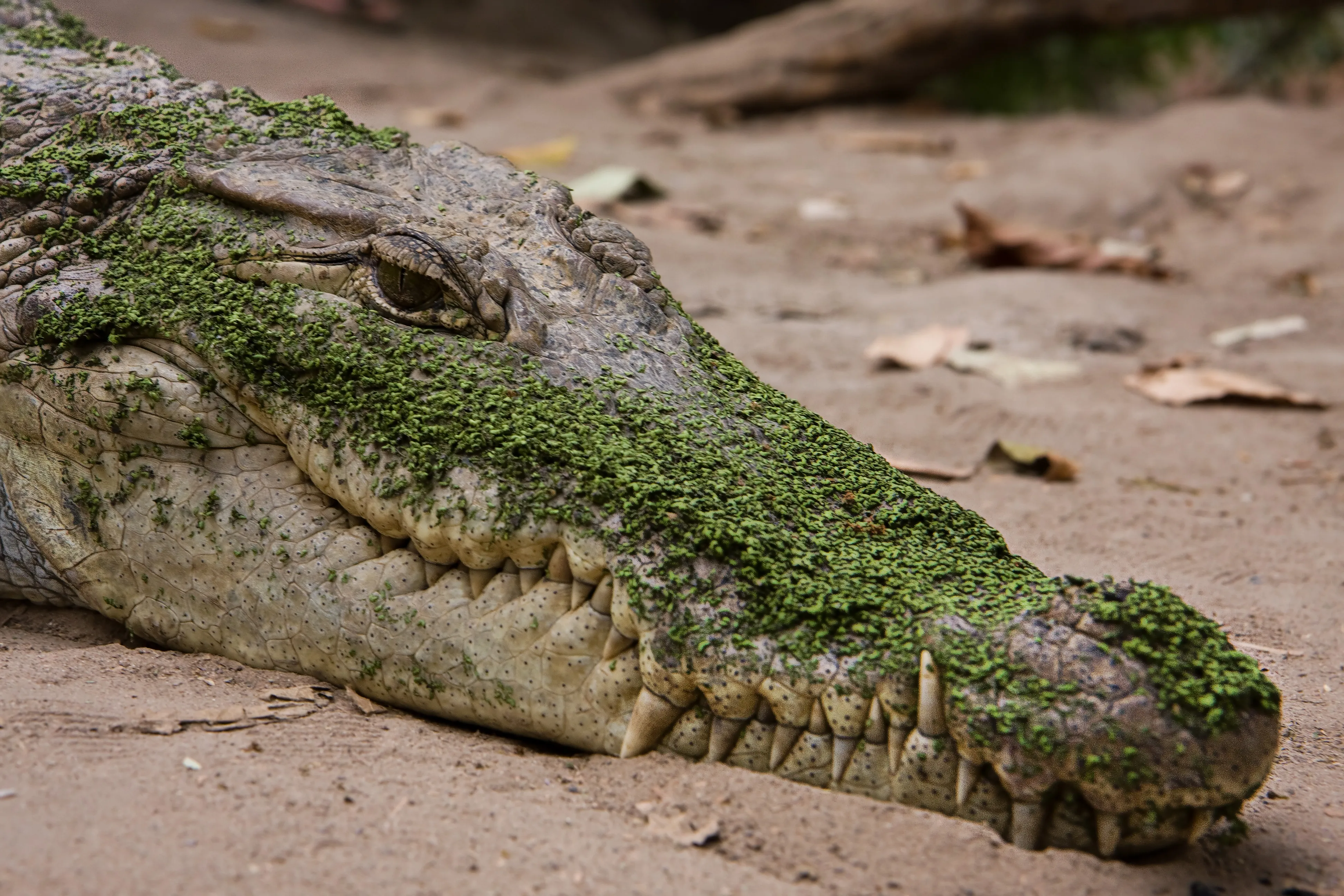
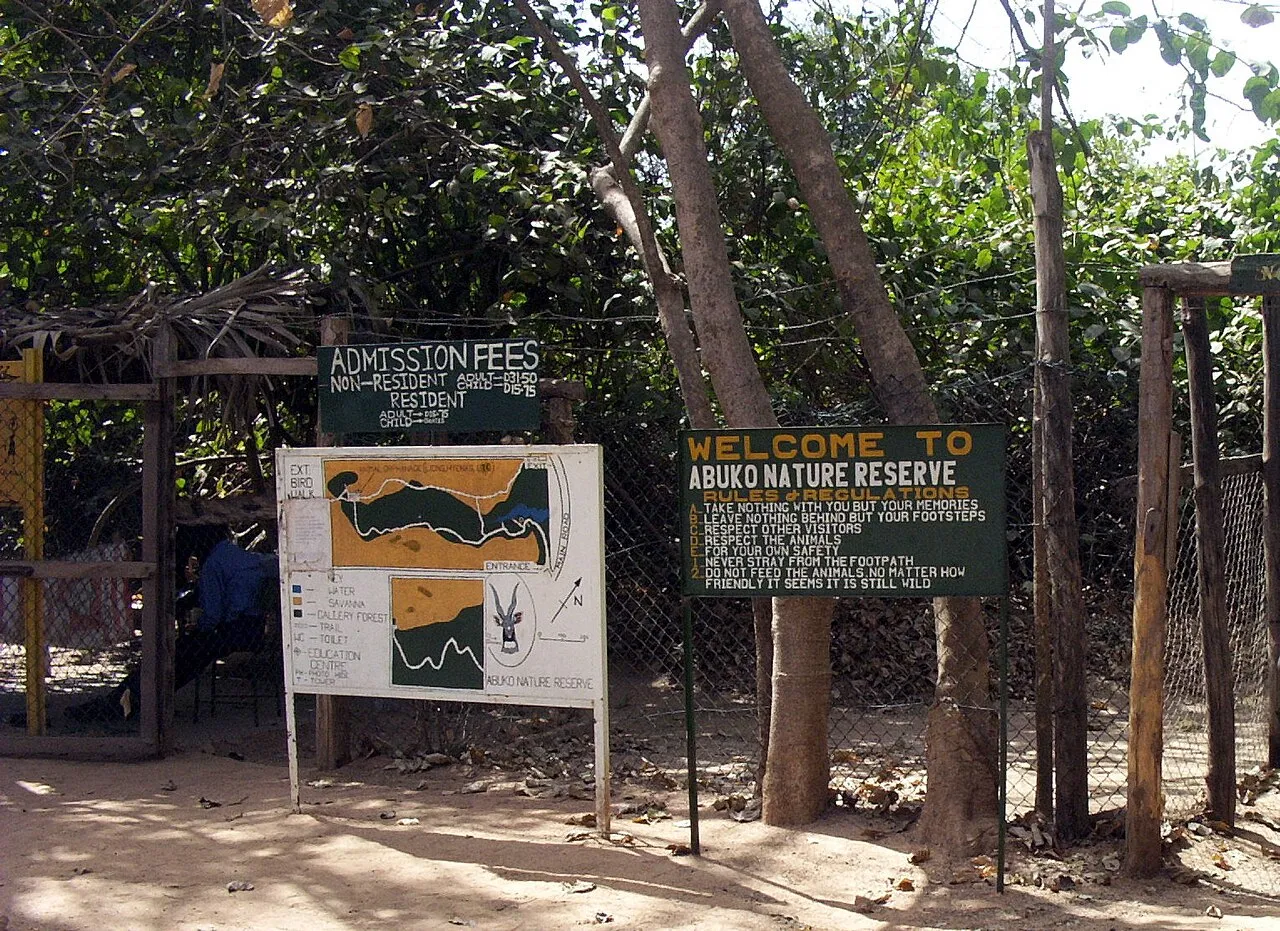
The pool is fed by springs and covered in water lettuce, small and green rather than the open lake some visitors expect. The family’s own account says the crocodiles have multiplied from an original two to over forty; Wikipedia gives a higher estimate of around 80, so treat either figure as approximate rather than a current headcount. For years they were thought to be Nile crocodiles, but research now identifies them as West African crocodiles (Crocodylus suchus), a species generally considered calmer around people than the Nile crocodile at Abuko Nature Reserve3 further down the coast. The animals are not caged and are allowed to roam the pool and its banks freely, and visitors are routinely allowed to approach and touch them under a guide’s supervision; some of the resident crocodiles are albino1, and young crocodiles are sometimes washed out of the pool during the rainy season2.
The site’s full name, Kachikally Museum and Crocodile Pool1, points to a museum on the grounds, but neither Wikipedia nor the NCAC publish what it displays; treat it as a small addition to the pool rather than the main reason to visit.
Visiting
No official source publishes current opening hours or an admission fee for Kachikally, so check with your driver, guide or hotel before planning your visit around a particular time, and bring small-denomination dalasi in cash. The ritual side of the site is still active, not staged for tourists: supplicants bring kola nuts as an offering, and an elder blesses pool water before ritually washing the person seeking help, a ceremony that ends with drumming and dancing. Participants are expected to abstain from behaviour such as adultery, and are asked to return to the pool once their wish has been granted2. The culture guide is worth reading before a visit, so a ceremony in progress is not mistaken for a show.
Getting there
Kachikally sits in Bakau’s old town, on the Kombo Saint Mary peninsula a short taxi ride from central Banjul; the getting around guide covers fares and routes from the coast hotels. Banjul International Airport4, south of the city on the mainland, is the arrival point for almost every visitor heading this way.
Nearby
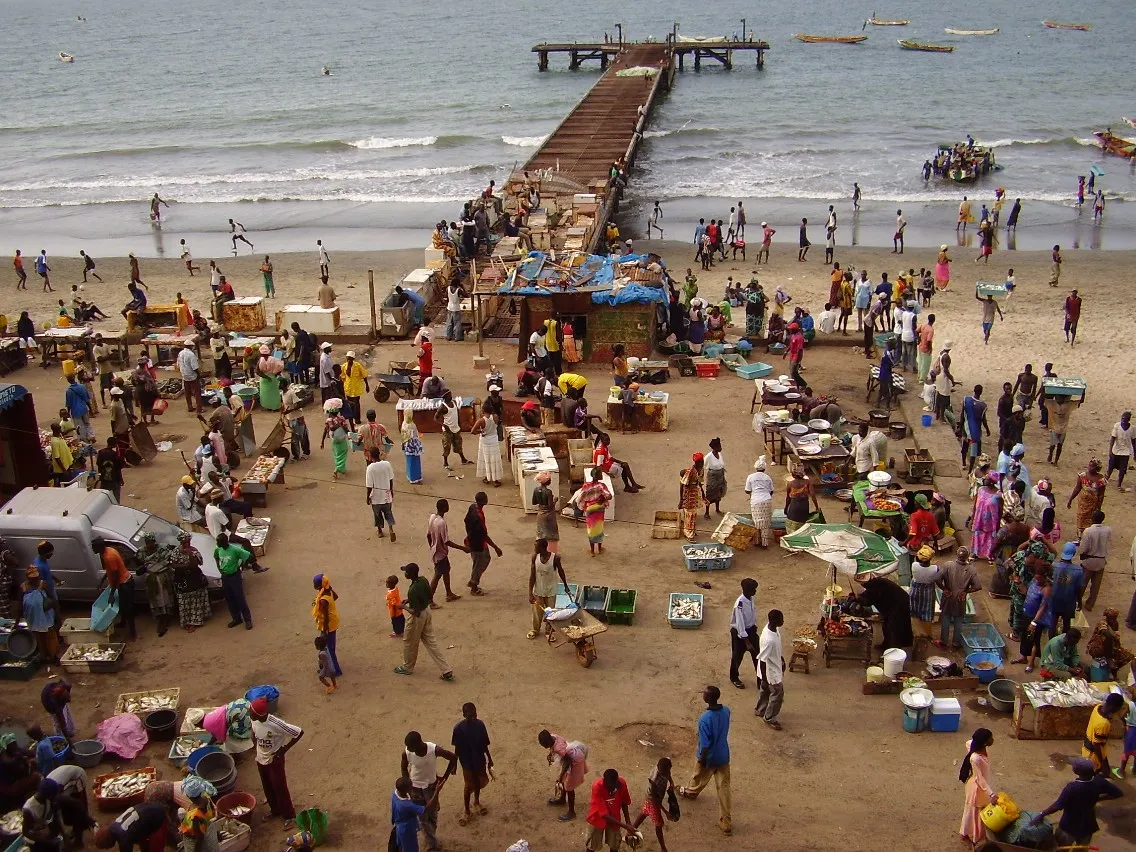
Bakau’s fishing wharf and its Botanical Gardens are both an easy walk from the pool, and together make a natural half-day with Kachikally; the Bakau page covers the rest of the town, including the beaches at Cape Point. For the Nile crocodiles that Kachikally’s are often confused with, Abuko Nature Reserve lies further south along the coast road.
_Z1NDVrE.webp)