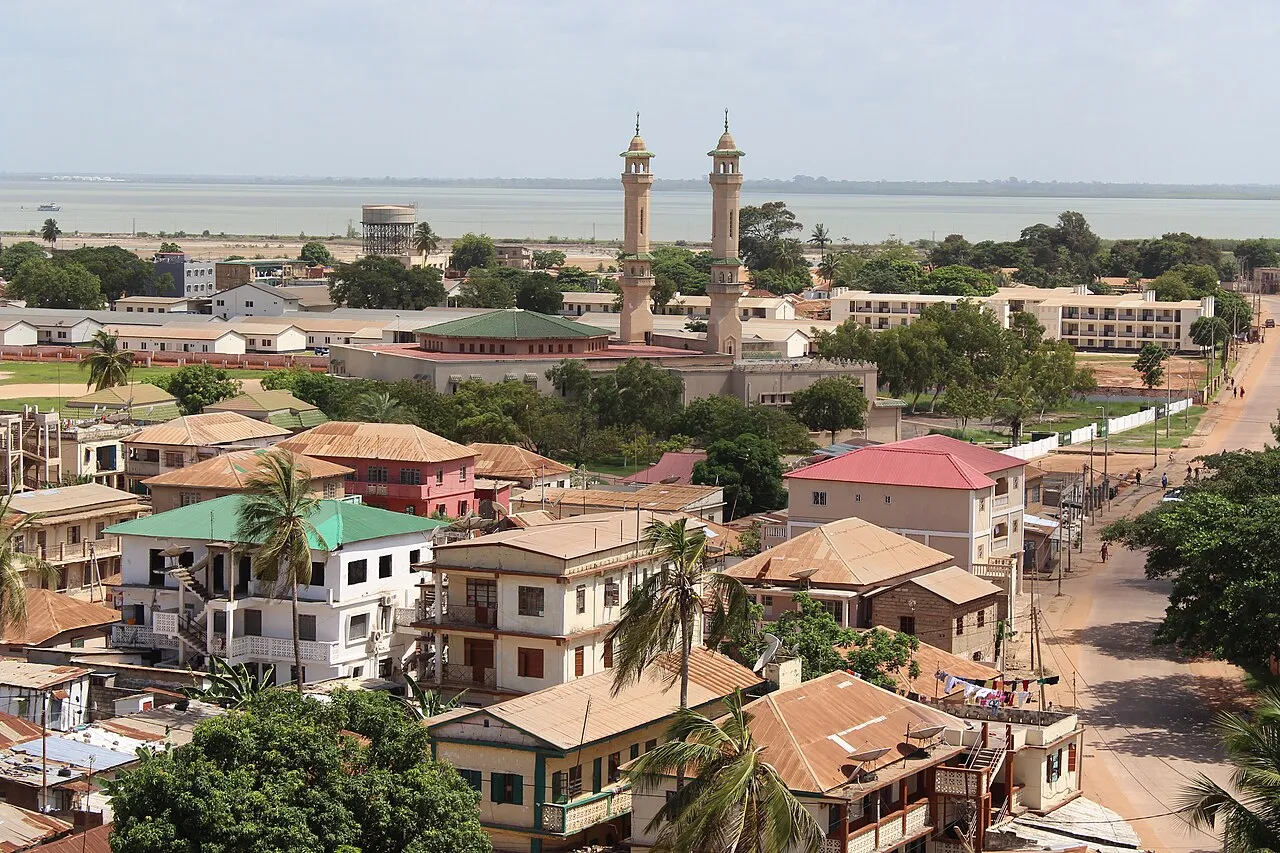
Banjul sits on St Mary’s Island at the mouth of the Gambia River, and it is a small, quiet capital rather than a resort base: the 2024 census counted just 26,461 people1 living there, a figure that has been falling for decades as residents move to the mainland suburbs of Kanifing and Serrekunda. Most visitors see it on a half-day trip from the coast hotels rather than stay the night, taking in the market, the colonial-era streets and the ceremonial arch that marks the entrance to the city. The best window for a visit is the dry, cooler run from December through February, the driest and mildest months at the Banjul weather station itself; the weather guide has the rest of the year.
Getting oriented
The old city is laid out on a simple colonial grid on the western side of the island, with Independence Drive running from Arch 22 down towards the river and the old quay. Albert Market, Banjul’s main market, sits just off this axis and is the busiest part of the city on a weekday morning. The rest of the island is mostly residential and low-lying, and much of Greater Banjul’s modern growth and its airport have shifted to the mainland, reached by the bridges and causeways at the island’s southern end.
Highlights
Arch 22
The triumphal arch at the entrance to the city marks a change of government and now serves as Banjul’s unofficial gateway and a viewing point over the rooftops towards the river.
Albert Market
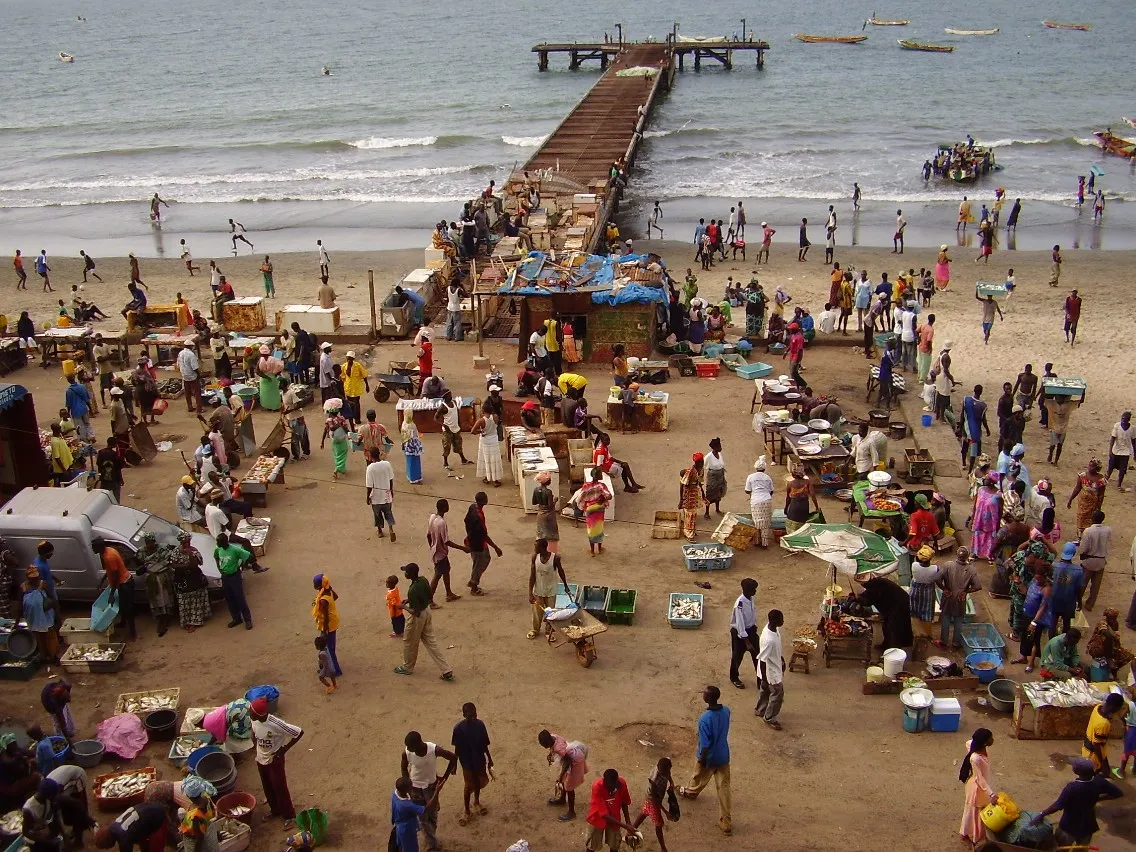
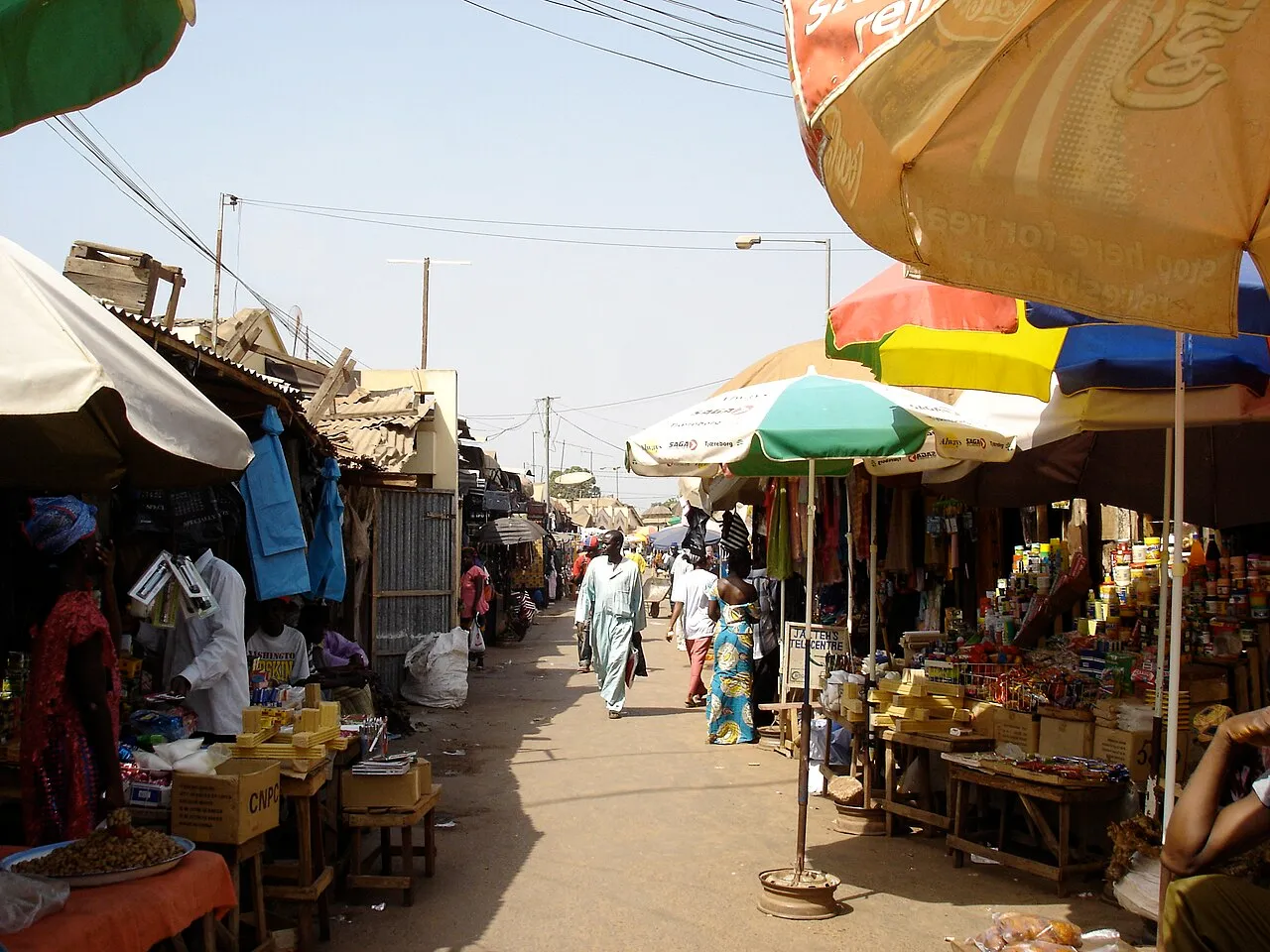
Banjul’s central market spreads over several blocks of narrow lanes near the old quay, trading everything from fabric and tailoring to fish and produce, and it is the easiest place in the city to see everyday Gambian trade up close.
The colonial quarter
The streets around Independence Drive and the waterfront keep a scatter of timber-framed colonial buildings, the State House and the old government offices among them, a reminder that Banjul was built as a 19th-century British trading post before Gambia’s modern growth moved to the mainland.
King Fahad Mosque
Visible across the water on the city’s skyline, the mosque is one of Banjul’s landmarks and a useful orientation point when arriving by the Banjul–Barra ferry or from the bridges to the south.
Getting around
Banjul’s old city is compact enough to walk in an afternoon. Shared taxis and minibuses link the city to the mainland suburbs and on to the resort strip around Kotu and Senegambia; the transport guide has routes and fares. Nearly every visitor arrives through Banjul International Airport2, which despite its name sits at Yundum on the mainland, a drive from the city itself rather than on the island.
Where to stay by area
Banjul itself has little tourist accommodation: almost everyone staying in the Gambia bases themselves on the coast strip south of the city, around Bakau, Fajara, Kotu and Senegambia, and visits Banjul as a day trip. The where-to-stay guide covers that strip in full.
Day trips
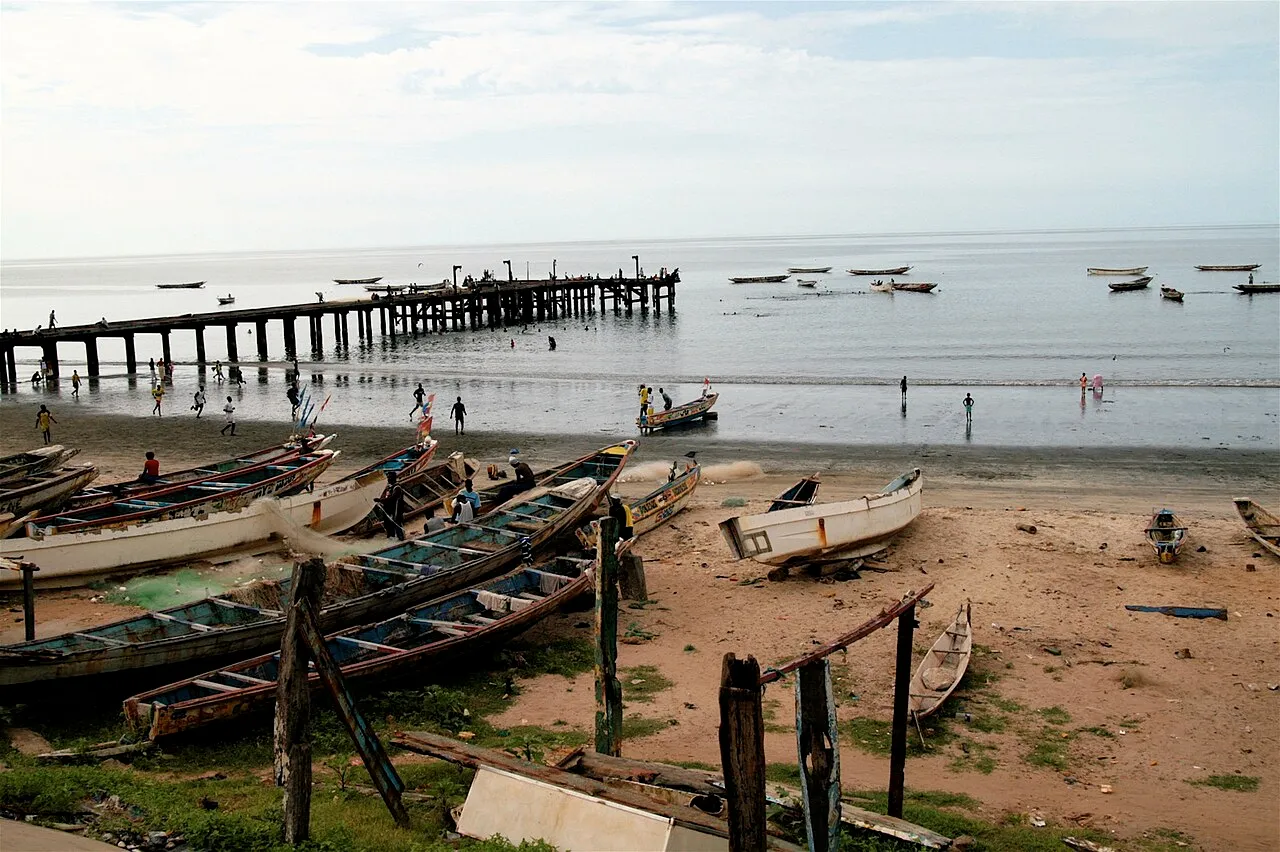
Bakau, the coast’s oldest suburb, is a short run south for its crocodile pool and fishing wharf, and makes an easy add-on to a half-day in Banjul. Travellers heading north across the river can take the Banjul–Barra ferry, though upcountry traffic increasingly prefers the Senegambia Bridge3 near Farafenni instead. The Gambia overview has the rest of the regions.
_Z1NDVrE.webp)