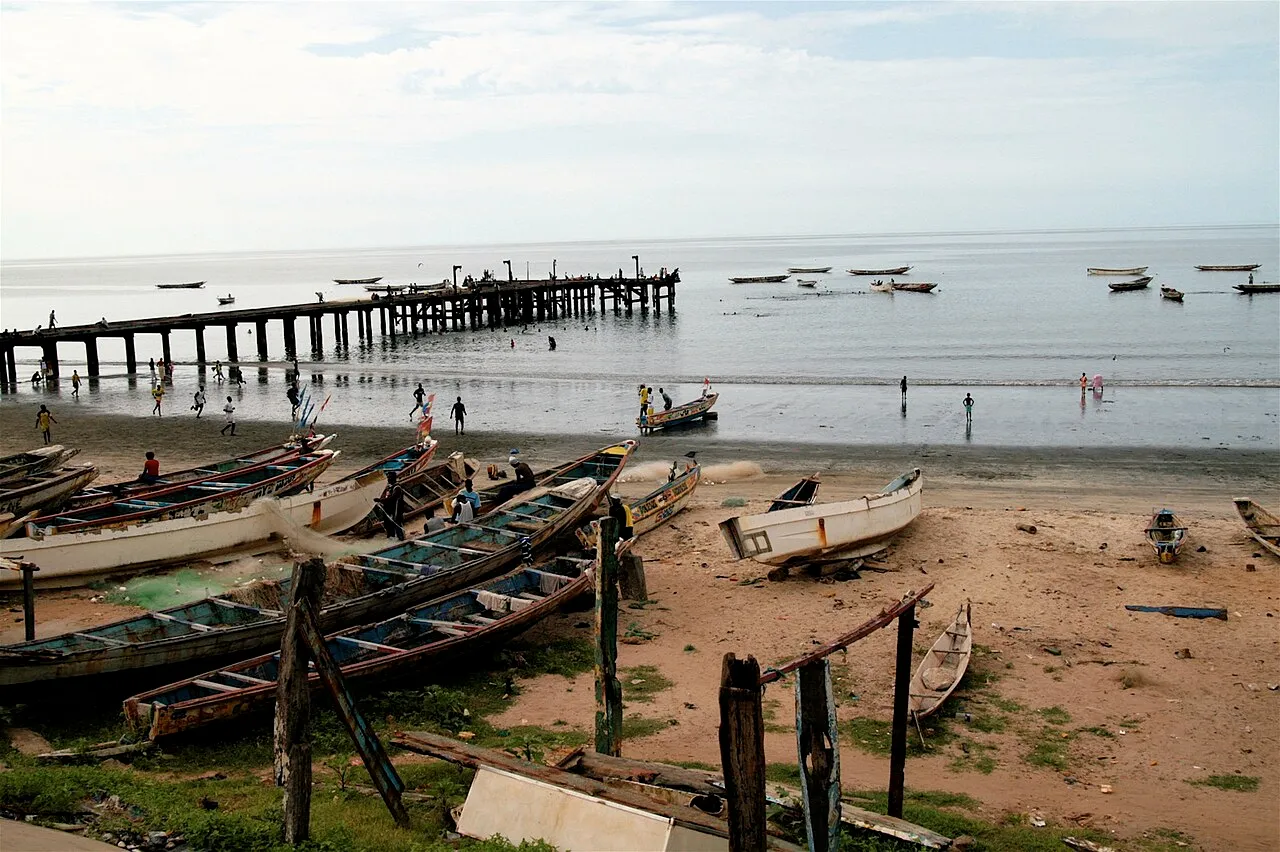
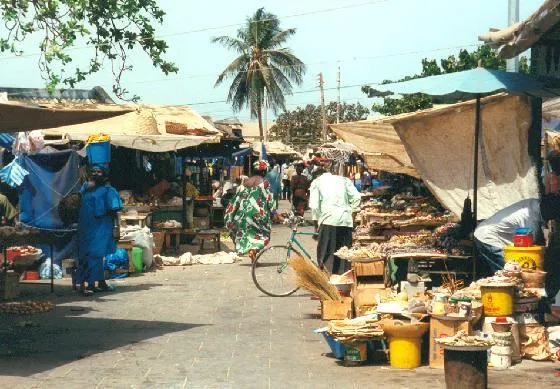
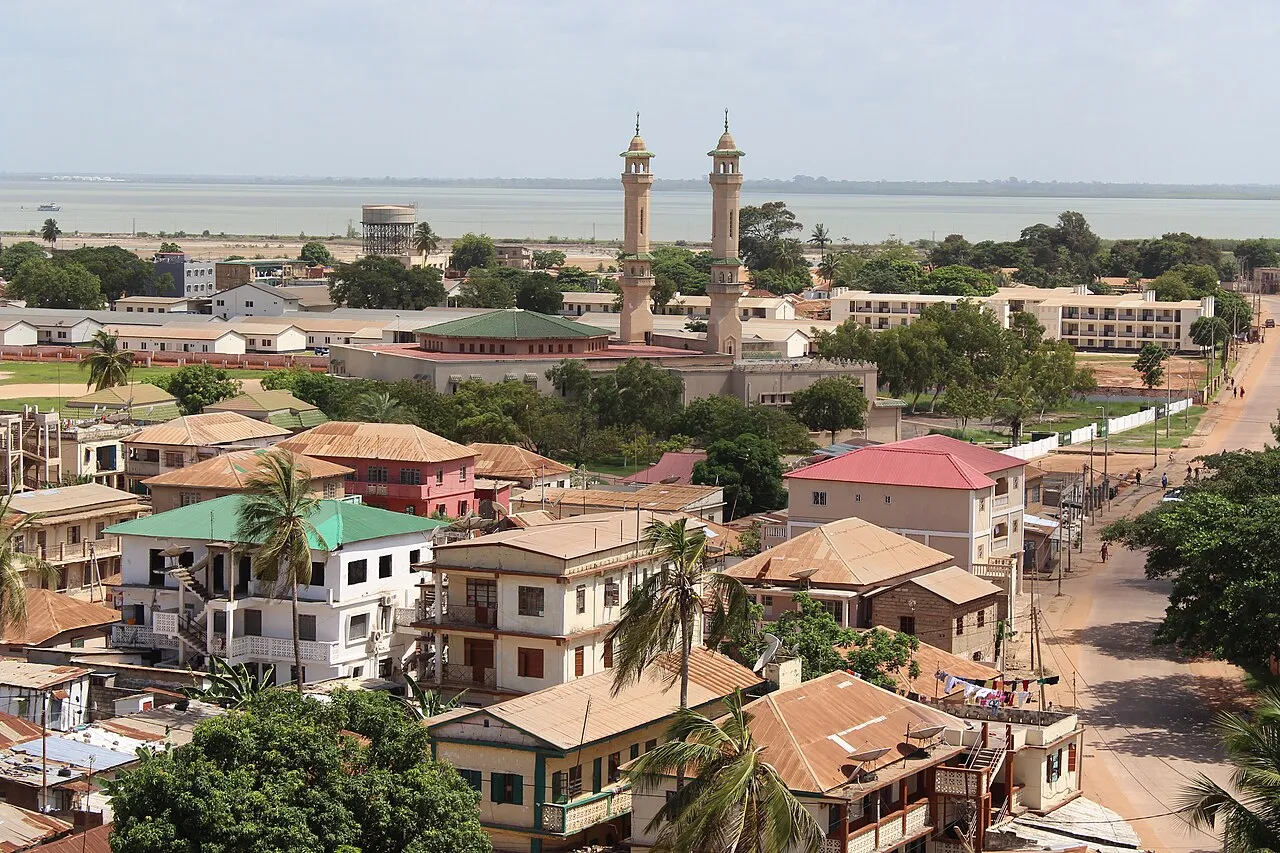
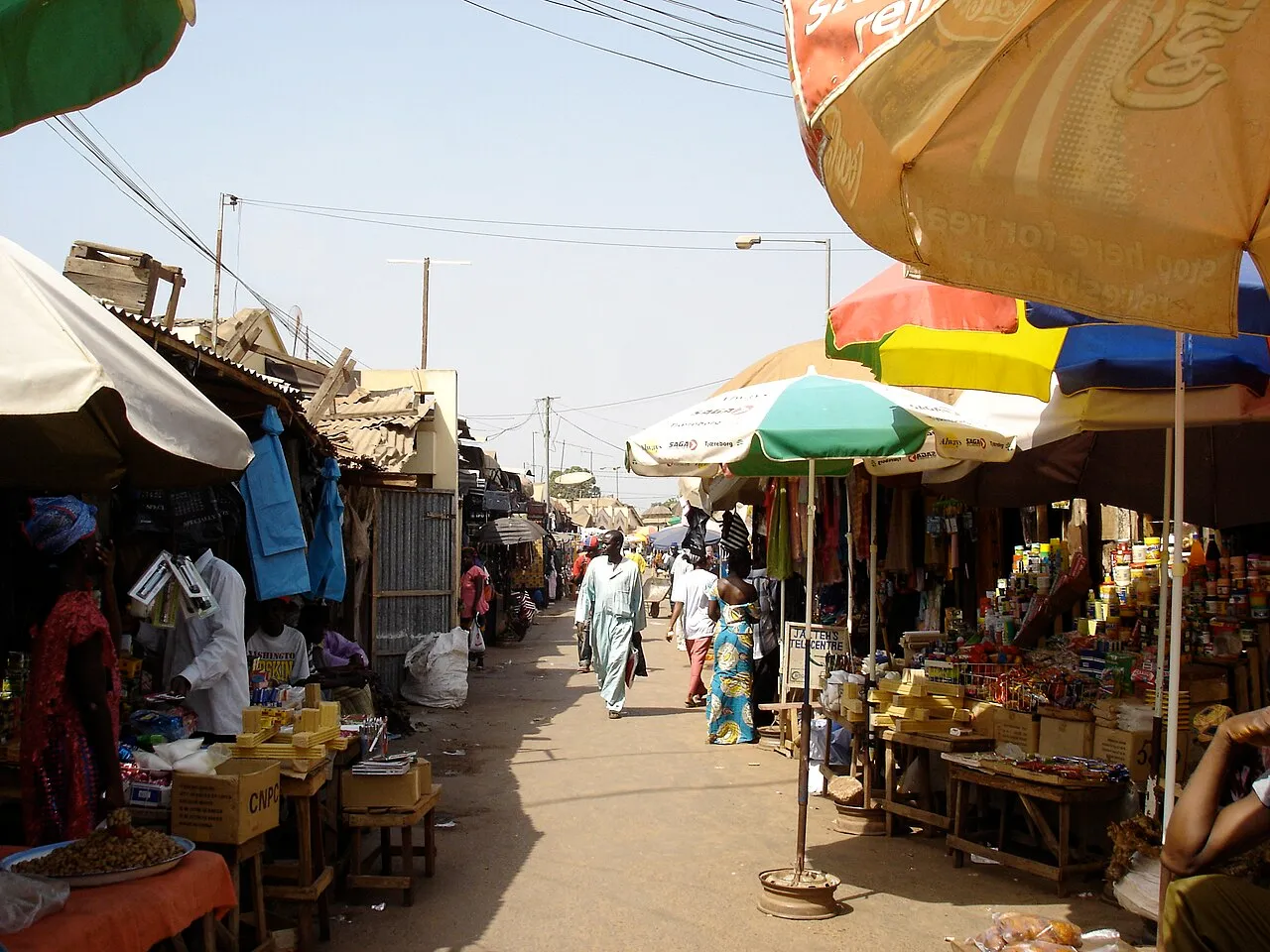
Bakau grew up around a sacred crocodile pool, west of Banjul, and it is now the capital’s oldest and most developed suburb, the first stop for most visitors on the coast. Colonial-era administrators built seaside residences here, and the town later spread into the planned neighbourhoods of Fajara and Cape Point, which is why Bakau reads as older and greener than the purpose-built resort strip further south around Kotu and Senegambia. It still earns its living from the Atlantic: a working fishing wharf sits below the old town, and the market by the main road is known for its fruit and vegetables1. The best window for a visit is the dry, cooler run from December through February; the weather guide has the rest of the year.
Getting oriented
The old town, Bakau Wasulun, sits closest to the coast and the wharf, with the newer New Town spreading inland along the main road to Banjul. Atlantic Boulevard runs along the shore past the Botanical Gardens, and this is also where Bakau’s embassies and Radio Gambia’s studios1 are concentrated, a legacy of the colonial and early-independence years when the town was the smart address outside the capital. Fajara and Cape Point, Bakau’s own planned extensions, continue the coast road south towards the main resort strip.
Highlights
Katchikally Crocodile Pool
Legend has it that Bakau itself grew up around this holy crocodile pool1, now kept as a small museum and pool where Nile crocodiles live alongside visitors on short paths around the water. It is an easy stop on foot from the old town.
The fishing wharf
Below the old town, Bakau’s wharf is a working harbour rather than a show for tourists: pirogues come in with the day’s catch and go straight to smoking racks and the fish sellers on the beach. Watching the catch come ashore here is the closest look you’ll get at Gambian fishing, and it’s why the market has its reputation for fresh produce.
Botanical Gardens and Atlantic Boulevard
Atlantic Boulevard, the coast road through Bakau, runs past the Botanical Gardens1, a quiet, shaded stretch that is as much a local park as a sightseeing stop, and a pleasant walk between the old town and the beach.
Cape Point
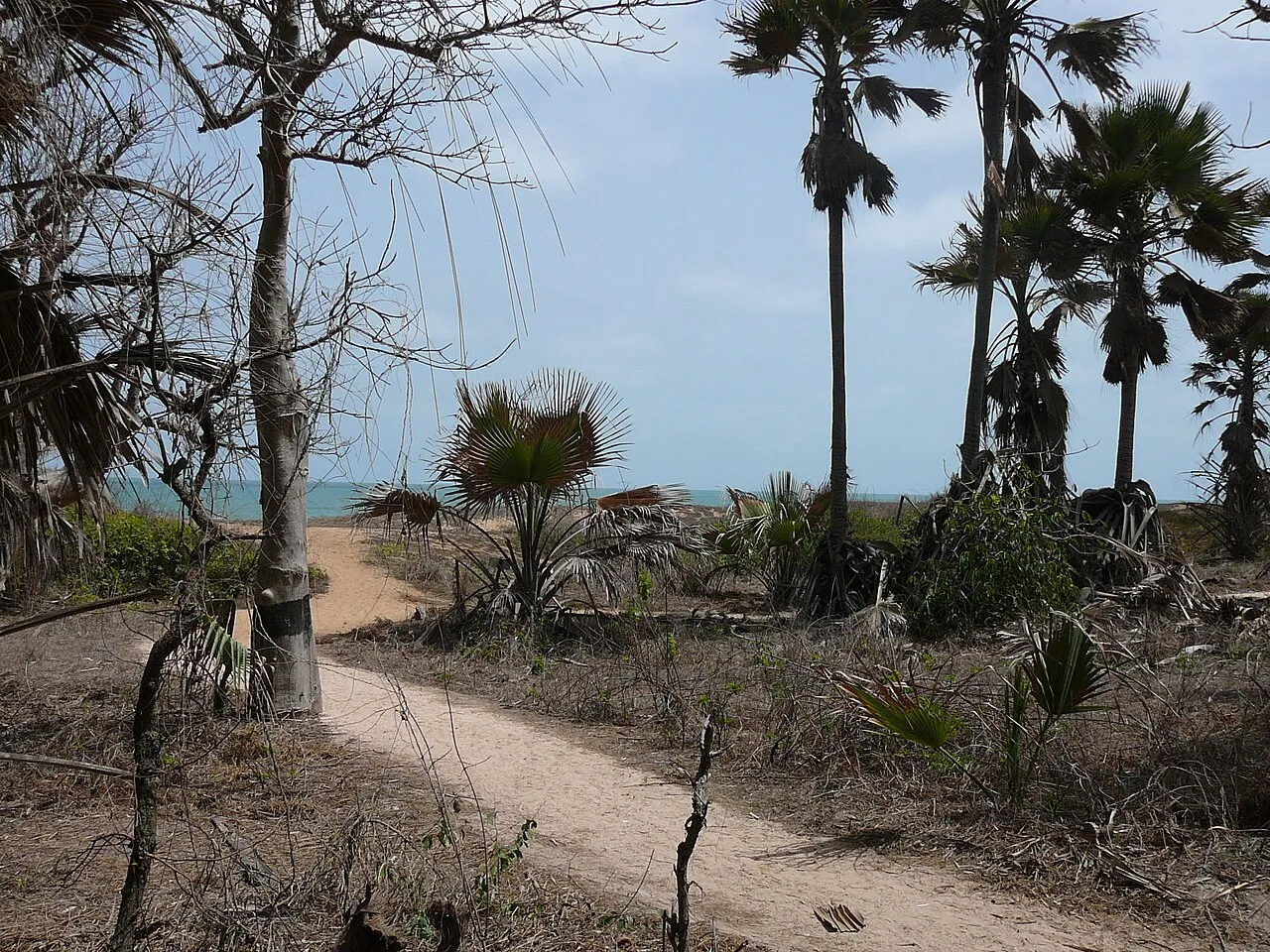
At Bakau’s northern tip, Cape Point has a few hotels on its beach1, which is quieter than the resort strip further south, with the planned residential district of the same name behind it.
Getting around
Bakau’s old town and wharf are walkable, and shared bush taxis and the minibuses known as gelly-gellys run the short hop along the coast road to Fajara, Cape Point, Kotu and on to Serekunda; the transport guide has routes and fares. Banjul International Airport2 is the arrival point for almost every visitor and sits a short drive south of town.
Where to stay by area
The old town, near the wharf and Katchikally, puts you closest to Bakau’s own sights and within walking distance of the market, at the cost of being a taxi ride from the beach hotels further south. Fajara and Cape Point, Bakau’s quieter planned suburbs, suit a stay that wants greenery and the embassy-district calm over nightlife, with the coast road making Atlantic Boulevard and the beach an easy walk. For the resort strip itself, with its concentration of hotels, restaurants and nightlife, see the where-to-stay guide.
Day trips
Banjul, the small capital at the mouth of the river, is a short run away for its market and colonial-era streets, best treated as a half-day out rather than a base. South along the coast, Kotu and Serekunda pick up where Bakau’s own sights leave off, with the bulk of the country’s beach hotels and its busiest commercial centre. The Gambia overview has the rest of the regions.
_Z1NDVrE.webp)