Why go
Everyone calls it Monkey Park, and that nickname is the whole pitch: a fenced strip of coastal forest where four primate species live close enough to the path that you do not need luck to see them. The Gambia’s Department of Parks and Wildlife Management gazetted the site in 1952, but it only opened as a walking trail to visitors in 1991. It has shrunk a little since: construction of the Sir Dawda Kairaba Jawara International Conference Center cost the park part of its protected area in 2018. What is left still covers 51.3 hectares and draws over 23,000 visitors a year1, modest numbers that keep it feeling uncrowded next to the busier beach resorts a short walk away.
What you will see
A 4.5-kilometre nature trail loops through the park’s closed-canopy forest, coastal scrubland and sand dunes, with a separate ornithological path through scrubland nearer the beach for anyone who wants to slow down and watch birds rather than walk through. Benches, signage and a viewing platform sit along the main route, and a small pond1 kept as a watering hole is one of the more reliable spots to see animals pause in the open.
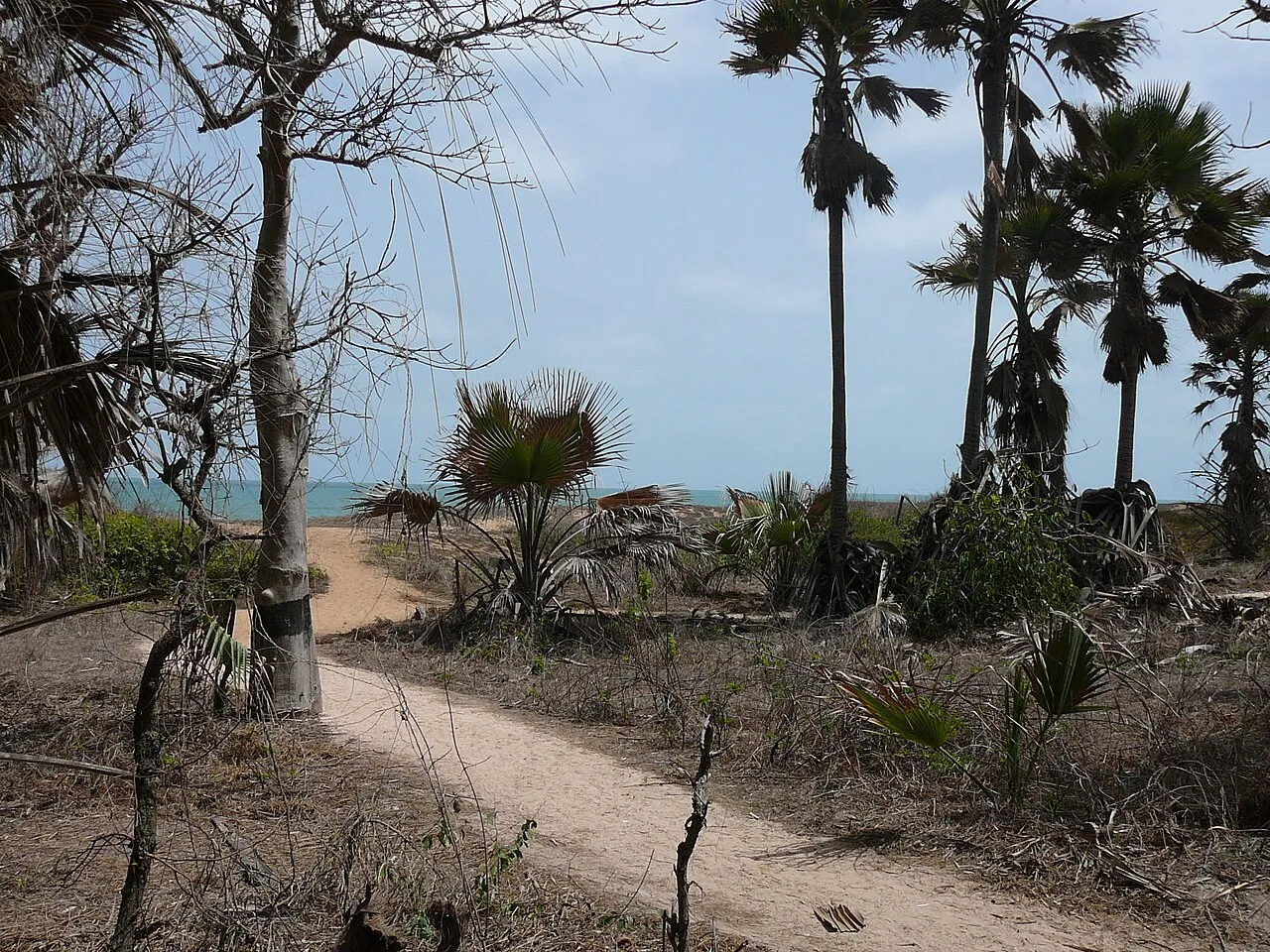
The forest canopy is thick with Borassus aethiopum rhun palms, the same tall fan palms pictured on this page, alongside silk cotton and baobab trees. Four monkey species share that canopy and the ground beneath it: green monkeys, Temminck’s red colobus, Campbell’s mona monkeys and patas monkeys, plus the nocturnal Senegal bushbaby for anyone visiting at dusk. Sun squirrels, African civets, genets, mongooses and brush-tailed porcupines move through the undergrowth, and monitor and agama lizards sun themselves along the trail. Birdwatchers have logged over 133 species1 here, from hornbills and sunbirds to migratory ospreys and Caspian terns drawn in by the coastal end of the park.
Visiting
No official source publishes a current admission fee or opening hours for Bijilo Forest Park, so this page does not quote figures it cannot confirm. Expect a small cash entrance fee paid at the gate, as at every Gambian protected area, and plan your visit for the morning: the monkeys and birds are more active before the midday heat sets in, and the trail offers little shade in the open scrubland sections. Do not feed the monkeys: it is the one rule every source on the park repeats, since fed animals lose their natural wariness and start approaching visitors for food.
Getting there
The park sits on the coast near Kotu and the Senegambia strip, close enough to walk from several beach hotels in that stretch and an easy taxi ride from anywhere in Serekunda. There is no need to book: you buy entry at the gate and can start the trail straight away.
Nearby
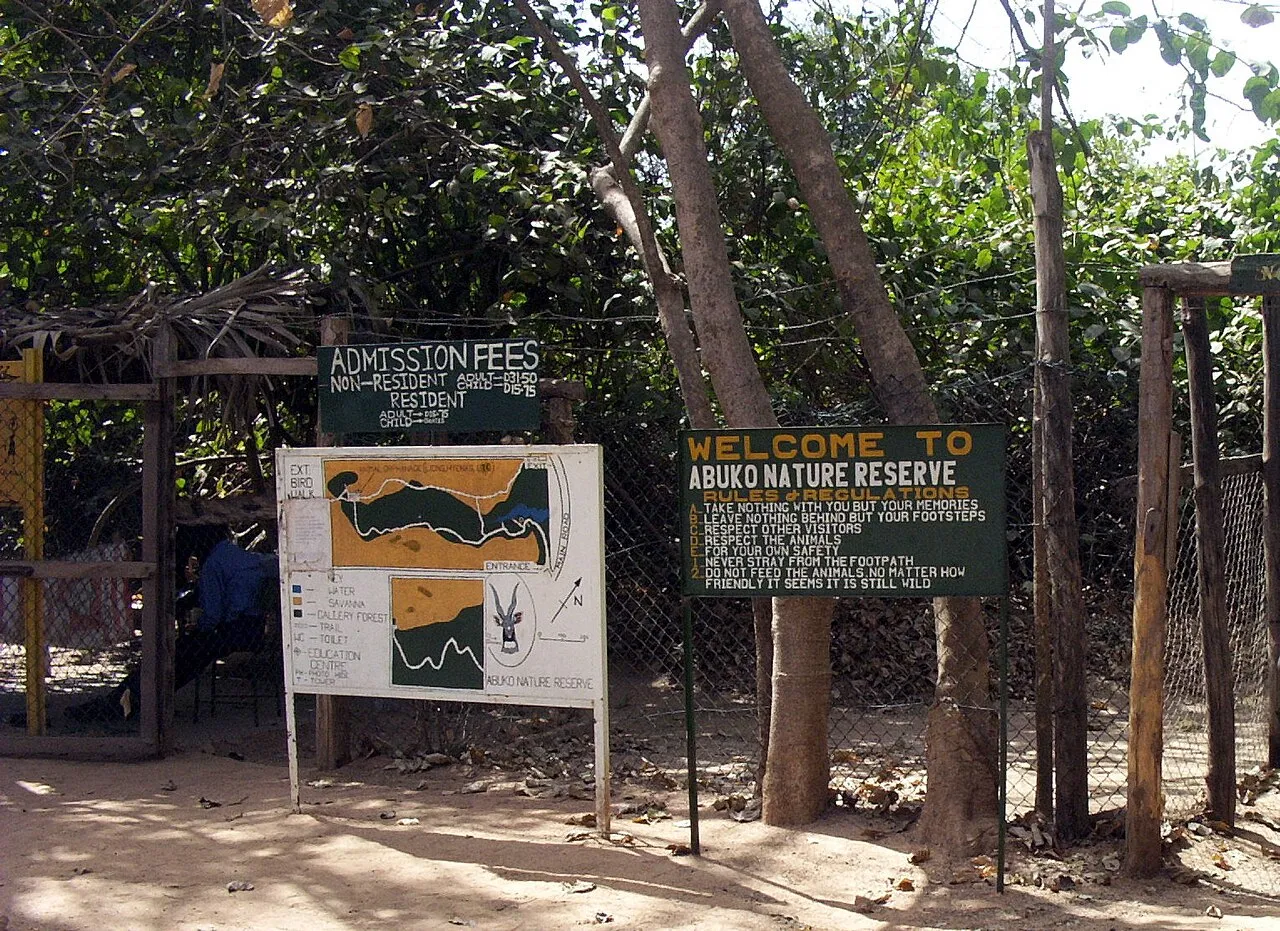
Kotu and its beach are a short walk north along the coast, and the Senegambia strip’s hotels and restaurants sit right next to the park, making it an easy add-on to a beach day. For more wildlife, Abuko Nature Reserve inland from Serekunda covers a wider range of habitat and adds crocodiles to the species list. The Serekunda page covers the wider town, and the Gambia overview the rest of the country’s regions.