Contents
Zimbabwe’s culture is overwhelmingly Shona and Ndebele, Christian in its public life and still deeply rooted in rural tradition, which shows up everywhere from the greeting you get on a street corner to the dance performed at a wedding. None of this requires planning around — but recognising it makes a trip easier to read, and a few small habits of respect go a long way with people who are otherwise relaxed and welcoming to visitors.
People and religion
Zimbabwe’s population is close to ethnically homogeneous: the 2022 census put Black African residents at 99.6%, with the Shona and Northern Ndebele together making up about 95% of the population. Shona speakers are the majority nationwide; Ndebele speakers are concentrated around Bulawayo and the south-west, which is one reason Bulawayo feels culturally distinct from Harare. On religion, survey data puts Christians at 84.1% of the population, split between Protestant and other Christian denominations, with 4.5% following traditional faiths and a further 10.2% reporting no religion1. In practice the two overlap more than the numbers suggest: church attendance is high, but belief in ancestral spirits, traditional healers (n’angas) and rainmaking ceremonies persists alongside it, especially in rural areas.
Music, dance and the Mbende tradition
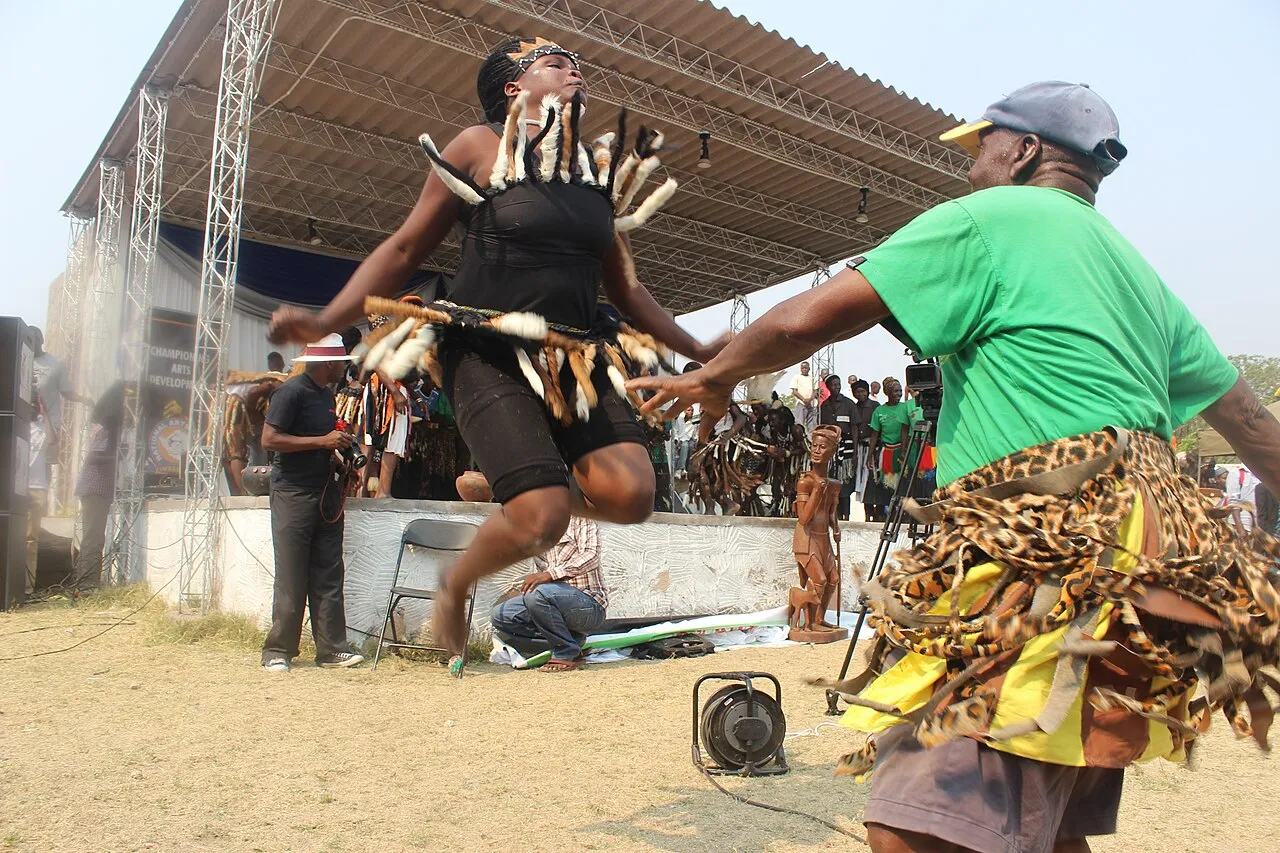
The clearest example of that overlap is the Mbende, also known as Jerusarema, a dance of the Zezuru Shona people from the Murehwa and Uzumba-Maramba-Pfungwe districts east of Harare. It began as a fertility dance — mbende means “mole” in Shona, and the dancers’ crouched, jerking movements imitate the animal burrowing — and missionaries renamed it “Jerusarema” to give it a veneer of biblical respectability. UNESCO inscribed it on the Representative List of the Intangible Cultural Heritage of Humanity in 20082, citing its single master drummer, woodblock clappers, handclapping and yodelling rather than the elaborate footwork found in other regional dance traditions. It later became a symbol of cultural pride during the struggle against colonial rule, and you can still see it performed at festivals and, increasingly, for tourists — a shift UNESCO itself flags as a risk to the tradition’s original meaning. The mbira, a thumb piano played at all-night bira ceremonies to communicate with ancestral spirits3, is the other defining instrument of Shona music, and its hypnotic, interlocking patterns underpin much of modern Zimbabwean popular music as well.
Festivals and public holidays
The Harare International Festival of the Arts (HIFA), founded in 1999, is the country’s biggest cultural event, running for a week each late April or early May4 and covering theatre, music, dance, fine art and poetry; it is worth checking the dates if a Harare stop coincides with spring. Among the 15 public holidays set out in the Public Holidays and Prohibition of Business Act, the ones most likely to affect a trip are Independence Day on 18 April, and the back-to-back Heroes’ Day and Defence Forces Day5, held on the second Monday and Tuesday of August, which honour the country’s liberation-war history; expect government offices and some businesses to close, and transport to be busier than usual around these dates.
Food
Everyday Zimbabwean food centres on sadza, a stiff cornmeal porridge eaten with the hands and served with a relish of vegetables, beans or meat; a thinner version called bota, often flavoured with peanut butter or butter, is the usual breakfast. Meat matters for celebration more than for daily meals: weddings, graduations and other family gatherings are typically marked by slaughtering a goat, sheep or cow and braaiing (barbecuing) it for the group6. British colonial habits left their mark too, and a mid-morning or mid-afternoon tea break is still common in towns and on lodge itineraries.
Etiquette for visitors
Greetings matter more in Zimbabwe than in many Western cultures, and skipping them to get straight to business reads as rude. A firm right-handed handshake is standard7, sometimes followed by a double clap and the Shona phrase “Makadii” (how are you); in more traditional settings, especially rural areas, a slight bow or half-curtsy while clapping softly with cupped hands shows added respect. Greet the oldest or most senior person in a group first. Hugging is reserved for close family and friends rather than new acquaintances. Modest dress is expected outside tourist lodges, particularly in rural areas and at churches or traditional ceremonies — long trousers or skirts cover better than shorts, and it is worth packing accordingly for a Great Zimbabwe or village visit rather than only for Victoria Falls.
What to check before you go
- Whether your trip dates overlap with HIFA, Independence Day or the Heroes’/Defence Forces Day weekend, since accommodation in Harare fills up and some offices close.
- Whether a community or cultural centre near your route hosts a Mbende or mbira performance during your visit, rather than relying on a staged tourist show.
- Local dress expectations for the specific place you are visiting — a safari lodge, a church service and the Great Zimbabwe ruins each call for different levels of modesty.