Contents
Zimbabwe holds five UNESCO World Heritage sites1, more than any of its immediate neighbours, spanning a waterfall, a medieval stone city, a wildlife valley and a hill country of ancient rock art. This page sorts the main sights by type, gives the figures that matter and points you to the practical pages for the rest.
Victoria Falls
Mosi-oa-Tunya / Victoria Falls, shared with Zambia on the Zambezi River, was inscribed as a UNESCO World Heritage site in 19891. On the Zimbabwean side, the Victoria Falls Rainforest walking trail gives the closest views of the main curtain of water; entry for an international day visitor costs USD 50 at the ordinary gate, with a quieter V.I.P. Gate at USD 150 and a Moonlight Viewing slot around full moon at USD 1002. The falls run fullest during and just after the rainy season; see the weather guide for when that is.
Great Zimbabwe and the Khami Ruins
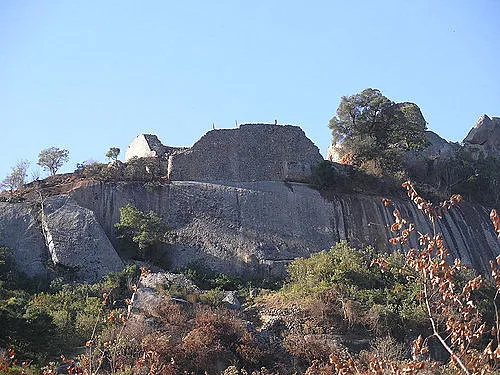
Near Masvingo, Great Zimbabwe was the stone-walled capital of a kingdom that controlled the regional gold trade from roughly the 11th to the 15th century, and its dry-stone walls, built without mortar, are the largest stone structure in precolonial Southern Africa3. UNESCO inscribed the Great Zimbabwe National Monument in 19861, the same year as the smaller but related Khami Ruins near Bulawayo, the later capital of the Kingdom of Butua.
Matobo Hills
South of Bulawayo, the Matobo Hills are a landscape of granite kopjes and balancing boulders settled by the San some 2,000 years ago4 and holds one of the highest concentrations of rock art in Southern Africa. UNESCO inscribed the hills as a World Heritage site in 20031 for that combination of rock art and an unbroken spiritual tradition still practised today. A day visitor pays USD 152 to enter Matobo National Park, which covers part of the same hills.
National parks: Hwange and Mana Pools
Hwange National Park, in the west, is Zimbabwe’s largest, and a day visitor pays USD 20 at the Main Camp, Robins or Sinamatella entrances, or USD 15 at the Zambezi entrance; visitors staying overnight in the park pay a lower accommodated rate. Mana Pools National Park, on the Zambezi flood plain, was inscribed as a UNESCO World Heritage site in 19841 together with the adjoining Sapi and Chewore Safari Areas, and charges a flat USD 20 day fee for international visitors, the same for day visitors and those staying overnight. Camping at a standard pitch in most ZimParks-run stations, including Hwange and Matobo, costs USD 10 per person per night2; lodges and exclusive bush campsites cost more and vary by park.
Practical tips
- Entry fees above are for international day visitors and are pegged in US dollars; ZimParks lists separate, lower rates for SADC nationals and Zimbabwean residents, and a lower accommodated rate at parks where overnight guests pay less than day visitors.
- Victoria Falls and Hwange are usually combined with a flight into Victoria Falls, while Great Zimbabwe and Matobo sit closer to Masvingo and Bulawayo; see the getting around section of the country guide for how the main stops connect.
- Pair a park visit with the costs guide for everyday prices and the where-to-stay guide for choosing a base near each site.
- Carry small-denomination US dollars for gate fees and tips; card payment is not reliable at park entrances.
What to check before you go
- Current park entry fees before you travel: ZimParks revises its tariff sheet periodically, and the rates above are valid only through the end of 2026.
- Malaria precautions for Hwange and Mana Pools, both in risk areas; see the health guide for what to take.
- Road and transfer times between sights, which are long in Zimbabwe; confirm current transfer options with your lodge or tour operator rather than assuming a short drive.