Why go
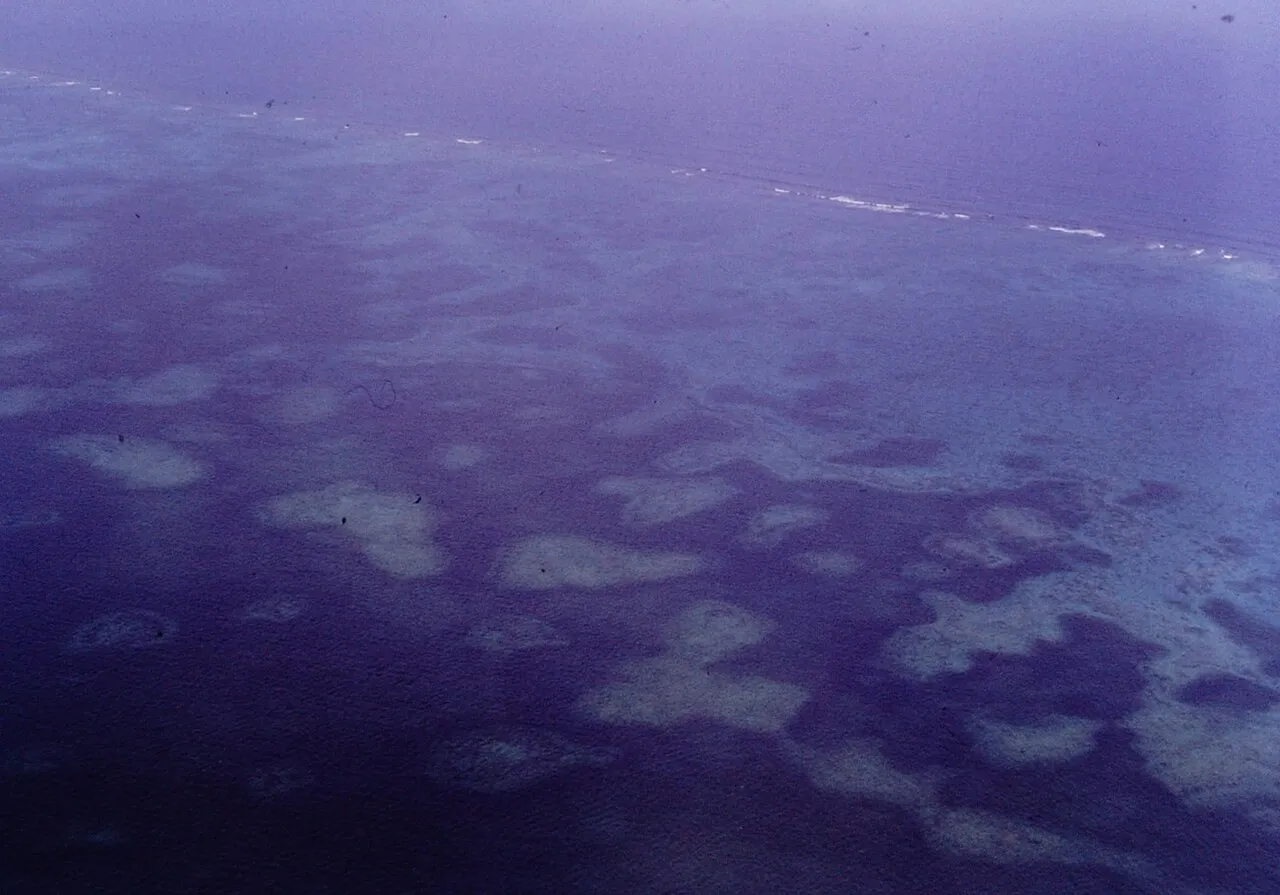
Bimini Road, also called the Bimini Wall, is a line of flat, roughly rectangular limestone blocks lying on the seabed just off North Bimini, and it has drawn divers and conspiracy theorists alike since two spearfishermen and a free-diving champion stumbled on it on 2 September 1968. The blocks run in a straight, orderly row for about 0.8 km (0.5 miles)1, and from above the water the pattern looks enough like a paved road or a harbour wall that it immediately got tangled up with the legend of a lost continent. Whatever you believe about where it came from, it is an easy, shallow dive with an odd, almost built look that is worth seeing for yourself.
What you will see
The formation sits in only about 5.5 metres (18 feet) of water, so snorkellers can see it clearly from the surface on a calm day, not just certified divers. The blocks themselves average 2 to 3 metres (7 to 10 feet) across, with the largest reaching 3 to 4 metres (10 to 13 feet)1, and their corners are rounded enough that geologists compare them to giant loaves of bread rather than cut masonry.
That natural-looking roundness is at the heart of the two stories told about the site. The Atlantis camp, which gained momentum after a 1971 expedition brought along researchers from the Edgar Cayce Foundation, argues the straight lines and right angles are too regular to be an accident of nature and reads the road as a paved street or harbour installation from a vanished civilisation. The geological explanation, which is the scientific consensus, is more mundane but still interesting: the blocks are beachrock, a type of limestone cemented from shell fragments that forms naturally along Bahamian shorelines, and the straight joints come from the rock cracking along regular natural fracture lines as the coastline eroded and currents settled the blocks into their current row. Radiocarbon dating of the beachrock puts its formation at around 2,800 years ago, with shell material underneath it dated to roughly 3,500 years old1 — both far too recent to fit Plato’s Atlantis, but old enough to predate any people known to have lived on Bimini.
Visiting: access and diving
There is no gate, ticket booth or fixed opening hours here: Bimini Road is a popular scuba diving and snorkelling site reachable only by boat2, sitting just off North Bimini’s western shore. Local dive shops on Bimini run regular trips out to the site, and because the water is so shallow, it also works well as a half-day snorkelling trip instead of a full dive: an easy add-on to a longer day on the water, not a trip that needs its own booking.
Bring a mask even if you are not diving — the blocks are shallow enough to see without tanks, and most days the conditions are calm, so a guided snorkel trip is often the simpler way to visit if you are not already a certified diver.
Getting there
North Bimini is reached by a short flight or ferry from Nassau or South Florida, not through the Bahamas’ Out Islands network, and from there it is a short boat ride out to the site. Ask at any dive shop or marina in Bimini’s main settlement, Alice Town, about the next trip out, since this is not a place you swim to from shore.
Nearby
North Bimini’s harbour and marina area around Alice Town is the base for most trips out to the road and for the island’s other dive sites, so it is worth pairing a visit with time in town rather than treating it as a standalone excursion.
_Z1bnThE.webp)