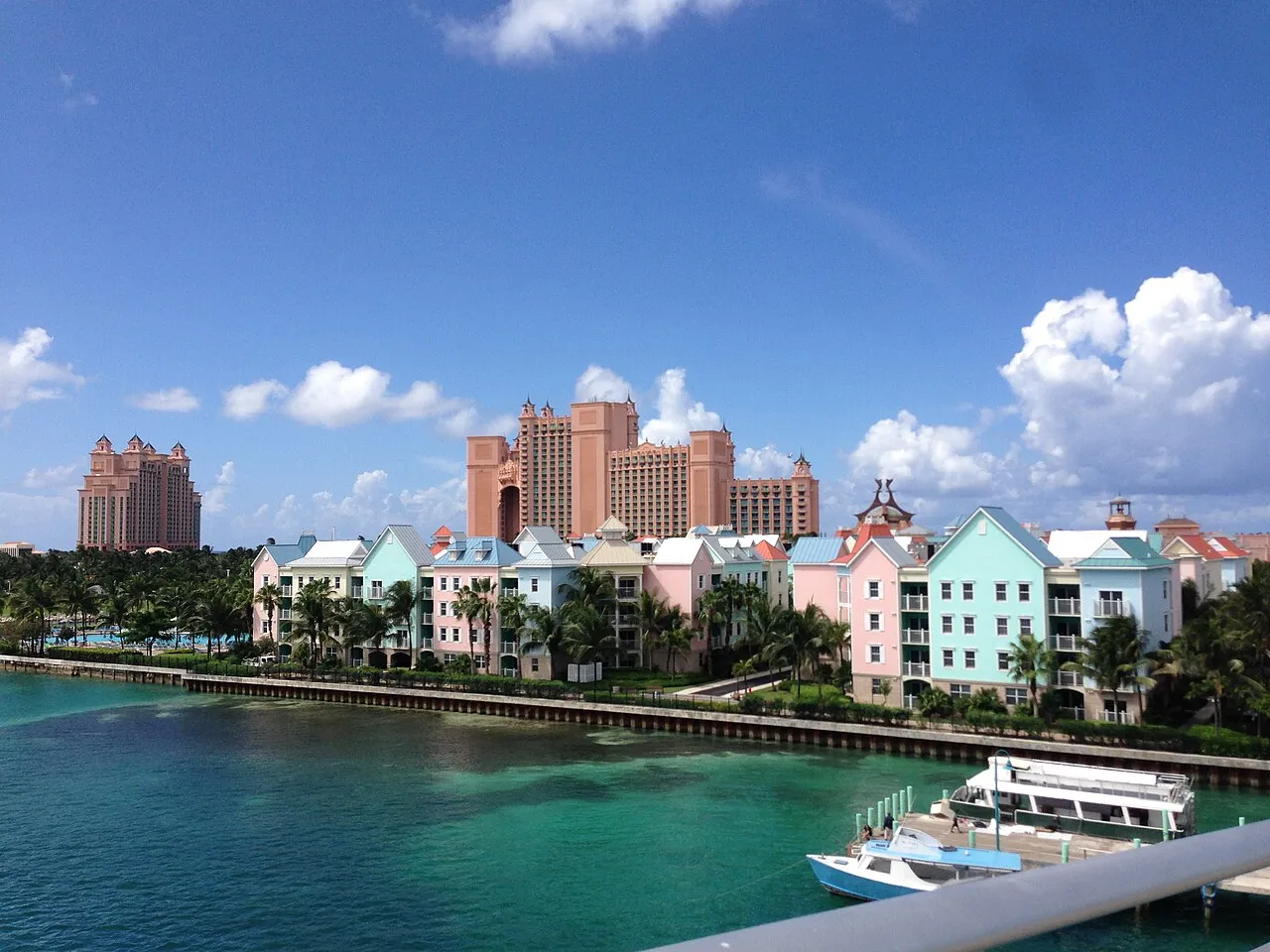
The Bahamas is an archipelago of roughly 700 islands and more than 2,500 cays, spread across 13,880 km² of the Atlantic north of Cuba, though only about 30 of them are inhabited and most of the 398,000 or so residents1 live on or near New Providence. That split shapes two very different trips: a short flight-and-flop week based around Nassau and its resort cays, or a longer island-hop through the quieter Out Islands, where the draw is empty pink-sand beaches, diving and sailing rather than nightlife. Many visitors do a bit of both, spending a few nights near Nassau before a short inter-island flight or boat onward.
Islands and main areas
Nassau, the capital, sits on New Providence and is where most flights, cruise ships and resort traffic concentrate; Paradise Island, just across the harbour bridge, holds the big all-inclusive resorts and casinos, Atlantis chief among them. Grand Bahama, with the town of Freeport, is the other developed hub, closer to Florida and popular for day-trip cruises and a quieter resort scene than Nassau’s. Beyond those two, the Out Islands cover the rest of the archipelago: the Exumas are known for swimming pigs and a chain of small cays good for chartering a boat; Eleuthera and its satellite Harbour Island have some of the country’s best pink-sand beaches; Abaco is a sailing and boating base; and Andros, the largest island by land area2, is mostly undeveloped and draws divers to its barrier reef and inland blue holes.
Getting there and around
Nearly all international flights land at Lynden Pindling International Airport3 near Nassau, the country’s main gateway, with Grand Bahama International in Freeport handling a smaller share of arrivals. There is no road network linking the islands: getting beyond New Providence and Grand Bahama usually means a short domestic flight, a mail boat, or a private or chartered boat, so build inter-island transfers into the schedule rather than assuming a quick hop. The facts box above has the side of the road for a rental car and the plug type to pack for.
When to go
The dry season, roughly November to April1, is the most reliable stretch of weather and the busiest tourist season, while the wetter months from May to October carry the Atlantic hurricane risk, with the chance of a storm disrupting travel highest from August to October. Booking around the dry season gives the best odds of calm seas for boat trips between islands.
Money, safety and visas
Currency, the emergency number and other practical basics are in the facts box above; the Bahamian dollar trades 1:1 with the US dollar and both circulate side by side, so there is no need to change money on arrival if you are carrying USD. Visitors from the US, Canada, the UK, Antigua and Barbuda, Belgium, Denmark, Greece, Iceland, Italy, Liechtenstein, Luxembourg, Norway, San Marino, Switzerland and Turkey can enter without a visa for stays of up to eight months; most other nationalities eligible for visa-free entry get a shorter three-month stay4, and anyone else should check their own requirements before booking.