Why go
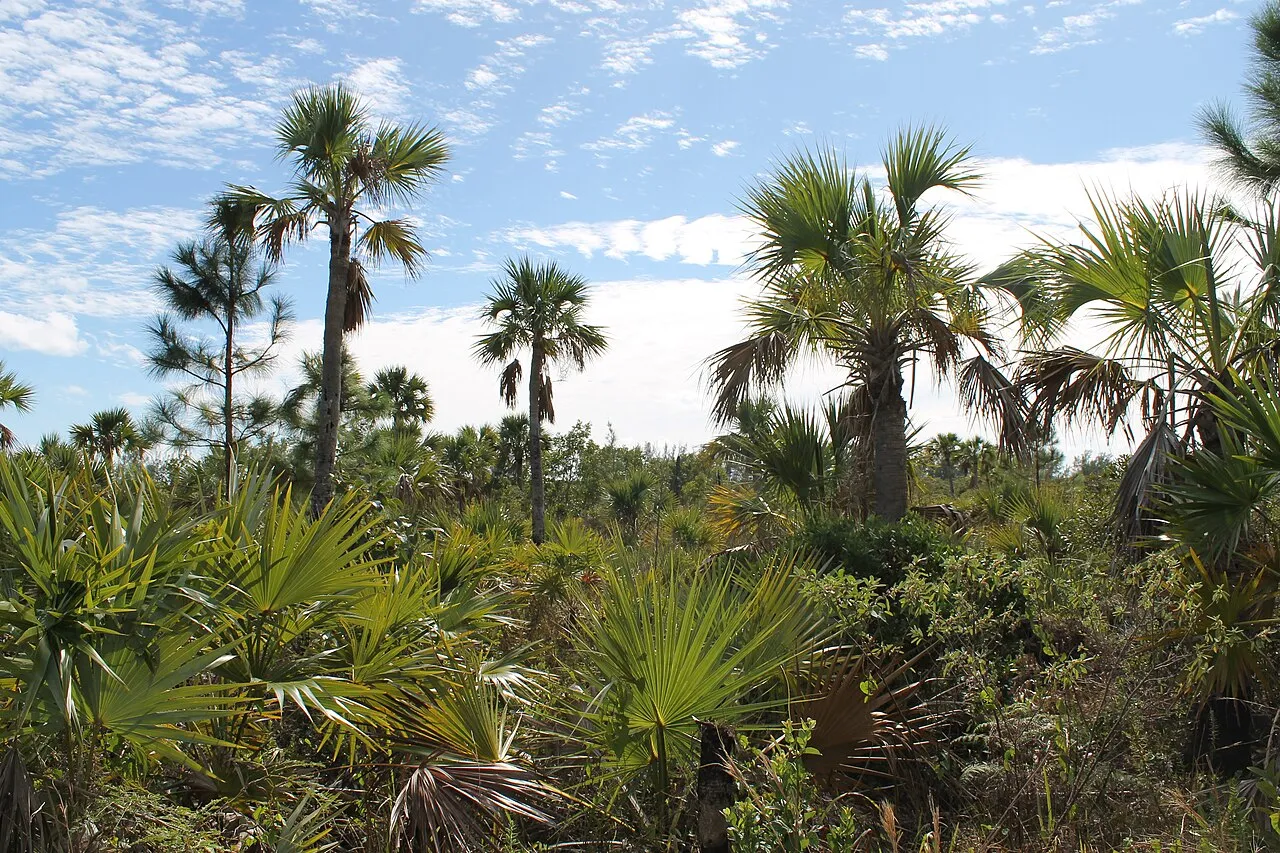
Lucayan National Park packs four different landscapes into 40 acres of land set inside a 1,937-acre protected area1: pine forest, mangrove creek, one of the longest charted underwater cave systems in the world, and a beach that USA Today’s readers voted the best in the Caribbean in 20182. It is Grand Bahama’s main nature outing outside Freeport, and the only place on the island where you can walk from pine woods into a cave mouth and out onto open sea within an hour.
The park is managed by the Bahamas National Trust, which leased the site from the Grand Bahama Development Company on a 99-year lease signed in 1982 and reopened it to the public in 19852 after a short closure.
What you will see
The park’s defining feature runs underground: a surveyed network of 6.4 miles (10.3 km) of underwater cave tunnels1, among the longest charted underwater cave systems anywhere. Two of those caves are open to walking visitors on boardwalks. Ben’s Cave drops into a chamber holding about 60 feet of water, layered with a freshwater zone sitting over denser saltwater below, and is home to a colony of migratory bats. Burial Mound Cave takes its name from the discovery, in 1986, of six human skeletal remains that were carbon-dated and confirmed to be from the Lucayan era2, the Taino people who lived in the Bahamas before European contact. Both caves are also where scientists first described the Remipedia, a class of blind, cave-dwelling crustaceans, including the species Speleonectes lucayensis.
Boardwalks and marked trails link the caves to Gold Rock Creek and on to Gold Rock Beach, a long, flat stretch of sand backed by pines that is wide enough at low tide to walk far out from the treeline. The park’s own literature notes that all of the Bahamas’ terrestrial vegetation zones are represented2 within its boundaries, from pine forest to mangrove to coastal coppice, which is part of why it holds Important Bird Area status with sightings of the thick-billed vireo, Bahama swallow and olive-capped warbler alongside wading birds and waterfowl in the mangrove creek. Grey snapper and parrotfish are common in the shallows off the beach.
Visiting: hours, admission, booking
The facts box on this page shows the weekend opening hours and adult admission; a visitor centre and restroom facilities sit at the entrance, and a park warden is on site during open hours. Children aged 6 to 14 and seniors aged 60 and over2 pay reduced admission, and Bahamas National Trust members enter free.
The Trust publishes opening hours only for Saturday and Sunday; there is no published weekday schedule, so plan a weekend visit or check with the Trust directly before making a special trip on another day.
Getting there
The park sits on Grand Bahama’s southern coast, west of Mole Hope and east of Mangrove Point2, east of central Freeport. There is no public bus service out this far; a rental car or a taxi arranged for a return trip is the practical way in, since taxis are scarce on this stretch of highway for a pickup on the way back.
Nearby
Freeport’s other big nature stop, the Garden of the Groves, sits much closer to town and pairs well with a day that starts at the caves and beach here. The Bahamas things-to-do page rounds up both alongside the rest of Grand Bahama’s and the wider archipelago’s highlights.
_Z1bnThE.webp)