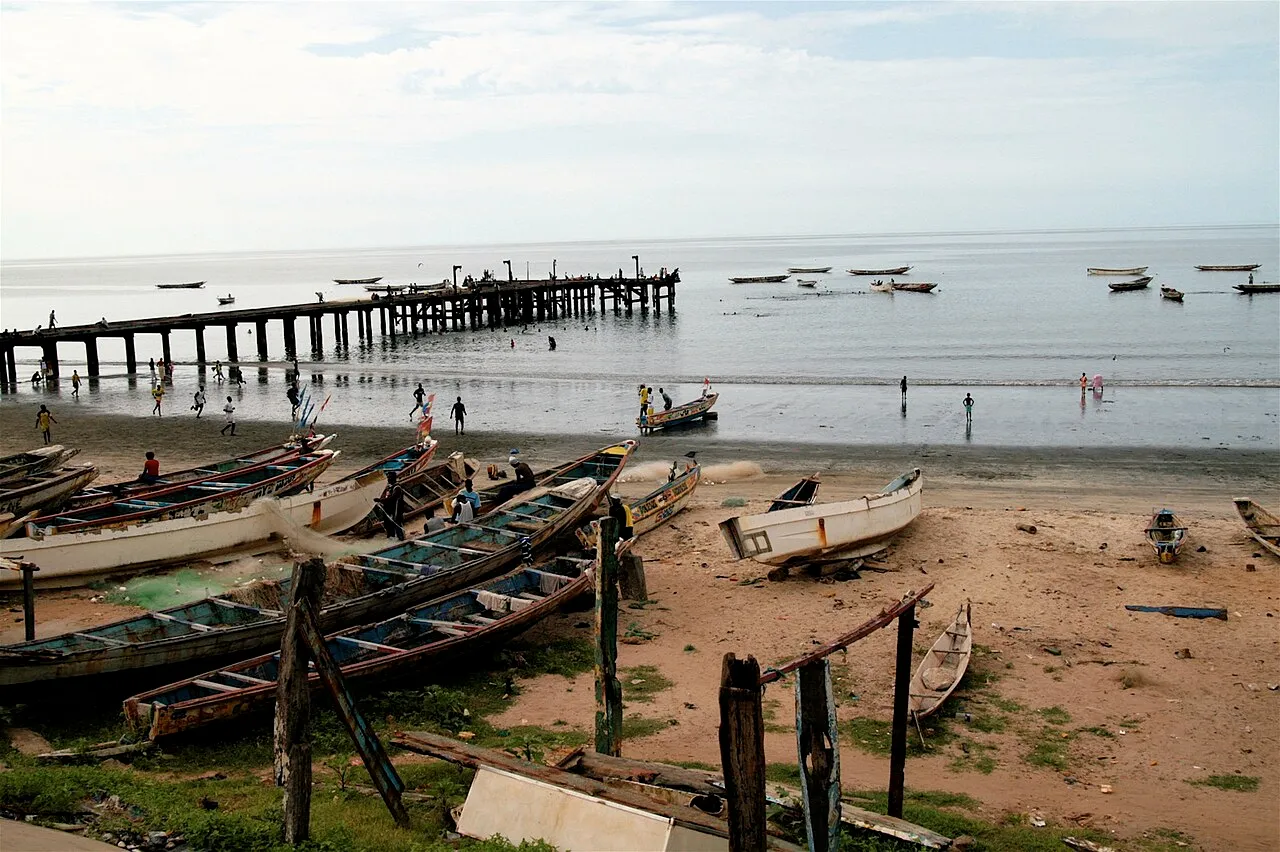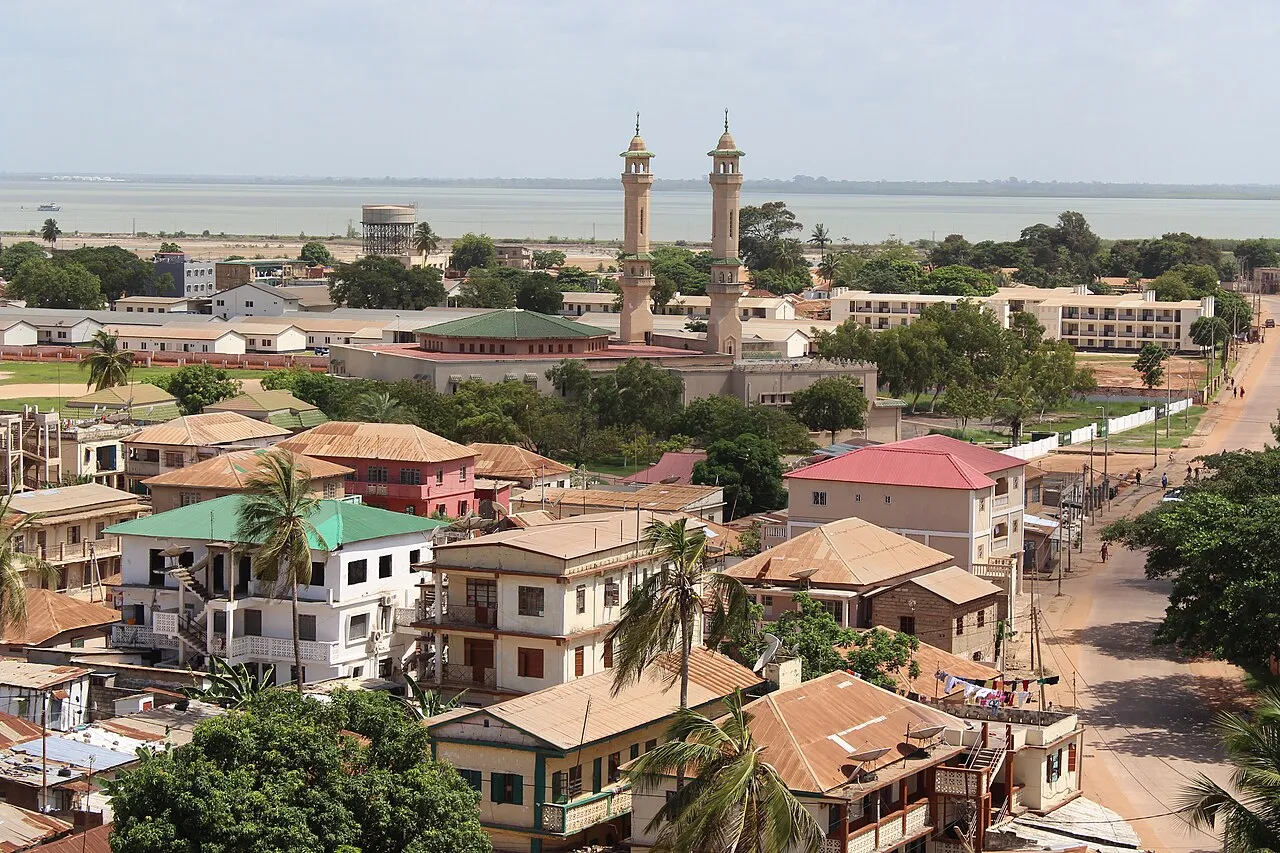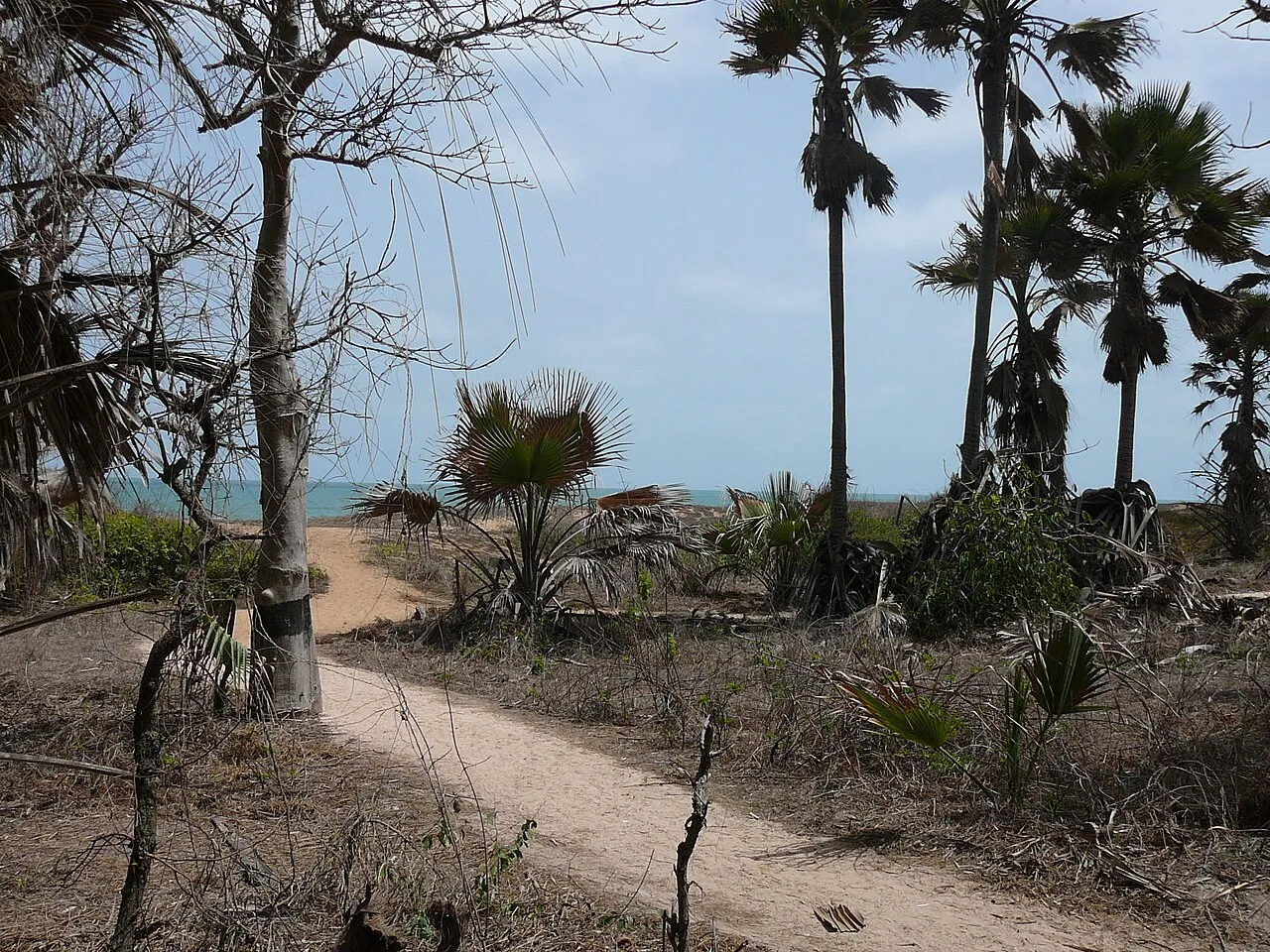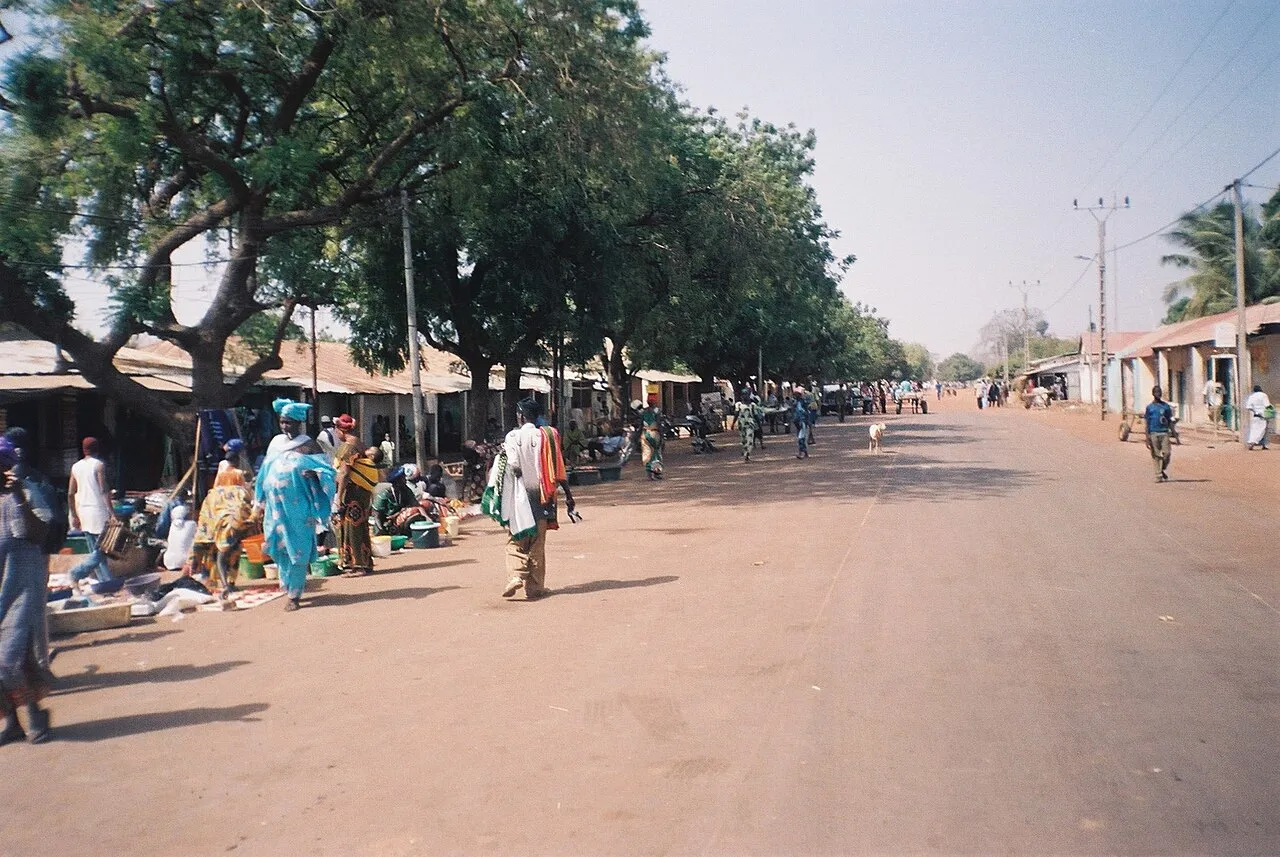
Farafenni sits on the north bank of the Gambia River, close to the border with Senegal, and it is a crossing point and market town rather than a tourist stop in its own right: the 2013 census counted 27,396 people1 in Farafenni and neighbouring Jigimarr, up from 20,956 in 1993 and 10,349 in 1983. Most visitors pass through on the road between Senegal and the Gambian coast, or break a river trip upcountry here, rather than staying the night. The best window for a visit is the dry, cooler run from November to January; the weather guide has the rest of the year.
Getting oriented
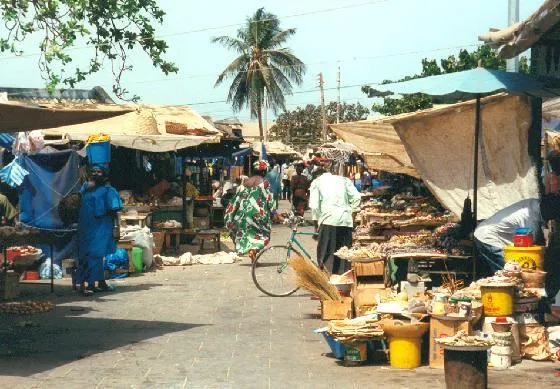
The town sits on the Trans-Gambia Highway, the main road linking Senegal’s Casamance region to Dakar through Gambian territory, which is why Farafenni has grown into a trading centre with a mix of Wolof, Mandinka and Fula speakers rather than a single ethnic base. A Sunday market on the edge of town draws traders from both sides of the border, alongside a newer hospital, a senior secondary school and a military base that mark Farafenni out as a regional centre rather than a village. The Senegambia Bridge, which opened in January 2019, crosses the river about 10 km south of town, replacing a ferry crossing where waits of 10 to 20 days2 were once common; the bridge now carries the Trans-Gambia traffic that used to queue at Farafenni’s own riverbank.
Getting around
Banjul International Airport3, around 150 km south across the river, is the way in or out by air; nearly everyone reaches Farafenni by road instead, on shared bush taxis and gelly-gellys running the Trans-Gambia Highway between the Senegalese border and the coast, or along the river road that starts here and runs east upcountry. The transport guide has routes and fares.
Where to stay by area
Farafenni has little tourist accommodation of its own: travellers either push on to the coast resorts around Bakau, Fajara, Kotu and Senegambia in an afternoon, or continue upcountry towards Janjanbureh. The handful of guesthouses in town serve traders and transit travellers rather than holidaymakers; the where-to-stay guide covers the country’s accommodation by area.
Day trips
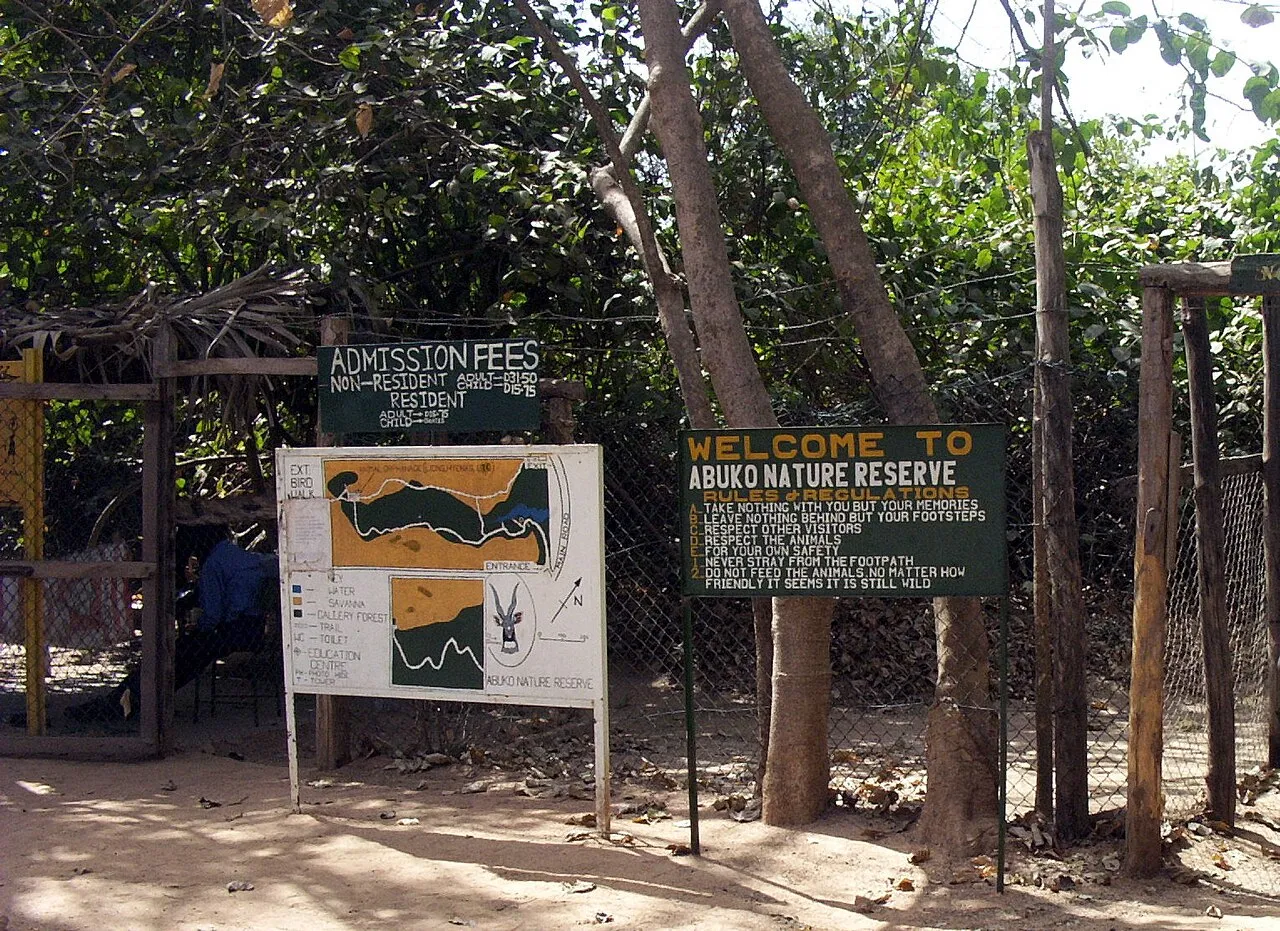
Upcountry river towns along the north and south banks are within reach for anyone continuing east rather than turning back to the coast; the Gambia overview has the rest of the regions. The coast resorts, and the Abuko and Bijilo reserves near them, are a half-day’s drive south across the Senegambia Bridge for visitors looping back towards Banjul.