_1KvDht.webp)
Why go
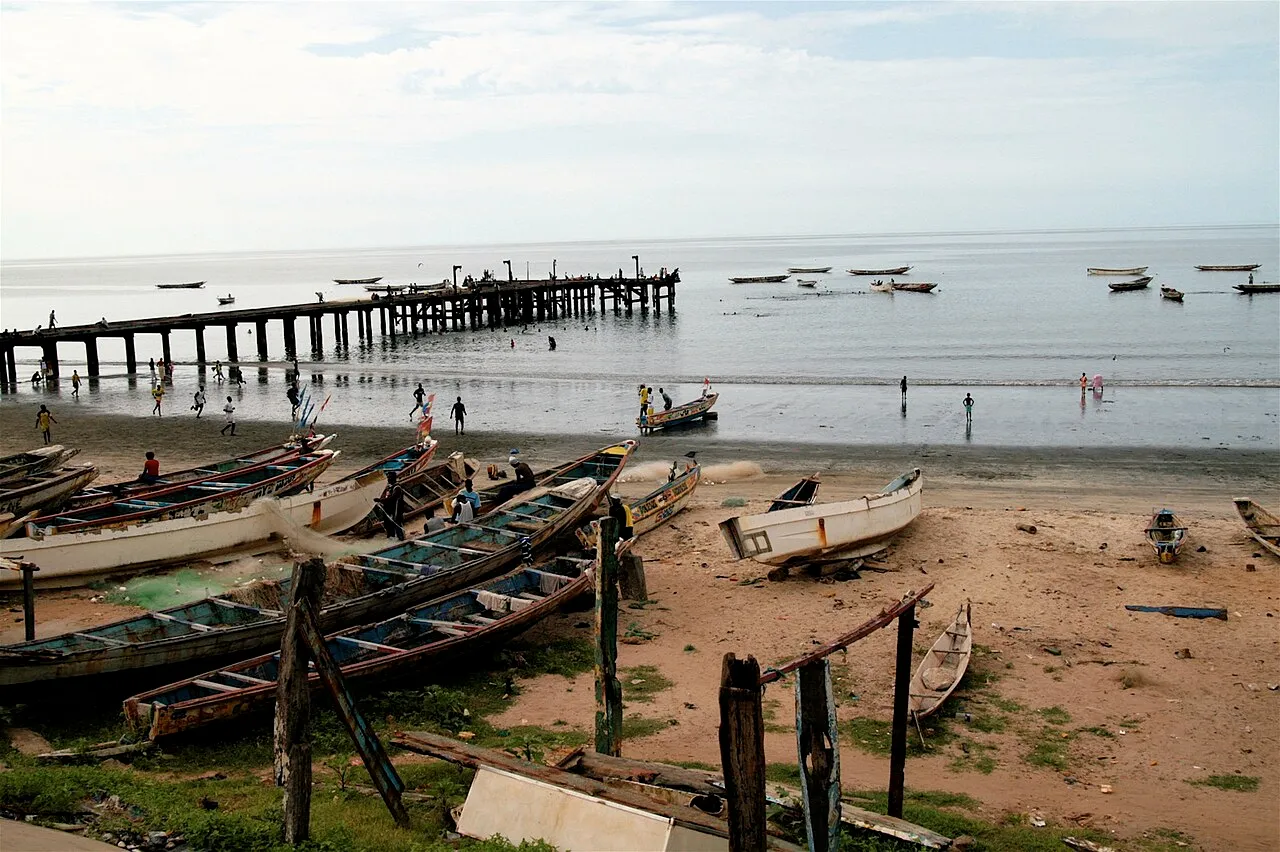
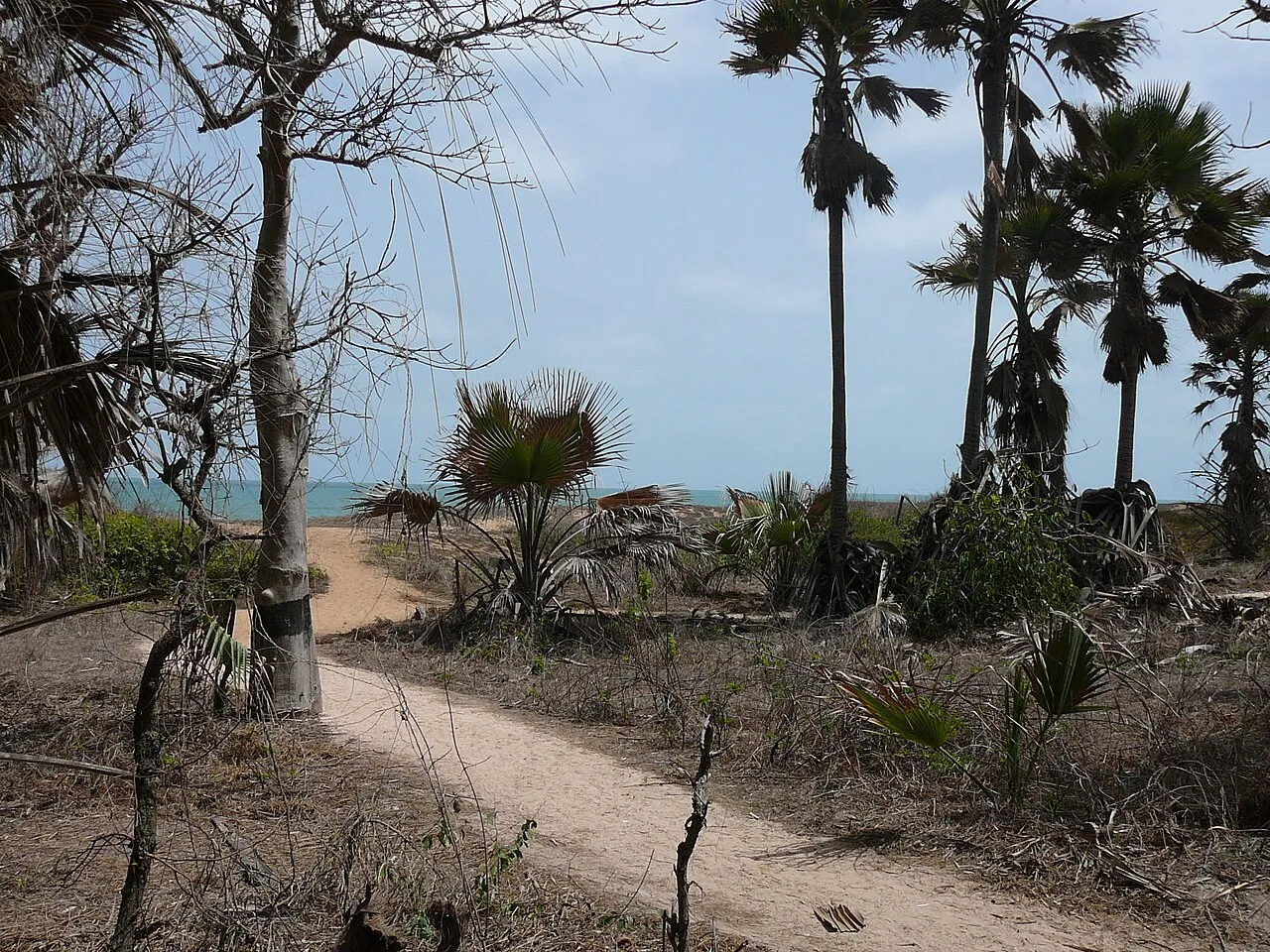
Kotu Beach is the stretch of sand the resort grew up around: wide and flat, coconut-palm-fringed2, and backed by the beachfront hotels, bars and eateries of Kotu and Kololi. It is a resort beach rather than a hidden one, and that is the point: lifeguards watch the water, vendors and horse operators work the strand, and everything you need for a day on the sand is a short walk from your room. Go for the golden hour1 if you can — low sun over the Atlantic is the beach at its best.
What you will see
The sand itself is good quality, though the water running over it carries sand in suspension, so it is not the clear turquoise of a Caribbean postcard. You can wade out about 25 metres before the shelf drops away steeply, and waves can break as far as 300 metres offshore2 in rougher conditions; the gently shelving sand near shore suits paddling better than serious swimming, since strong currents can make swimming risky1 further out.
Lifeguards work from a high lookout post and fly warning flags for the day’s conditions, and a tourist police post2 sits right on the strand. Horse riding is one of the beach’s signature activities: operators work the sand, and riding at low tide is the local tip for the best going underfoot. Cyclists use the firmer, low-tide sand too, with tracks running along the Badala Hotel fence toward Kololi for anyone who wants to pedal further down the coast.
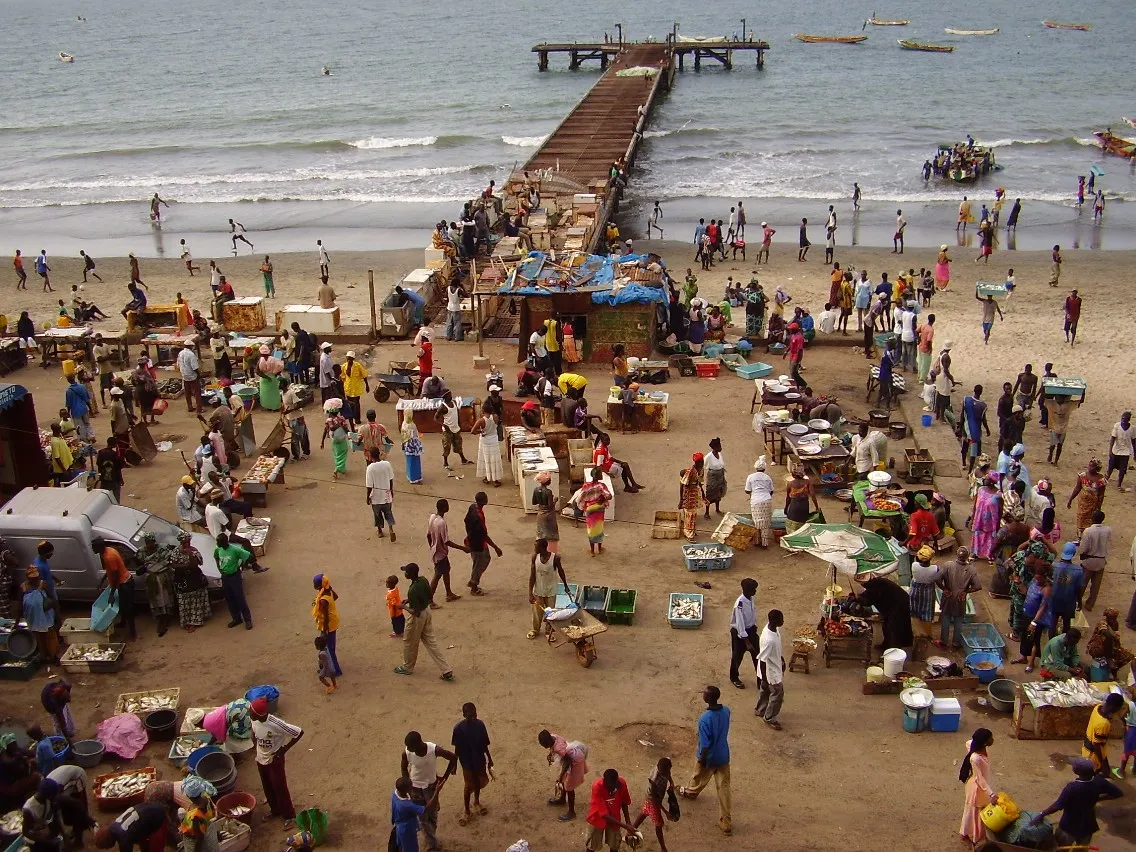
Vendors are a constant and genial part of the scene: fruit sellers in regulated green uniforms2 sell fresh juice and fruit along the beachfront, alongside the horse-ride touts and craft sellers who work every Gambian resort beach. A firm, friendly “no thank you” moves things along; the local trick when someone will not take no for an answer is simply to walk a few steps into the surf1, since most vendors stop at the waterline.
Visiting
There is no ticket, no gate and no fixed hours: Kotu Beach is open sand, free to walk onto from any of the hotels or beach-access paths along the strip. The sun is strongest from November to April, so pack a high-factor sunscreen and a hat if you plan to spend the day out rather than under a beach umbrella. That same stretch of the year, running mid-October to April2, is also when the resort is busiest and the beach sees the most vendors, riders and sunbathers.
Getting there
The beach runs along the seaward edge of Kotu, reached directly from the hotels that line it or from the short access paths between them; see the Kotu page for the resort’s layout. There is no need to arrange transport if you are staying in Kotu or neighbouring Kololi — it is a walk, not a trip. From further along the coast, shared bush taxis and gelly-gellys run the coast road past Kotu in both directions; the getting around guide has routes and fares. Banjul International Airport3 is a short drive south.
Nearby
Kotu Stream and its bridge, one of the Gambia’s best-known birdwatching spots, sit just inland from the beach, and the Bendula craft market is a short walk away by the BB Hotel. North along the coast road, Bakau and its fish market and crocodile pool make an easy half-day out; south, the busier Senegambia strip picks up around Kololi. The Kotu page covers the rest of the resort, and the Gambia overview has the other coastal towns nearby.