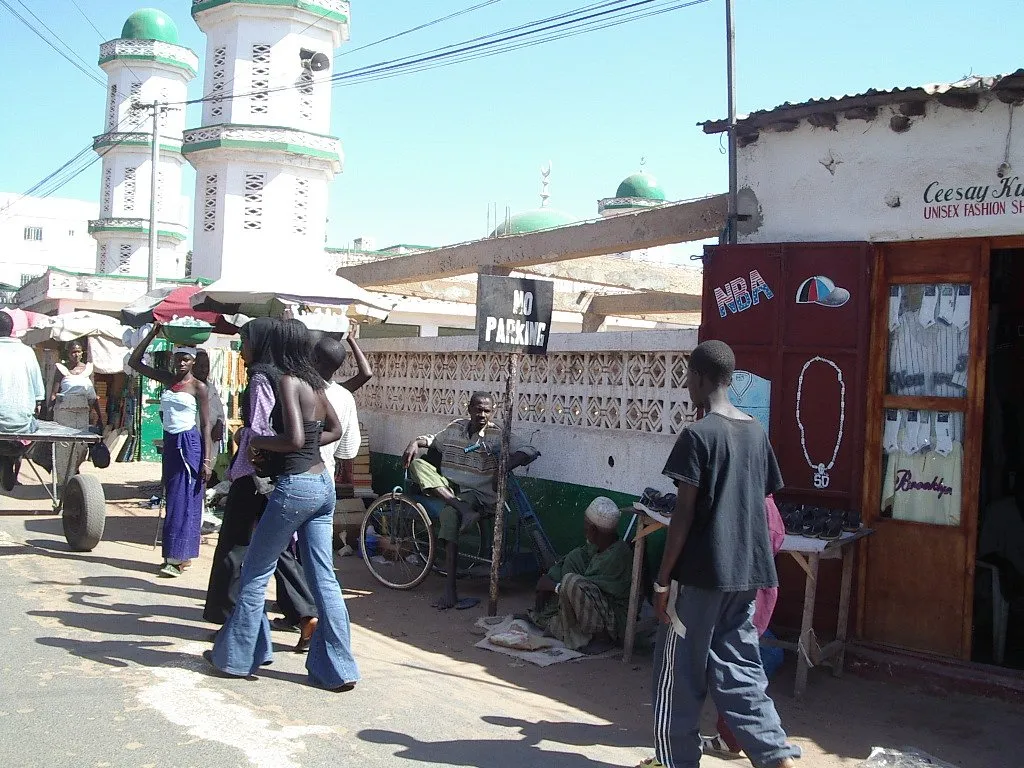
Serekunda is The Gambia’s largest urban centre, a sprawling, workaday city just inland from the coast resorts rather than a beach destination itself, built around the country’s biggest market. The 2013 census counted 19,944 people2 in the Sere Kunda settlement proper, though that figure is almost beside the point: Serekunda is really the core of a continuous urban sprawl of named settlements across the Kanifing area that, together with neighbouring Bakau and Latri Kunda, forms the country’s largest conurbation and the commercial engine for the whole coast. The city grew from a 19th-century settlement founded by Sayerr Jobe, a Wolof man from Senegal1, and later absorbed several surrounding villages as Banjul’s own growth ran out of room on its island site. The best window for a visit is the dry, cooler run from December through February; the weather guide has the rest of the year.
Getting oriented
Serekunda has no single old quarter to orient around; it reads instead as a run of linked neighbourhoods, among them Westfield Junction, London Corner and Bundung1. Westfield Junction is the city’s best-known landmark in its own right, a major traffic interchange where routes from Banjul, the coast resorts and the Brikama road all meet, and a natural point to get your bearings. The market itself sits towards the centre of the city, with the residential neighbourhoods spreading out around it in every direction.
Highlights
Serekunda Market (Sandika)
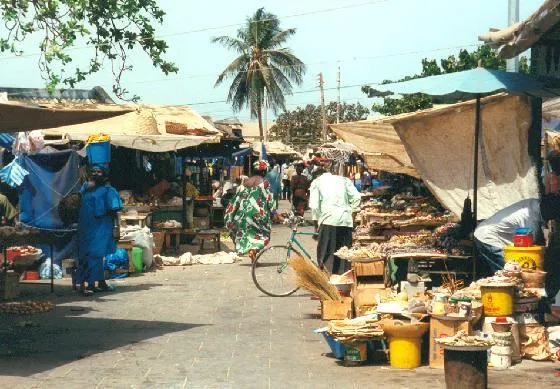
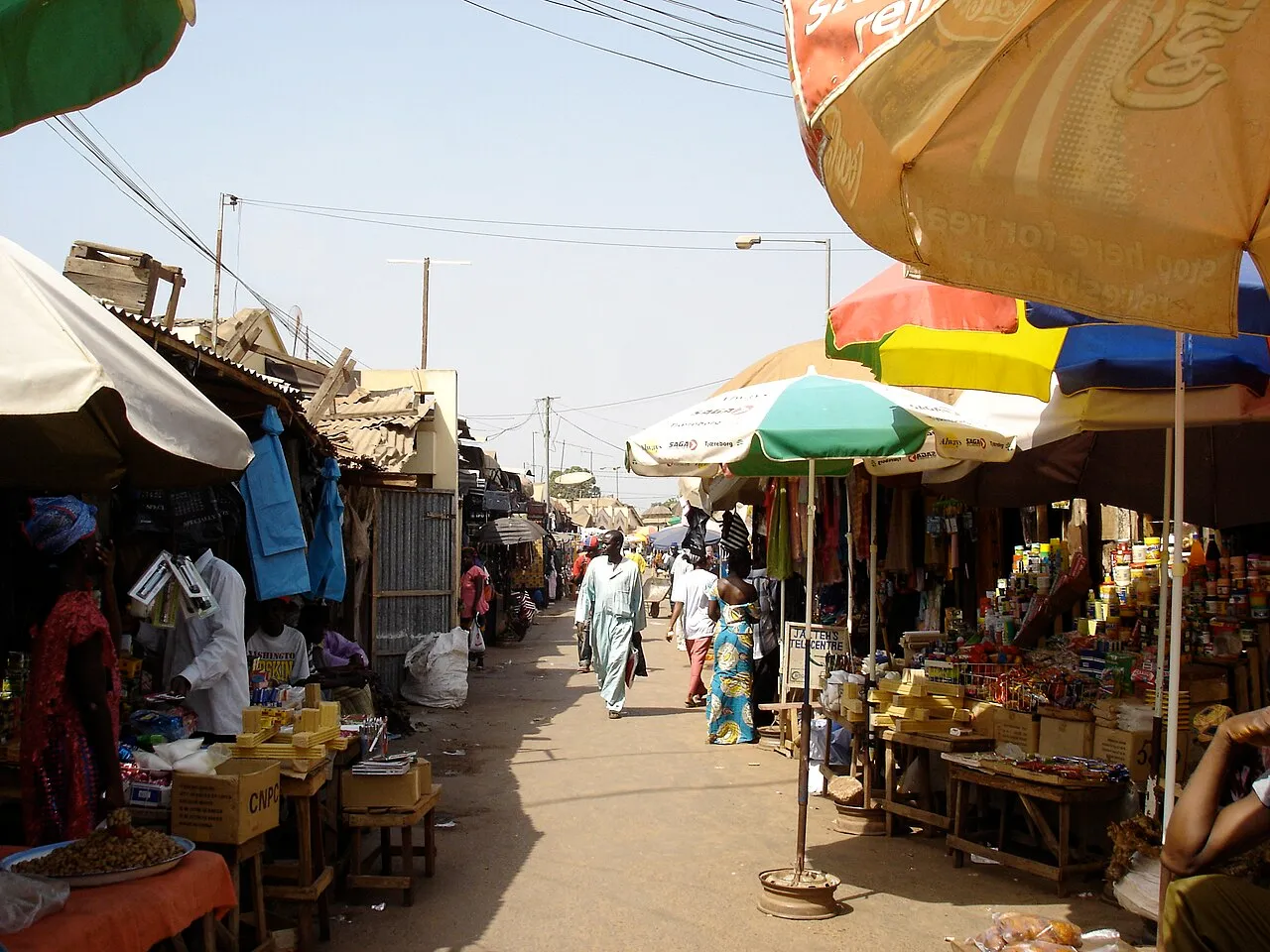
Known locally as Sandika, Serekunda Market is the largest market in the country1, trading in produce, fish and the batik cloth the city is known for. It grew from women selling fish and vegetables by a dirt road in the early 1800s into the sprawling, crowded trading ground it is today, and remains the single best place in the Gambia to see everyday commerce at full scale, though space is tight and the lanes flood in the rainy season.
Westfield Junction
The roundabout where the roads from Banjul, the coast resorts and upcountry Brikama converge, Westfield Junction1 is as much a city orientation point as a traffic bottleneck, and most shared-taxi routes across the Kombo pass through or start here.
Pipeline Mosque and Serekunda Mosque
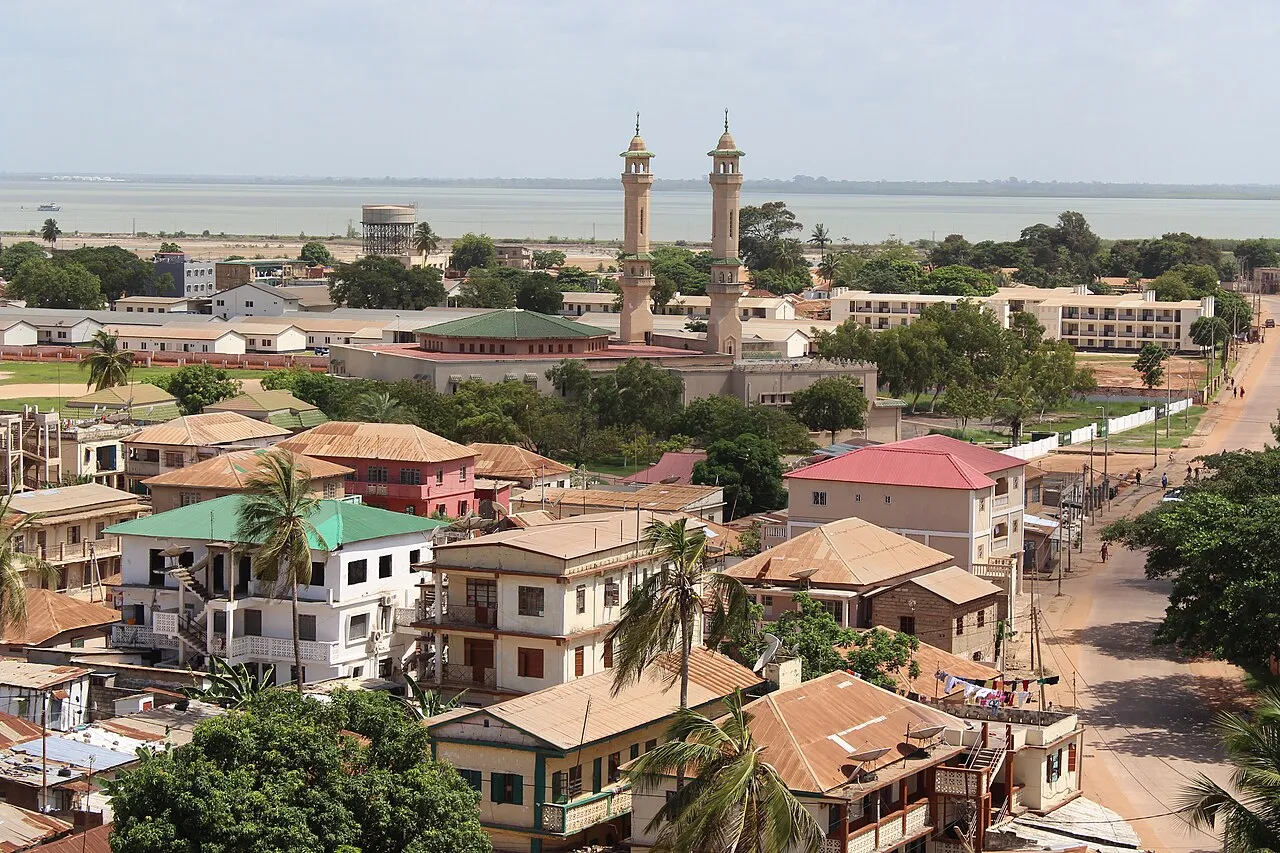
Serekunda’s two largest mosques are the Pipeline Mosque, which holds around 3,000 worshippers1, and the Serekunda Mosque on Sayerr Jobe Avenue, named for the city’s founder; both are active neighbourhood landmarks rather than visitor sights, but useful markers when navigating the city’s grid of residential streets.
Getting around
Serekunda’s own streets are easiest covered by shared taxi or gelly-gelly rather than on foot, given the city’s size and the heat; the transport guide has routes and fares. The Banjul-Serekunda Highway crosses Denton Bridge to reach the capital1, while the coast road runs the other way out to Bakau, Kotu and the resort strip. Banjul International Airport3 is a short taxi ride south of the city.
Where to stay by area
Serekunda itself is better suited to budget stays than resort hotels: it carries much of the coast’s stock of simple guesthouses, at a fraction of a beach hotel’s rate, but without a beach on the doorstep. Most visitors instead base themselves in Bakau, Kotu or the Senegambia strip and treat Serekunda as a market trip rather than a place to sleep; the where-to-stay guide covers the whole coast.
Day trips
Bakau, with its crocodile pool and fishing wharf, and Kotu, with its stream and beach, are both a short run up the coast road. Banjul, the small capital at the river mouth, makes an easy half-day out across Denton Bridge. The Gambia overview has the rest of the regions.
_Z1NDVrE.webp)