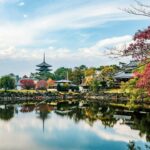
Nestled in the bustling heart of Tokyo lies an oasis of serenity and spirituality that has stood the test of time. The ancient Buddhist temple, Senso-ji, is a testament to Japan’s rich history and culture, and offers a unique opportunity for visitors to immerse themselves in the traditions of this remarkable country.
As you approach the temple grounds, the first thing that strikes you is the iconic Kaminarimon, or “Thunder Gate.” This massive entrance gate, adorned with a colossal red paper lantern, serves as a symbolic division between the earthly world and the sacred realm of Senso-ji. The lantern itself is inscribed with the characters for “thunder” and “lightning,” paying homage to the deities of wind and thunder that are enshrined within the gate’s pillars. The Kaminarimon is an impressive sight to behold and is emblematic of the vibrant colors and intricate craftsmanship that define Japanese temple architecture.
Stepping through the Kaminarimon, you are greeted by the bustling Nakamise-dori, a lively shopping street that has been serving temple visitors for centuries. The street is lined with small shops selling an array of traditional Japanese goods, from colorful yukata (summer kimono) and handcrafted wooden combs to intricate folding fans and delicate paper parasols. The air is filled with the tantalizing aroma of freshly made street food, such as savory senbei rice crackers, sweet dorayaki pancakes, and skewers of grilled yakitori chicken. Walking down Nakamise-dori is like taking a step back in time, as the street is a living reminder of the Edo period, when Tokyo – then known as Edo – was a flourishing capital city.
As you make your way down Nakamise-dori, you will come across the second gate of Senso-ji, the Hozomon, or “Treasure House Gate.” This imposing structure houses the temple’s treasured scriptures and cultural artifacts and is guarded by two fearsome statues of the Nio, the wrathful and muscular deities who protect the Buddhist teachings. The Hozomon serves as a reminder of the temple’s long and storied history and of the many generations of worshipers who have sought solace within its sacred halls.
Upon passing through the Hozomon, you will find yourself in the heart of Senso-ji’s temple grounds. The vibrant reds, blues, and greens of the temple buildings stand in stark contrast to the muted colors of the surrounding cityscape, creating a sense of otherworldliness that permeates the area. The central focus of the temple grounds is the majestic main hall, the Hondo, which enshrines the temple’s principal deity, the bodhisattva Kannon.
The story of Senso-ji’s founding is a tale steeped in legend and folklore. It is said that in the year 628, two brothers were fishing in the nearby Sumida River when they discovered a small golden statue of Kannon tangled in their fishing net. Despite their attempts to return the statue to the river, it kept finding its way back to them. Recognizing the significance of their find, the brothers enshrined the statue in a small temple built on the site of the present-day Senso-ji. Over time, the temple’s reputation grew, and it became a popular destination for worshipers seeking the Kannon’s blessings and protection.
As you explore the temple grounds, you may notice the many stone statues of Buddhist deities and mythical creatures scattered throughout the area. These statues serve as both artistic expressions and spiritual guardians, representing the various facets of Buddhist teachings and the interconnectedness of all living beings. One particularly striking example is the row of Jizo statues that can be found near the Hondo. Jizo is the protector of travelers, children, and expectant mothers, and these small stone statues, often adorned with red bibs and hats, are a poignant tribute to the countless lives touched by the temple’s compassionate teachings.
Another noteworthy feature of Senso-ji is the vast incense burner that stands before the Hondo. Here, visitors can partake in the ritual of “smoke bathing,” where they waft the fragrant smoke towards themselves to purify their bodies and minds. This ritual is believed to have healing properties, and it is not uncommon to see people rubbing the smoke on specific parts of their bodies in the hope of alleviating pain or illness.
In addition to its stunning architecture and serene atmosphere, Senso-ji is also a hub of cultural activity. Throughout the year, the temple plays host to a variety of traditional Japanese festivals and events. One of the most popular is the Sanja Matsuri, a lively three-day celebration held every May, which sees the temple grounds transformed into a sea of color and activity as hundreds of thousands of visitors come to pay their respects and participate in the festivities.
As the sun begins to set on your visit to Senso-ji, take a moment to reflect on the enduring power of this ancient temple. Despite the passage of time and the encroachment of modernity, Senso-ji remains a beacon of spirituality and culture in the heart of Tokyo. It serves as a reminder of the timeless beauty of Japan’s heritage and the enduring appeal of its traditions.
So if you find yourself in Tokyo, be sure to carve out some time to visit the awe-inspiring Senso-ji temple. Whether you’re drawn to its rich history, stunning architecture, or simply the opportunity to experience a moment of tranquility amid the city’s hustle and bustle, a visit to Senso-ji is sure to leave a lasting impression on your heart and mind.