Kasanka National Park covers about 420 km² on the south-western edge of the Lake Bangweulu basin in Zambia’s Central Province, one of the country’s smallest national parks, known almost entirely for one spectacle. Kasanka became a national park in 1972. After visiting in 1985 and hearing gunshots from poachers, British resident David Lloyd raised funds to rehabilitate the park, and the privately funded Kasanka Trust was founded in 1987 to rebuild wildlife that years of poaching had depleted. Kasanka has an airfield2 (ICAO: FLKA); most visitors self-drive in on the Great North Road from Lusaka, turning off after Kapiri Mposhi and again after Serenje towards Samfya, then into the park through Malaushi Gate1.
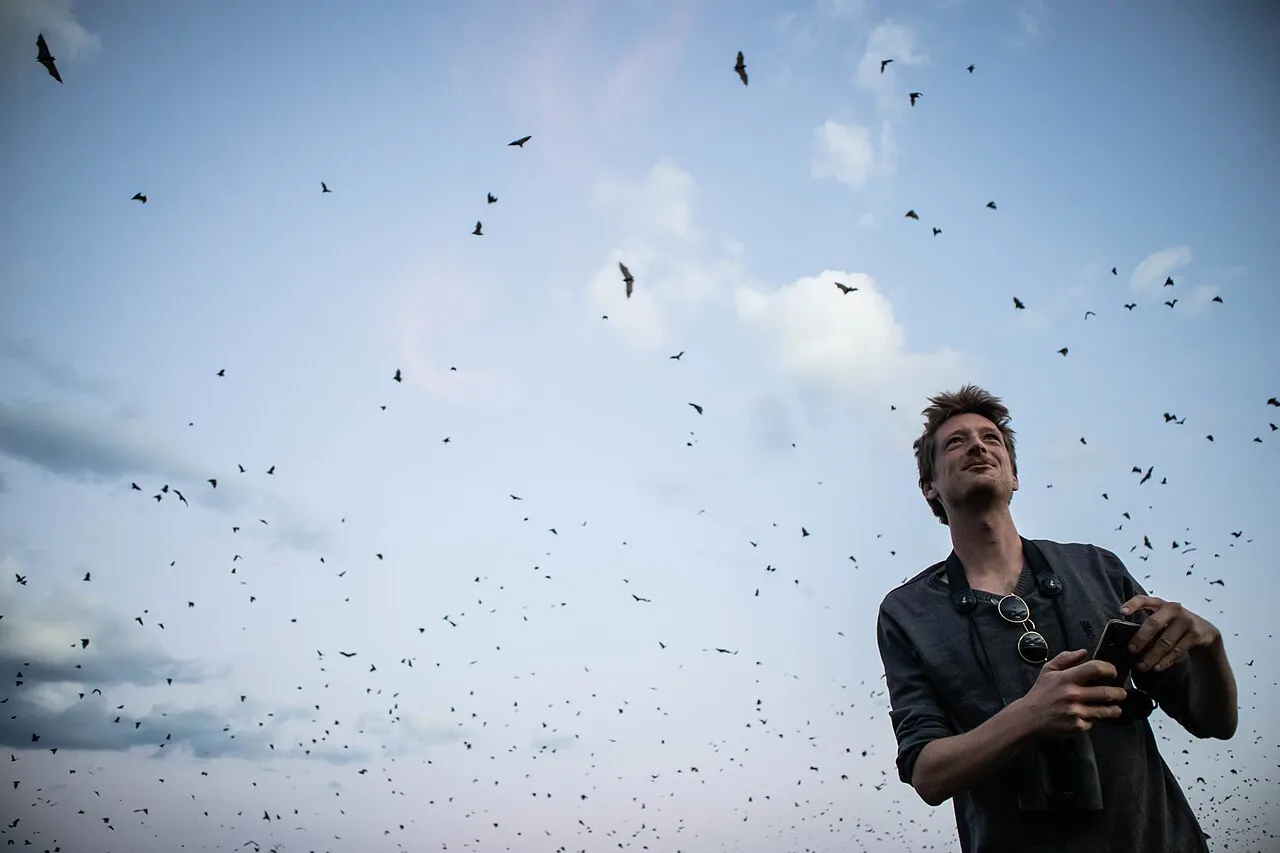
The reason most visitors time a trip here is the bats. Between October and December2 each year, an estimated 8 to 10 million straw-coloured fruit bats3 gather in the park’s Mushitu swamp forest to feed on the wild fruit that ripens there, in what zambiatourism.com calls the world’s biggest mammal migration1. The bats leave the forest at dusk and return before sunrise, so the best viewing windows are set by their own routine rather than a park timetable.
Getting oriented
Within its small area, Kasanka packs miombo woodland, swamp forest, grassland and floodplain, drained by five perennial rivers that empty through the Luwombwa River2, the park’s sole outlet. The Mushitu swamp forest where the bats roost is one patch within that mix; the rest of the park is where its birds and mammals are spread out across the dry season.
Highlights
The bat migration
The Mushitu swamp forest fills with bats for roughly three months a year, and the Kasanka Trust has built raised hides and a tree platform in the forest so visitors can watch the evening exodus and dawn return at close range. Numbers build from mid-October and reach their highest density by mid-November, before decreasing from the second week of December2.
Birdlife
Kasanka’s bird list runs to more than 330 recorded species1, among them the rare shoebill stork, Pel’s fishing owl and wattled crane. A tree-top lookout lets visitors watch the shy, swamp-dwelling sitatunga antelope at dawn3, in the same wetland where the birdlife gathers.
Mammals and fishing
The puku population exceeds 1,500 animals1, and sable antelope, Lichtenstein’s hartebeest and a recovering hippo population are also part of the Trust’s rehabilitation record. The Luwombwa River carries tigerfish, bream and barbel, and boat rental for fishing trips3 is available on site.
Getting around
Guided walks and game drives run on the park’s own tracks, and the Trust runs the hides and lookout points used for the bat migration and the sitatunga viewing platform. Visitors get between the gate, the Mushitu forest and the rest of the park in the same self-driven vehicle used to reach the park, or in a transfer arranged with a camp.
Where to stay by area
Camps close to the Mushitu swamp forest put the bat hides within a short drive or walk, which matters most during the October-to-December season when the migration is the point of the trip. Camps further into the park, nearer the rivers and lakes, suit a birdwatching or fishing-focused stay outside those months, when the swamp forest itself has emptied out again.