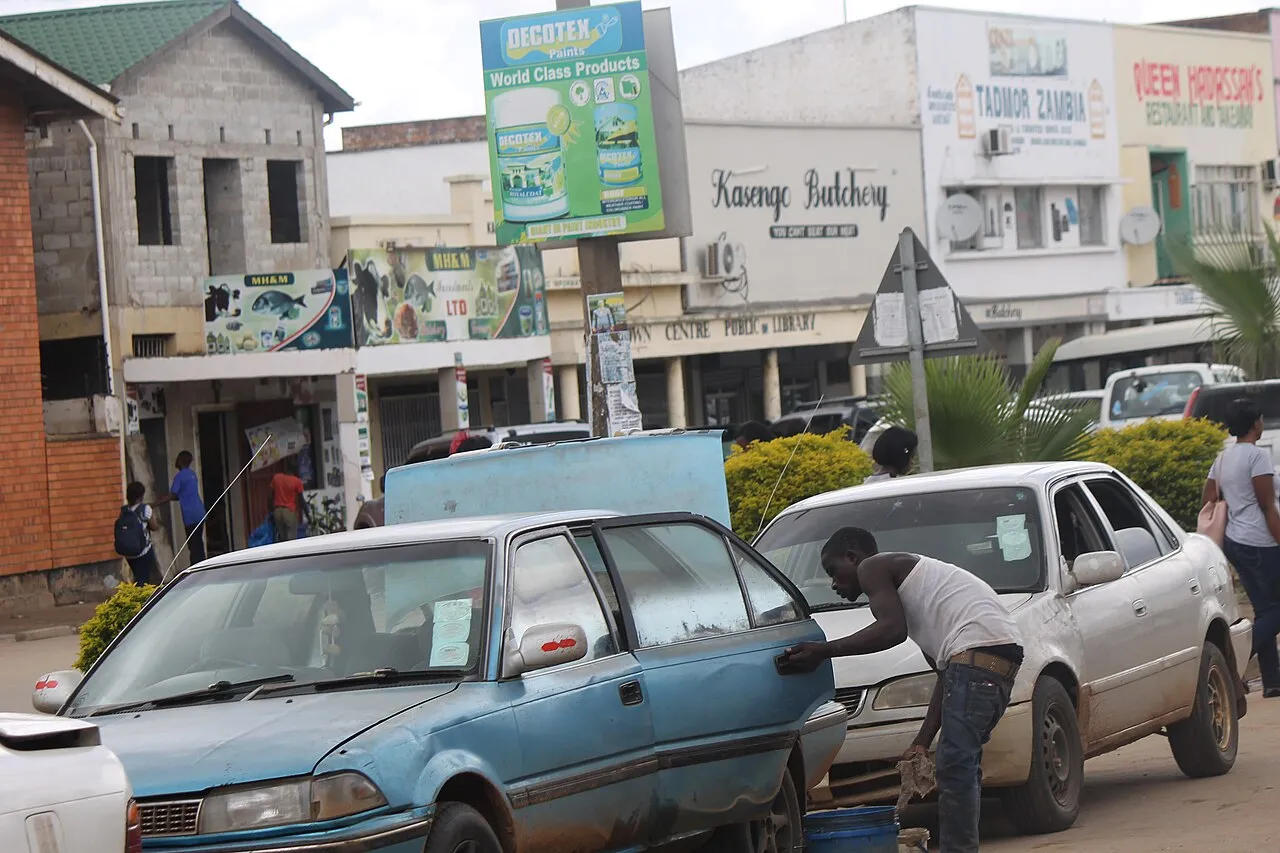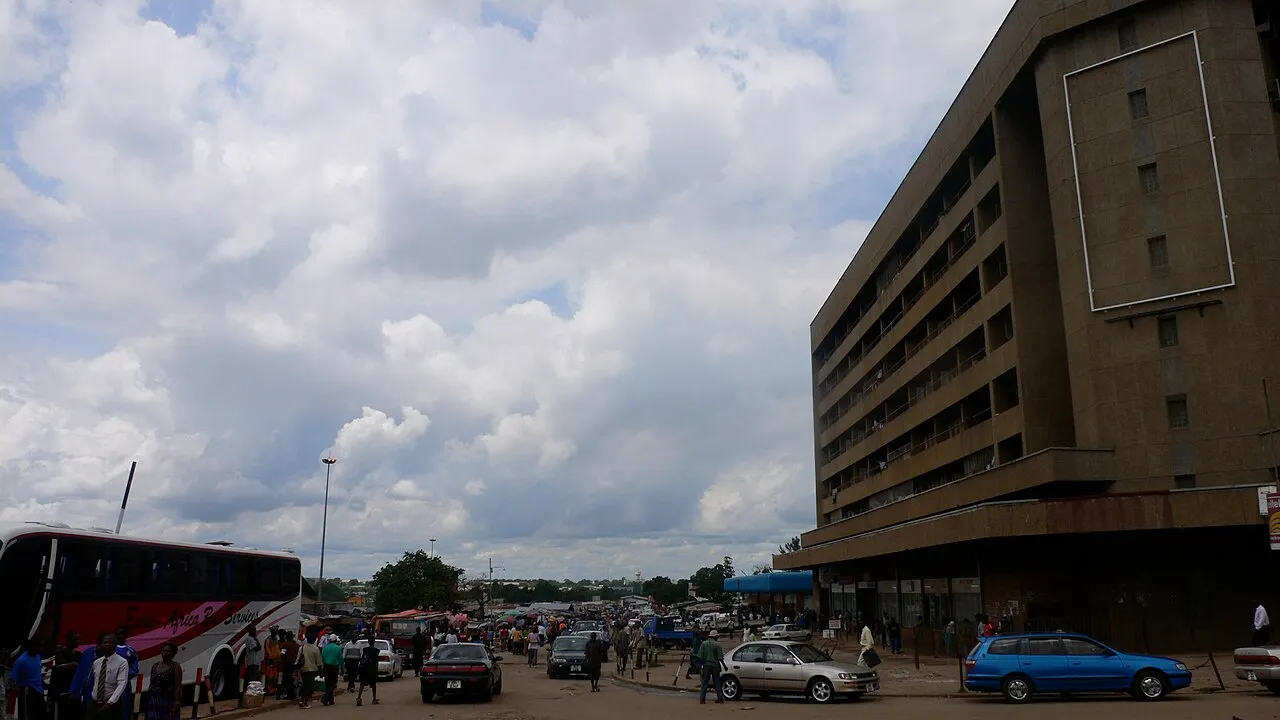
Kitwe was founded in 1936, growing up as the railway was being built2 as a support town for the expanding copper-mining centre at Nkana; with the upsurge of copper prices in the 1950s it grew from a small township into Zambia’s second-largest city, gaining city status in 1966. The city owes its existence to the copper-mining industry1, and it is largely undeveloped as a tourist town because of that focus on mining and industry. Come to understand a working Copperbelt city, not for a list of sights.
Getting oriented
Kitwe is made up of townships and suburban areas, among them Parklands, Riverside, Buchi, Chimwemwe, Kwacha, Nkana East, Nkana West, Garneton, Ndeke, Miseshi, Wusakile, Mindolo, Chachacha and Race Course, and the city is sometimes called Kitwe-Nkana. It has a complex of mines3 on its north-western and western edges. Parklands is where you will find Mukuba Mall, the biggest mall in Kitwe4, built where the former Kitwe zoo once stood2.
Highlights
Nkana and the mine that built the city
The Nkana mine lies 1 km south-west of Kitwe, is one of the largest in Africa, and has been in operation since 1932, working four underground mines alongside open pits. It is the deepest mine on the Zambian Copperbelt, with two shafts below 1,300 metres2. Its operator, Mopani Copper Mines, has been 51% owned by International Resources Holding5, based in Abu Dhabi, since 2024, with the government’s holding company ZCCM-IH keeping 49%. If you have an interest in mining, a tour down one of the shafts1 is possible: enquire at the mining companies’ offices.
Chisokone Market
Chisokone is one of Kitwe’s largest markets. It has had a series of fire outbreaks6: in December 2024 fire gutted four shops, the year before a blaze razed the entire curio section, and traders have urged the authorities to act swiftly to prevent further losses. Go for the atmosphere and the bargaining, not for a leisurely browse of valuables. For crafts, Obote Ave Market2 has arts and crafts stalls, including copper craft items.
Mindolo Dam
About 7 km south-west of the city centre1 along Kalulushi Road, Mindolo Dam has a boating club, a swimming pool and a bar. It makes a half-day break from the mining townships, not a destination in its own right.
Getting around
Ndola is 57.7 km away, under an hour’s drive on a well-maintained dual carriageway; the T3 highway runs through the city to Ndola in the south-east and to Chingola and Chililabombwe in the north-west. Kitwe lies at the end of the Zambia Railways passenger line from Livingstone, Lusaka and Ndola, with overnight trains from Livingstone several times per week4. Southdowns Airport, about 12 km south-west of the city, has no scheduled services; Ndola’s airport, 50 km to the south-east2, has regular commercial flights from Lusaka, Addis Ababa, Nairobi and Johannesburg.
Where to stay by area
Parklands4 puts you closest to Mukuba Mall3, a self-contained convenience centre with back-up power generators and its own potable water, whose key tenants are Game, Shoprite and Pick and Pay; it suits a visit built around comfort over atmosphere. Elsewhere, Kitwe has a large shopping area with hotels1, a cinema and a theatre, the Kitwe Little Theatre.
Day trips
Chembe Bird Sanctuary, about 30 km from Kitwe1 on the Kalulushi/Kasempa road, is a small lake ringed by thick woodland, with shady campsites at the water’s edge; you can walk or drive around the lake and hire rowing boats for fishing or birdwatching. Further out, Chimfunshi Wildlife Orphanage lies about 110 km northwest of Kitwe4, past Chingola. It is one of the world’s oldest and largest chimpanzee sanctuaries: it began on 18 October 1983, when a baby chimpanzee that a game ranger had confiscated from poachers was taken to a farm, and in 2018 it was home to more than 130 chimpanzees across 60 square kilometres7 of forest on the banks of the Upper Kafue River.