Why go
Great Zimbabwe Ruins is the dry-stone capital that gave modern Zimbabwe its name, built by ancestors of the Shona people between the 11th and 15th centuries1. UNESCO inscribed it as a World Heritage Site in 19862, and the National Museums and Monuments of Zimbabwe (NMMZ), the body that manages every national monument in the country, runs it today. Where the Great Zimbabwe page covers the city’s history and layout in full, this page is about the practical side: what you see on site, how the visit is organised, and how to get there from Masvingo.
What you will see
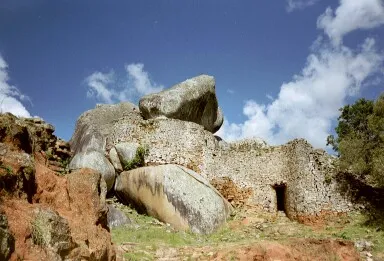
NMMZ divides the monument into four components: the Hill Complex, the Great Enclosure, the Valley Ruins and the Periphery Settlements, the last of these the lesser-visited outer area of house platforms beyond the main walled sites. The walk starts at the souvenir shop by the base of the Hill Complex, where an information office2 issues tour guides; most visitors climb the Hill Complex first, then descend to the Great Enclosure, whose wall stands 11 metres high and runs for about 250 metres1 without any mortar, and finish through the Valley Ruins on the way back.
The on-site Great Zimbabwe Museum, near the entrance, holds the original finds rather than replicas: soapstone Zimbabwe Birds, gold beads, pottery, iron tools and ceremonial objects dug out of the Valley Ruins over the past century. A nearby traditional village, staffed by artisans and craftspeople, shows a version of rural Shona life rather than anything from the historic period itself, and sells crafts alongside the souvenir shop. Plan an unhurried morning or afternoon to cover the Hill Complex and Great Enclosure, with extra time if you also want the Valley Ruins and the museum.
Visiting: hours, admission, booking
The facts box above has the current opening hours, sourced from NMMZ, and a link to its site for admission, which NMMZ sells at the gate rather than through a published fixed-price list. Tour guides are provided from the information office at the entrance; ask for one when you arrive, since the site has no marked route and a guide makes sense of which structures belong to which period. Bring cash for the gate, guide fee and souvenir shop, as card payment this far from Masvingo cannot be relied on.
If you want to stay close to the ruins rather than drive back to Masvingo each day, lodges and rondavels operate near the monument2, and a campsite on site has cooking areas, sanitation and firewood for sale. Either lets you start the climb up the Hill Complex before the day’s heat sets in.
Getting there
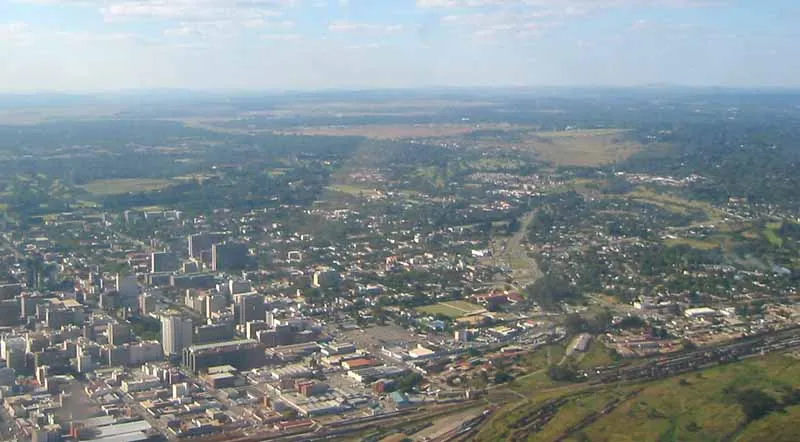
The ruins sit about 27 km southeast of Masvingo town2, itself 292 km south of Harare3 on the A4 highway. There is no scheduled public transport to the site, so a hire car, taxi or organised tour from Masvingo is the practical way in; the road is sealed and an easy half-hour drive. Most Masvingo hotels and lodges can arrange a half- or full-day transfer if you would rather not self-drive.
Nearby
Lake Mutirikwe, a reservoir close to the ruins, adds a change of scenery with a recreational park and wildlife on its northern shore, and pairs easily with a morning at the ruins. Masvingo itself, the practical base for this part of the country, has the wider choice of hotels, fuel and onward transport connections toward Harare or Bulawayo. For the fuller story of the city’s three building phases, trade links and the Zimbabwe Bird, see the Great Zimbabwe overview.
_Tg7jU.webp)