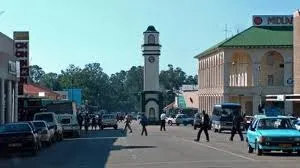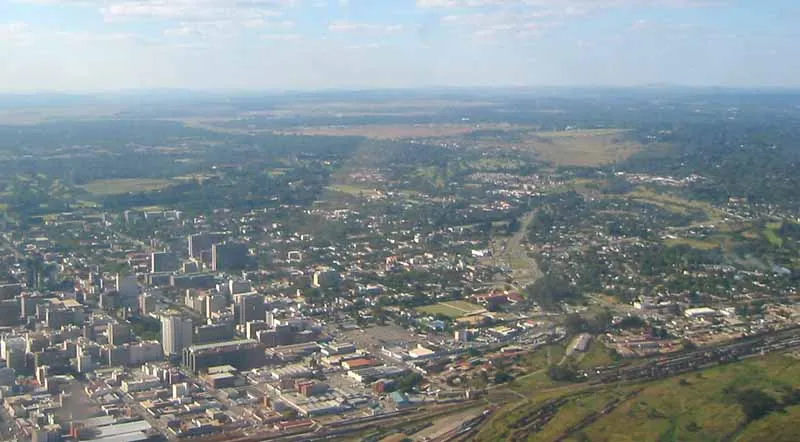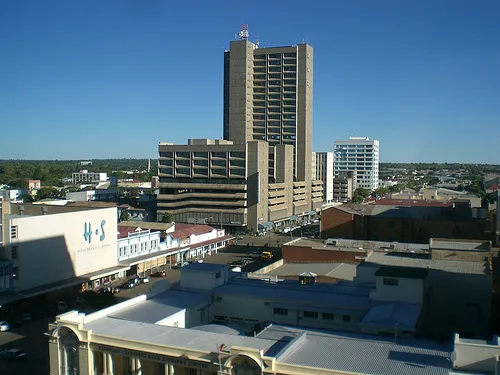
Bulawayo is Zimbabwe’s second-largest city, with 665,952 people1 counted in the 2022 census, and sits in the south-west of the country at an elevation of 1,358 metres, which keeps its climate milder than the lowveld further south. The city grew out of a kraal that King Mzilikazi of the Ndebele built around 1840; its name is usually translated as “place of slaughter” or “the one that is killed.” British South Africa Company forces took the settlement after the 1893 First Matabele War, and the colonial town that followed, laid out with broad grid streets, was granted city status in 19432. For visitors today, Bulawayo is a compact, workable base in its own right, built around two national museums and a short run from one of the continent’s great granite landscapes.
Getting oriented
The centre is a straightforward grid of broad avenues, a legacy of the colonial planning that left the streets wide enough to turn a full ox wagon2. That is still why the CBD feels so much more spacious than Harare’s. The railway, which made Bulawayo Zimbabwe’s industrial hub through most of the 20th century, runs along the southern edge of the centre and the old station is a short walk from most of the central hotels and shops. Suburbs proper lie just outside the grid: Suburbs and Hillside to the south are the leafy, residential areas closest to the centre, while the industrial zones that once anchored the city’s economy sit further out.
Highlights
The Natural History Museum of Zimbabwe, which opened in 1964, is one of the country’s five national museums and its only dedicated natural history collection. It holds the second-largest mounted elephant in the world alongside what it calls the largest and most important collection of bird skins, nests and eggs in Africa, spread across nine public galleries3 covering geology, palaeontology and entomology as well as zoology.
The Bulawayo Railway Museum, at the old station and established in 1972, is the place to see why the railway mattered here: 18 steam locomotives and 8 diesel-electric engines are on display, alongside coaches, cranes and wagons, plus Cecil Rhodes’s own railway carriage, built in 18974. It rewards an hour or two for anyone even mildly curious about how the city was built.
Centenary Park, in the city centre, is the everyday green space — an amphitheatre and fountain rather than a headline attraction, but a pleasant stop between the two museums if you are on foot.
Getting around
Joshua Mqabuko Nkomo International Airport, in the facts box above, handles the city’s flights; most visitors otherwise arrive overland. The A5 highway to Harare runs 439 km5 to the north-east, and the A8 highway to Victoria Falls runs 440 km6 to the north-west. Both are long enough that most people fly or take an overnight coach rather than self-drive in one push. Within the compact centre, walking covers most of what a short stay needs; a car or organised transfer is the practical way to reach the Matobo Hills, since no scheduled public transport runs there.
Where to stay by area
The city centre puts you within walking distance of both museums and the old station, and is the easiest base if you are relying on taxis or your own feet. Suburbs and Hillside, just south of the centre, are quieter, leafier residential areas a short drive out, favoured by anyone who prefers gardens and a slower pace to the CBD’s bustle. Either works for a one- or two-night stop before heading on to the Matobo Hills or Victoria Falls.
Day trips
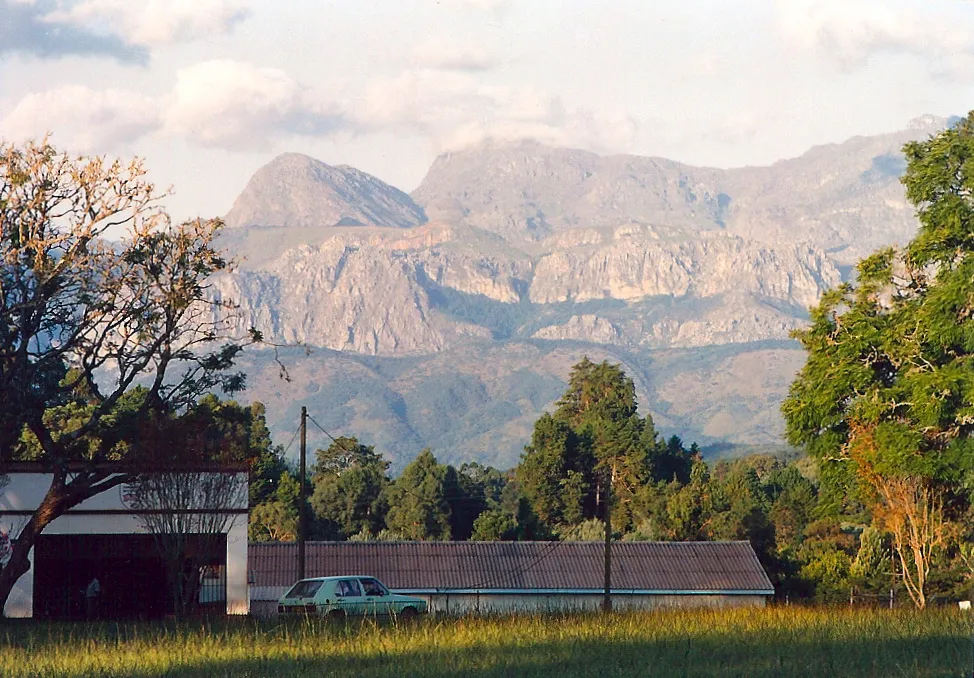
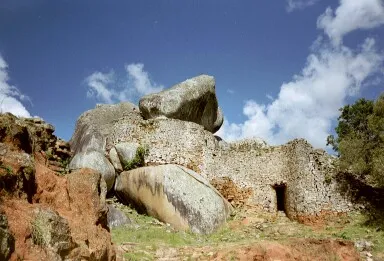
The Matobo Hills, about 35 km south of the city, are the reason many travellers add a Bulawayo stop at all. The park was inscribed as a UNESCO World Heritage Site in 2003 for its distinctive granite kopjes, and holds more than 3,000 registered rock art sites, most dating to between the 4th and 5th centuries, with Bambata, Inanke, Nswatugi and Pomongwe caves among the sites you can visit. A separately fenced game area has been restocked with black and white rhino, and the hills are known for the world’s densest leopard population7. Malindidzimu, known as World’s View, is where Cecil Rhodes is buried — a site that remains contested in Zimbabwe for what it represents. A day is enough to see the rock art and the game area; a guide or organised transfer is the practical way in, since there is no public transport to the park.
_Tg7jU.webp)