Why go
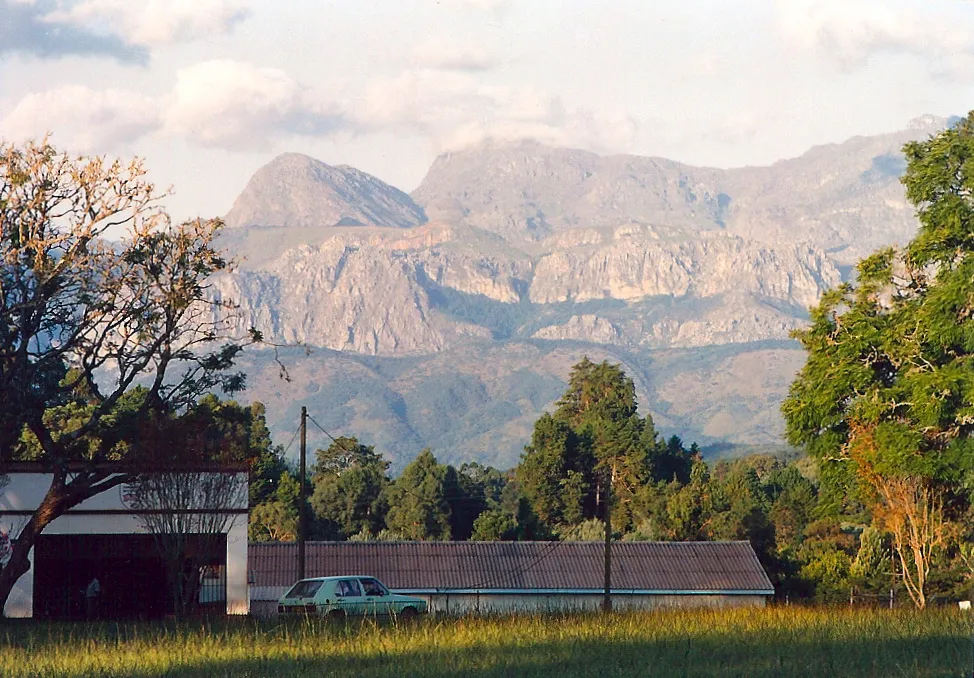
The Chimanimani Mountains straddle the border between Zimbabwe and Mozambique at the southern end of the Eastern Highlands, a range of jagged quartzite peaks that feels closer to a Scottish moor than to the rest of lowland Zimbabwe. On the Zimbabwean side, the range is protected as Chimanimani National Park, established in 19501, 17,110 hectares of Afro-montane wilderness managed by the Zimbabwe Parks and Wildlife Management Authority (ZimParks). It is one of the country’s richer pockets of plant life, with 2,182 recorded plant taxa, 74 of them found nowhere else, and it is also recognised as an Important Bird Area2. None of that is the main reason people come, though: this is a park for walking, not driving, and it draws hikers rather than the wildlife-focused visitors who head for Hwange or Mana Pools.
What you will see
There is no scenic loop road here, because there is no road beyond the car park at all; the park is on foot from the entrance onward, and what you see depends entirely on how far you are prepared to walk. The signature target is Bridal Veil Falls, a waterfall reached by trail from the base camp area and an achievable half-day outing for anyone not planning a multi-day traverse. Hikers heading deeper into the range sleep in a scatter of caves rather than in built accommodation: Terry’s and Peter’s caves, former mine shafts left over from old mineral prospecting2, are the best known of these natural shelters, and camping is otherwise the only overnight option inside the park — bring your own tent, since there is nothing to rent on site. The terrain itself, bare rock peaks, grassy valleys and patches of montane forest running right up to the Mozambique boundary, is the real draw, and the quiet is part of it: this is a far less visited park than Zimbabwe’s big game reserves.
Visiting: hours, admission, booking
The facts box above has the day-visitor conservation fee that applies on entry. On top of that, a separate vehicle fee applies if you drive in: locally registered vehicles pay USD 3 for a day visit or USD 1 if you’re staying overnight, while foreign-registered vehicles pay USD 10 for a day visit or USD 3 overnight. Sleeping in the park’s mountain huts costs USD 7 per person for local visitors or USD 10 for foreign visitors, and standard or undeveloped camping is charged at the same USD 7 / USD 10 per person rate3. These are ZimParks’ own published tariffs, paid at the entrance rather than booked online. The best months to visit are March to April and August to September2, avoiding the wettest and coldest stretches of the Eastern Highlands’ own weather pattern.
Getting there
Vehicles stop at the park’s car park; everything beyond that point is reached on foot only, so this is not a park you can tour from a vehicle the way you might Hwange or Matobo. The nearest city with onward transport and services is Mutare, itself the usual base for the wider Eastern Highlands; from there, Chimanimani village is the final stop before the park entrance. ZimParks’ head office, for bookings or questions ahead of a trip, sits at the corner of Sandringham and Borrowdale Road in Harare’s Botanical Gardens, reachable on +263(242)7076252 or by email.
Nearby
Chimanimani sits at the southern end of the same Eastern Highlands spine that runs north through Nyanga, so a trip here pairs naturally with more time in that cooler, greener strip of the country rather than with Zimbabwe’s game parks. Mutare and the Bvumba Mountains above it are the closest stop with real infrastructure, a reasonable base for arranging transport or restocking before or after a few days on the trails here.
_Tg7jU.webp)