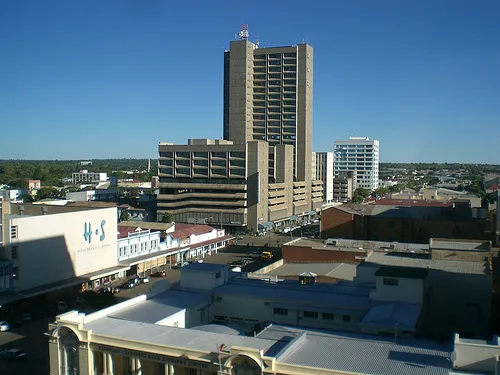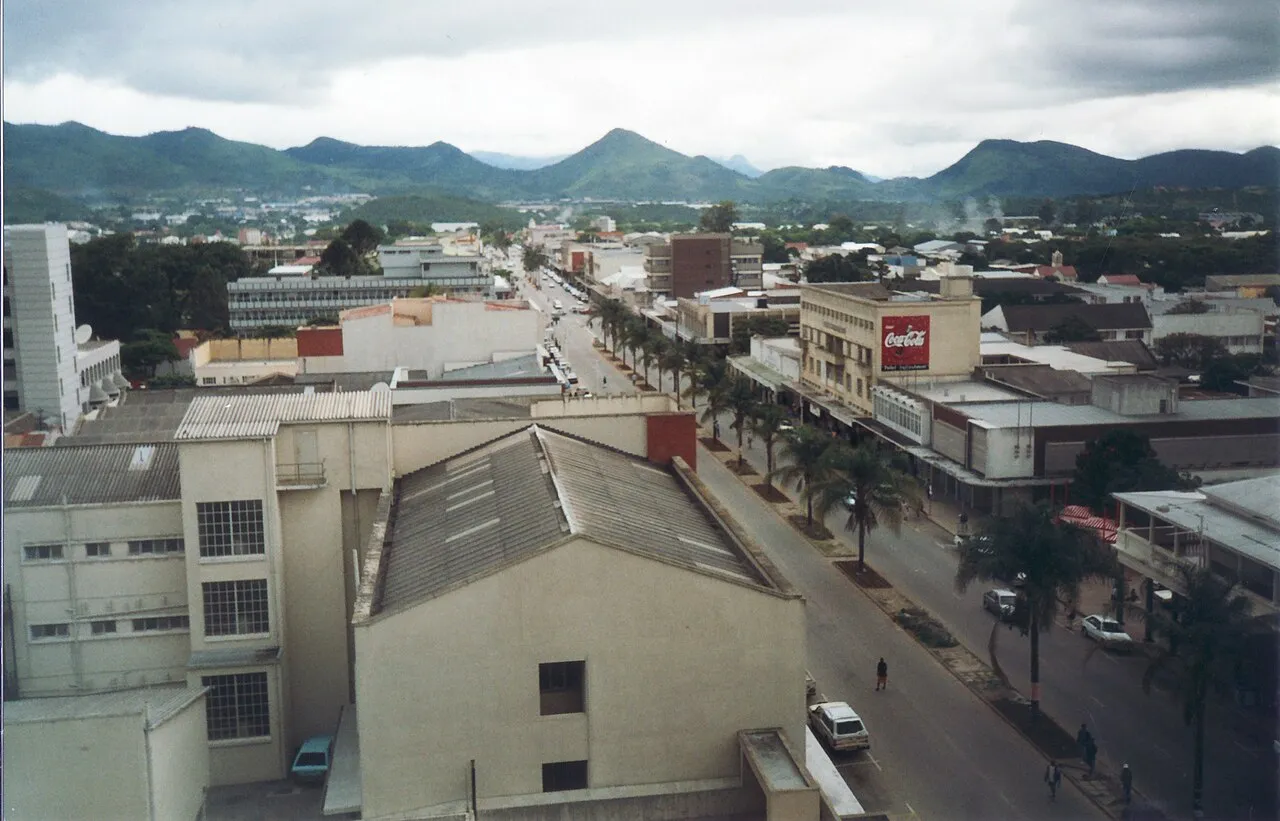
Mutare is Zimbabwe’s fourth-largest city, with 224,804 people1 counted in the 2022 census, tucked into a valley on the eastern edge of the country just 8 km from the Mozambique border. It was founded as a fort in 1897, became a municipality in 1914 and a city in 1971; known as Umtali for most of that history, it took its current name in 19822. The name itself probably comes from “Utare,” a reference to the iron and gold found in the valley below. For visitors, Mutare works best as a base for the mountains and old mining villages around it rather than a destination in its own right.
Getting oriented
The city sits at 1,120 metres2, low enough to feel mild rather than cold, with Christmas Pass carrying the main road down into the valley from the west and the Bvumba Mountains3 rising immediately to the south. The better-off suburbs — Murambi, Fairbridge Park, Tiger’s Kloof and the Avenues — spread out on the valley’s higher, cooler ground, while Yeovil, Westlea and Florida form the middle-income areas closer to the centre. Sakubva and Dangamvura, the city’s largest residential areas, lie further out and are not geared towards visitors.
Highlights
Mutare Museum, one of Zimbabwe’s national museums, began life as a society in 1954 before the government took it over in 19594. It’s a modest stop, not a headline sight, but worth an hour for context on the region’s mining and natural history before heading into the mountains.
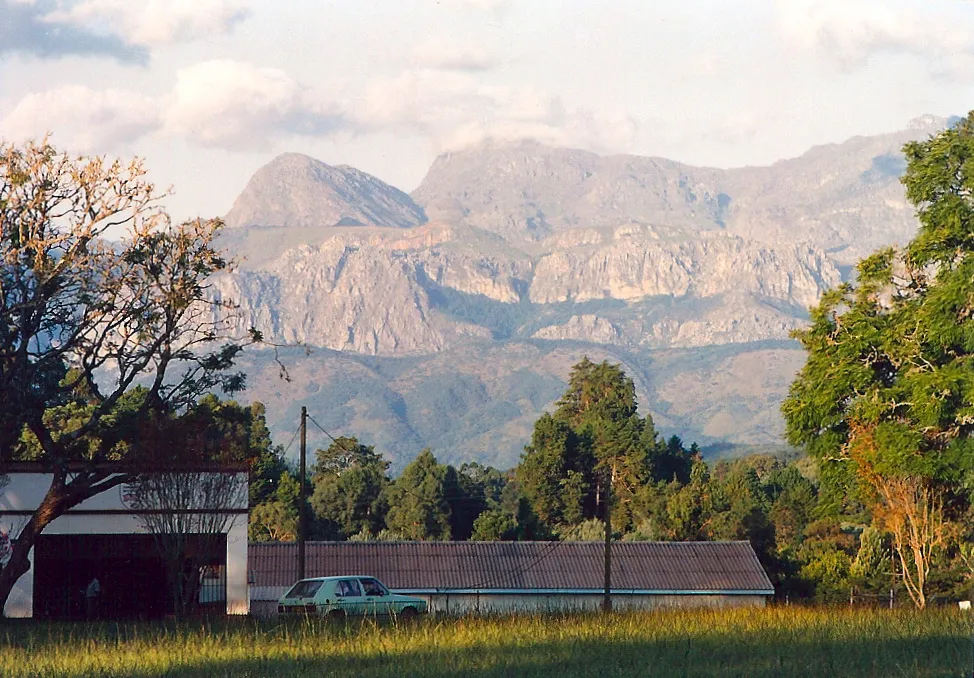
Starting about 10 km south-east of the city, the Bvumba Mountains are the real draw, a range of mist-wrapped peaks rising to 1,911 metres at Castle Beacon, named “Bvumba” (Shona for mist) for the cloud that regularly rolls through the ravines. The Bvumba Botanical Garden here holds 59 of the world’s 189 known cycad species in grounds built around a handful of small streams, with a viewpoint locally reckoned one of the best views in Africa3.
Gold mining built Penhalonga, 18 km north of the city: it dates back to ancient workings, and the Penhalonga Mine opened in 1895, drawing the village that grew up around it, before closing in 1943; the Rezende Mine nearby has worked the same ground since 19995. It’s the place to see where Mutare’s own name and economy started.
Getting around
Mutare has no scheduled commercial air service, in the facts box above, so arriving overland on the A3 highway from Harare, 214 km to the west, is the normal route in; the same road continues east towards the Mozambique border post, with Beira on the coast roughly 290 km2 beyond it. The city centre itself is small enough to cover on foot; a car or organised transfer is the practical way up into the Bvumba Mountains or out to Penhalonga, since public transport does not reliably reach either.
Where to stay by area
The city centre keeps you close to the museum and the shops and is the simplest base for a one-night stop before moving on. Murambi and Fairbridge Park, up on the cooler high ground, suit anyone who would rather be away from the centre’s noise, at the cost of needing a car or taxi to get around. Staying up in the Bvumba Mountains themselves, rather than in the city, is the better choice if the mountains are the actual reason for the detour — it saves the daily drive up and down Christmas Pass.
Day trips
The Bvumba Mountains are the obvious day trip, close enough for a morning in the botanical garden and an afternoon on one of the viewpoints before returning to the city, though staying a night up there instead is just as easy given the short distance. Penhalonga makes a shorter, different kind of outing: a look at the gold-mining village and old workings that gave the area its start, rather than a scenic hike.
_Tg7jU.webp)