Victoria Falls exists because of the bridge, not just the waterfall. A small settlement grew up from 1901, when engineers were scouting the Zambezi for hydro-electric potential, but the town took shape once the railway from Bulawayo reached it and the Victoria Falls Bridge opened on 12 September 19052, linking what were then Southern and Northern Rhodesia across the gorge just below the falls. It stayed a tourism town from that point on, booming through the 1930s to 1960s and again in the 1980s and early 1990s, and was granted city status only recently, on 9 December 20201. Today it is almost entirely a service town for the falls and the adventure industry built around them.
Getting oriented
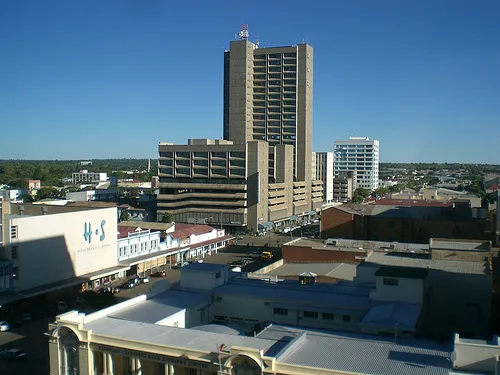
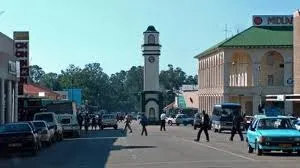
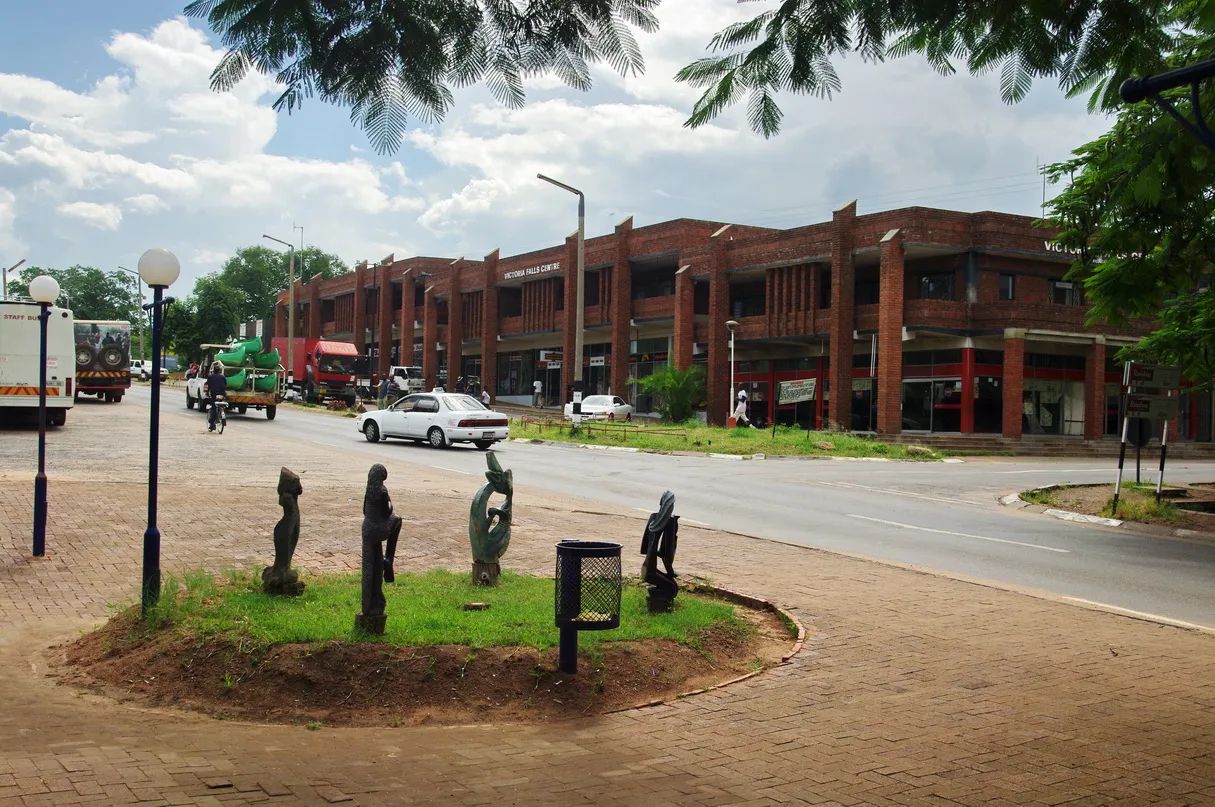
The town sits on the southern bank of the Zambezi, at the western end of the falls, and is compact: the built-up area covers only about 23.4 km²1. The town centre, where most hotels, restaurants, tour operators and the curio market sit, is within walking distance of the national park gate for the falls themselves. Chinotimba, one of the town’s older high-density suburbs, is a residential area a short drive from the centre, with family-run guesthouses and B&Bs that cost noticeably less than anything in the centre or along the river. The two areas rarely overlap for a visitor beyond that accommodation choice: sightseeing and tour pickups happen in and around the centre.
Highlights
Victoria Falls Bridge is as much an attraction as a border crossing: the steel-arch structure, opened on 12 September 19052, carries road, rail and foot traffic between Zimbabwe and Zambia directly over the gorge, with bungee jumping and a bridge tour run from the Zimbabwean side. The falls themselves, viewed from the Rainforest trail inside the national park, are covered in the country’s things-to-do guide, which has current entry fees and opening times.
Whitewater rafting and gorge activities on the Zambezi below the falls are the town’s signature adventure draw, part of a lineup that numbered over 200 related activities in 20191, including bungee jumping, mountain biking, quad biking, paragliding, skydiving and fly fishing, most bookable through operators based in the town centre.
Sundowner cruises on the calmer stretch of the Zambezi above the falls are the low-effort alternative to the adrenaline activities, typically a couple of hours on the water at the end of the day with wildlife along the banks and a view back towards the spray cloud rising off the falls.
The curio market and craft stalls in the town centre are the place for Zimbabwean and regional crafts, wood carving and textiles, and a standard stop for visitors with an afternoon free between activities.
Getting around
Victoria Falls Airport3, in the facts box above, sits about 18 km south of the town and now handles a large share of the country’s tourist arrivals directly, so most visitors fly in rather than overland. By road, it is roughly 440 km from Bulawayo via the A8, a full day’s drive, and about 109 km from Hwange1 to the south-east, the usual link to Hwange National Park. The town centre itself is small enough to walk between hotels, the park gate and the curio market; longer trips, including the crossing to Zambia over the bridge, are done by shuttle, taxi or organised tour.
Where to stay by area
The town centre and the riverfront closest to the falls carry the widest and priciest choice, from the colonial-era Victoria Falls Hotel overlooking the gorge to backpacker lodges a short walk from the park gate; staying here means activities, restaurants and the market are all within walking distance. Chinotimba, a short drive out, is the budget alternative: guesthouses and B&Bs run by local families, at a noticeably lower price than the centre, suited to longer stays or a tighter budget rather than falls-view convenience.
Day trips
Zambezi National Park, upstream of the town along the river, and the Zambian side of the falls, reached on foot or by shuttle over the Victoria Falls Bridge, are the two standard add-ons for a traveller based here with an extra day. Both are short trips from the town centre rather than overnight excursions, and most tour operators in town sell them as half-day add-ons alongside the rafting and cruise bookings.
_Tg7jU.webp)