ROAMOPEDIA
Wat Pho
Discover serenity and history at Wat Pho, Bangkok – where the majestic Reclining Buddha meets Thailand’s largest Buddha image collection.
“Discover serenity and history at Wat Pho, Bangkok – where the majestic Reclining Buddha meets Thailand’s largest Buddha image collection.”

Exploring Bangkok: Wat Pho and the Reclining Buddha

Picture yourself walking through the bustling streets of Bangkok, Thailand. The air is filled with the aroma of exotic spices, while the sound of ancient bells and gongs fills your ears. As you weave through the throngs of people, your eyes are drawn to a magnificent sight – the Wat Pho temple, home to the famous Reclining Buddha and the largest collection of Buddha images in Thailand.

Wat Pho, also known as Wat Phra Chetuphon Vimolmangklararm Rajwaramahaviharn, is one of the oldest and largest temple complexes in Bangkok, dating back to the 16th century. The temple grounds cover an area of over 80,000 square meters, and the entire complex is a testament to Thailand’s rich cultural and religious history.

The Reclining Buddha is the main attraction at Wat Pho and is one of the most awe-inspiring sights you will ever encounter. Measuring 46 meters in length and 15 meters in height, this gigantic golden statue of Buddha lying down on his right side is truly a sight to behold. The statue is adorned with intricate designs and patterns, while the soles of the Buddha’s feet are inlaid with mother-of-pearl, depicting 108 auspicious symbols of Buddhism.

The Reclining Buddha is not just an artistic masterpiece; it also holds significant religious importance. The pose in which the Buddha is depicted symbolizes his entry into Nirvana and the end of all reincarnations. This momentous event in the life of the Buddha is the culmination of his journey towards enlightenment, and the statue serves as a powerful reminder of the ultimate goal of Buddhism – the attainment of spiritual liberation.

As you walk around the Reclining Buddha, you will notice that there are 108 bronze bowls lining the length of the statue. These bowls represent the 108 auspicious symbols found on the soles of the Buddha’s feet and are used by worshippers to make merit. Visitors can participate in this ritual by purchasing a bowl of coins and dropping one coin into each of the 108 bowls, creating a soothing melody that fills the temple. The act of making merit is believed to bring good fortune and happiness, and the coins collected are used to maintain the temple and support its monks.

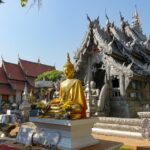
While the Reclining Buddha may be the star attraction, Wat Pho is also home to the largest collection of Buddha images in Thailand, boasting over a thousand statues in total. These images come in various forms, showcasing the rich artistic traditions of Thailand and its neighboring regions.

One of the most striking collections of images can be found in the Gallery of 394 Buddhas, which houses rows upon rows of gilded Buddha statues seated in the lotus position. The sheer number of statues in this gallery creates a mesmerizing effect, as the golden figures seem to stretch on into infinity.

Elsewhere in the temple complex, you will come across the Phra Rabiang cloisters, which feature a remarkable display of over 150 Buddha statues. These statues were collected from various parts of Thailand and represent different periods and styles of Thai art, from the graceful Sukhothai style to the more robust and earthy Ayutthaya style. Each statue is unique, with its own story to tell, and together they form a fascinating visual history of Thai Buddhist art.

Wat Pho is not just a treasure trove of Buddhist art; it also has a long-standing reputation as a center of learning and medicine. The temple is considered the birthplace of traditional Thai massage, and its walls are adorned with ancient inscriptions and illustrations on various subjects, including herbal medicine, massage techniques, and even astrology.

One of the most famous inscriptions at Wat Pho is the “Epigraphic Archives of Wat Pho,” a series of 1,431 stone inscriptions that serve as a comprehensive encyclopedia of traditional Thai knowledge. These inscriptions, which were created during the reign of King Rama III in the early 19th century, provide invaluable insights into the social, cultural, and intellectual life of Thailand during that period. In recognition of their historical and cultural importance, the Epigraphic Archives of Wat Pho were inscribed on UNESCO’s Memory of the World Register in 2011.

Given its deep connection to traditional Thai medicine, it is no surprise that Wat Pho is also home to a renowned school of massage and medicine. The Wat Pho Thai Traditional Medical and Massage School, established in 1955, is the oldest and most prestigious institution of its kind in Thailand. The school offers a range of courses on traditional Thai massage, herbal medicine, and other related subjects, and attracts students from all over the world.

As you explore the temple complex, you may come across some of the students practicing their massage techniques on one another or even offering their services to visitors. This is a unique opportunity to experience the ancient art of Thai massage, which combines elements of acupressure, yoga, and meditation to create a deeply relaxing and therapeutic experience.

In addition to its rich cultural and historical offerings, the Wat Pho temple complex also boasts beautiful architecture and lush gardens. The temple’s main chapel, or ubosot, is a stunning example of Thai religious architecture, with its sweeping multi-tiered roof, intricately carved gables, and richly decorated interior.

The temple grounds are dotted with stupas, or chedis, which are bell-shaped structures containing the ashes of members of the royal family and other important figures. There are over 90 chedis in total at Wat Pho, with the largest and most impressive being the Phra Maha Chedi Si Rajakarn, a group of four large stupas built to honor the first four kings of the Chakri dynasty.

As you wander through the tranquil gardens of Wat Pho, you can’t help but feel a sense of serenity and reverence, as the beauty of the temple’s art and architecture, the spirituality of its statues and inscriptions, and the ancient wisdom of its teachings all come together to create an experience that is both inspiring and humbling. For anyone visiting Bangkok, a trip to Wat Pho is an absolute must, as it offers a unique opportunity to connect with Thailand’s rich cultural heritage and gain a deeper understanding of its enduring spiritual traditions.

  • Print
  • +-
    Font Size