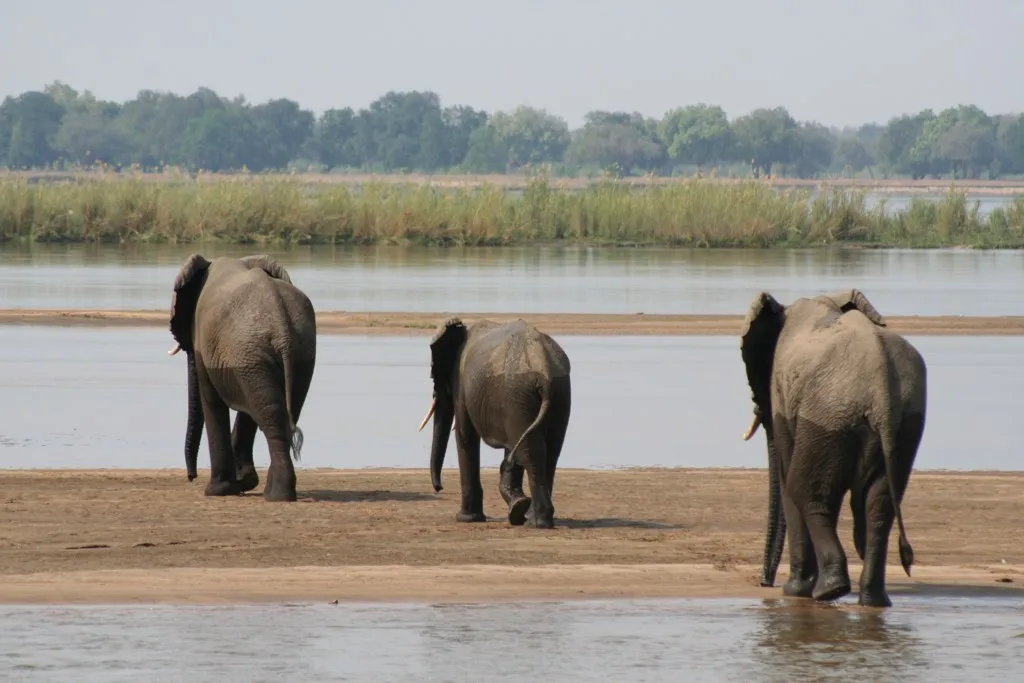
Lower Zambezi National Park covers 4,092 km² on the north bank of the Zambezi River in southeastern Zambia, opposite Zimbabwe’s Mana Pools National Park. Until 1983 the area was the private game reserve of Zambia’s president, which protected it from mass tourism; there are no paved roads, and tourists are unlikely to encounter other tourists. The quickest and easiest way in, and likely the most expensive, is to fly from Lusaka to the Royal or Jeki airstrips2. Jeki, inside the park, has service on Proflight Zambia1.
By road, the Chongwe River on the park’s western boundary can be reached from Chirundu along a rough road, with a 4×4 recommended and a pontoon across the Kafue River just beyond Gwabi Lodge. You can also self-drive from Lusaka on the T4. Lodges and canoeing operators generally offer pick-ups2 from Lusaka or Chirundu in Zambia, or from across the river in Zimbabwe.
Getting oriented
The park slopes gently from the Zambezi Escarpment down to the river, with Southern Miombo woodlands on the higher ground in the north, Zambezian and Mopane woodlands on the lower slopes in the south, and a floodplain at the river’s edge. A much larger game management area surrounds the park with no fences1 between the two, and both animals and people are free to roam across the whole area.
The river’s edge is overhung with a thick riverine fringe, including ebony and fig trees. Further inland, the floodplain is fringed with mopane forest and interspersed with winterthorn trees and huge acacias, and broadleaf woodland covers the rolling hills behind. Most of the game is concentrated along the valley floor2: an escarpment along the northern end acts as a physical barrier to most of the park’s animal species, and the park famously has no giraffes, as the hilly terrain does not suit them.
Highlights
Canoeing and the river
This stretch of the Zambezi is considered fairly calm and predictable, and for that reason seasonal fishing, boating and canoeing are popular activities, especially guided kayaking through the channels. Look out for carmine bee-eaters at work on their nests in the riverbanks. Fishing is at its best in September and October2.
Wildlife on the valley floor
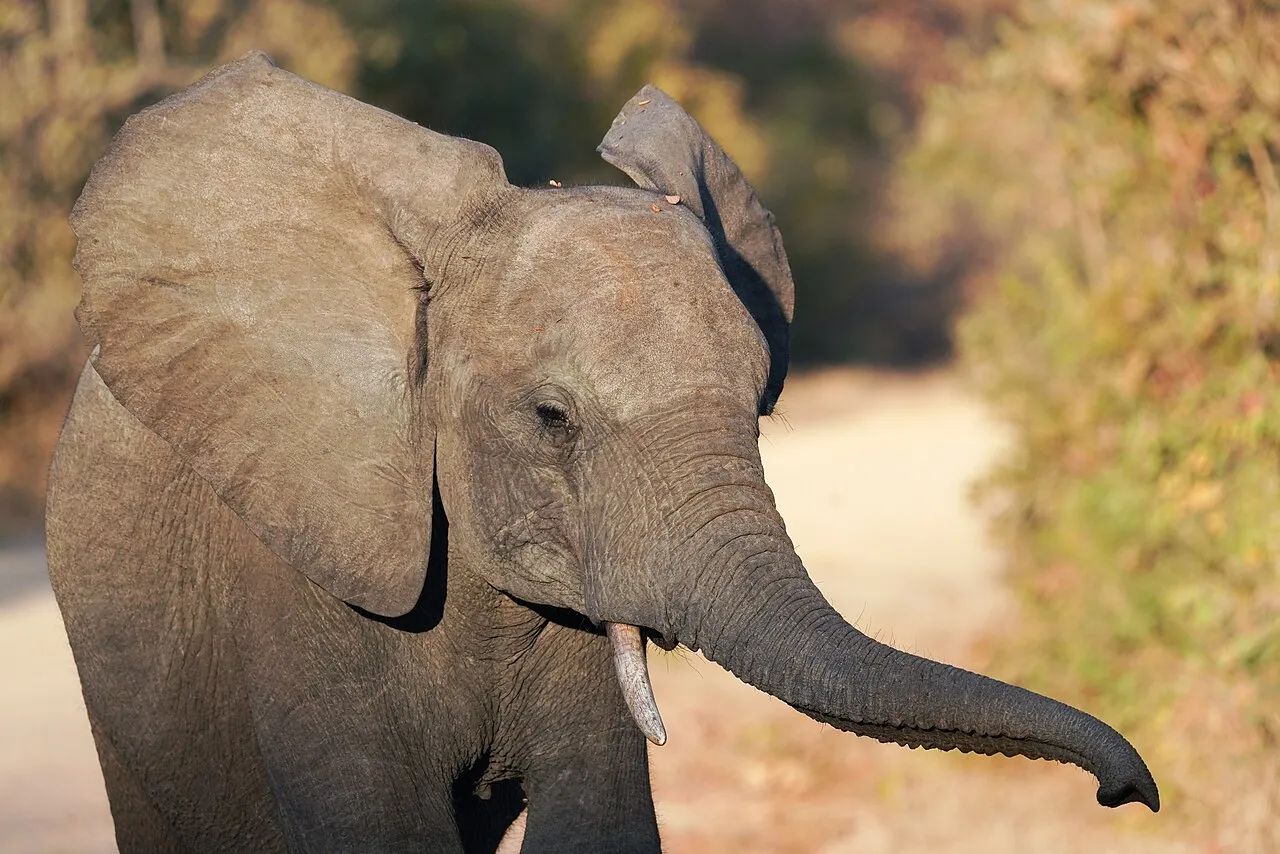
Herds of elephant up to a hundred strong are often seen at the river’s edge, and “island hopping” buffalo and waterbuck are common. A small area on the valley floor hosts many of the bigger mammals: elephant, buffalo, hippo, waterbuck, kudu, zebra, lion and wild dog. Roan, eland and the Samango monkey are occasionally seen, and the nocturnal animals include hyena, porcupine, civet, genet and honey badger. The park and the adjacent Chiawa Game Management Area support a relatively large population of mammals2.
Birdlife
The birdlife along the riverbanks is exceptional. Many African fish eagles can be seen and heard for miles around, white-fronted and carmine bee-eaters nest along the cliffs, and other unusual species include the red-winged pratincole, crested guineafowl, black eagle and vast swarms of quelea. In summer the narina trogon makes its home here2; other specialities are the trumpeter hornbill, Meyer’s parrot and Lilian’s lovebird.
Getting around
If you fly in, the lodge you are staying at will collect you and provide game drives. Camps also offer walking safaris3. From April to June the bush is dense and the grass long2, so game may be harder to spot, and animals may be skittish because they will not have seen many vehicles during the summer rainy season.
When to go
Virtually all lodges and canoeing operators are open from about April to November, and the best time is mid-season, from July to October2.