South Luangwa National Park is a national park in eastern Zambia that was founded as a game reserve in 1938 and became a national park in 1972. It covers 9,050 km²1 in the valley of the Luangwa River, which forms its eastern boundary. The concentration of animals around the river and its oxbow lagoons is among the most intense in Africa. The walking safari originated in South Luangwa, and the park is one of the best known2 for mobile walking safaris.
It is Zambia’s most popular park3, and four of the Big Five are easily seen; only the rhino is missing, poached to extinction2.
Getting oriented
The Muchinga Escarpment borders the park to the west, and the Luangwa Valley lies at the end of the East African Rift valley. Southern Miombo woodlands cover the higher slopes of the valley, while Zambezian and Mopane woodlands cover the valley bottom. Floodplains lie close to the river, where hippos graze at night1.
The main settlement, Mfuwe, lies outside the park’s eastern boundary and has an airport. The Nsefu Sector forms the northern part of the park1, with riverine forest, ebony groves, mopane woodland, seasonally flooded plains and several natural geothermal springs. The BBC One documentary Kingdom was filmed over five years in the Nsefu Sector2.
Reedbuck, roan, sable, hartebeest, grysbok, klipspringer and oribi all live in the park but are not prolific in the central tourist area2. They tend to stay deeper in the remote parts towards the Muchinga escarpment.
Highlights
Leopards
The park is known as the Valley of the Leopard2. If you don’t see one resting in a tree in the daytime, your guide will probably track one down at night3.
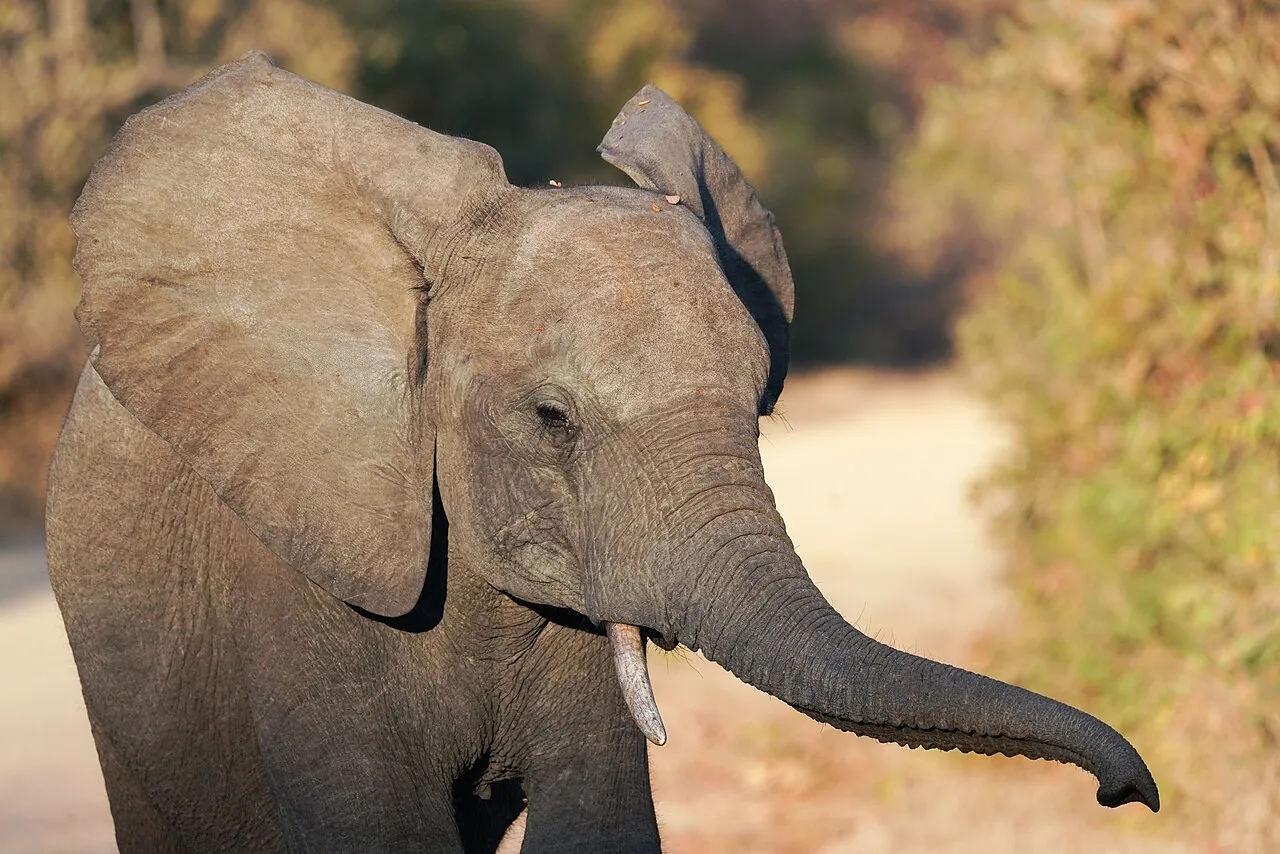
Hippos, elephants and antelope
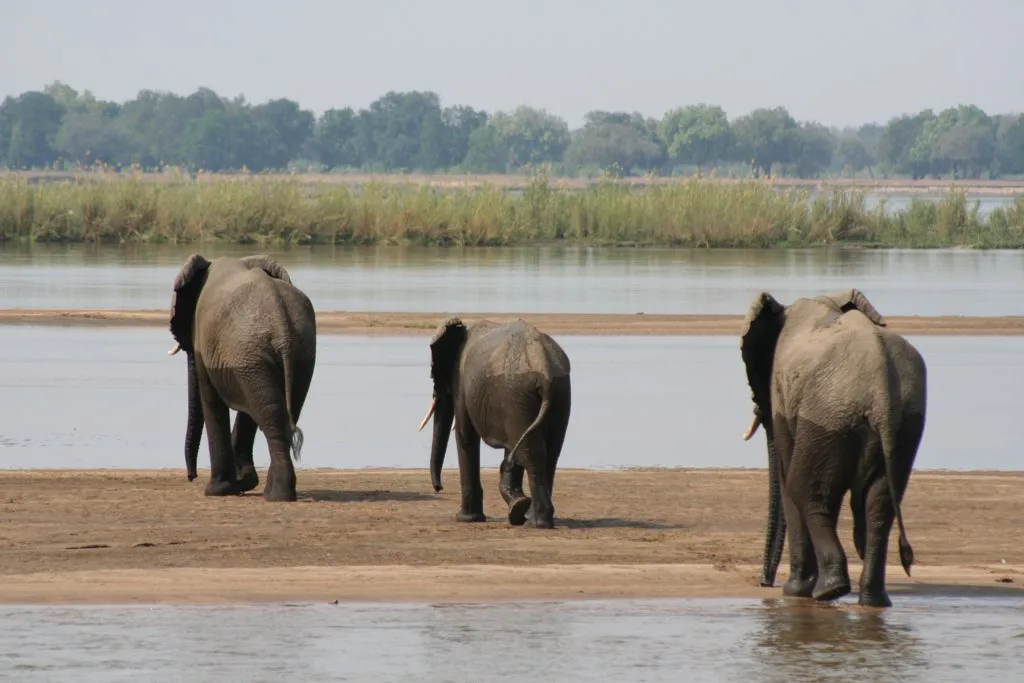
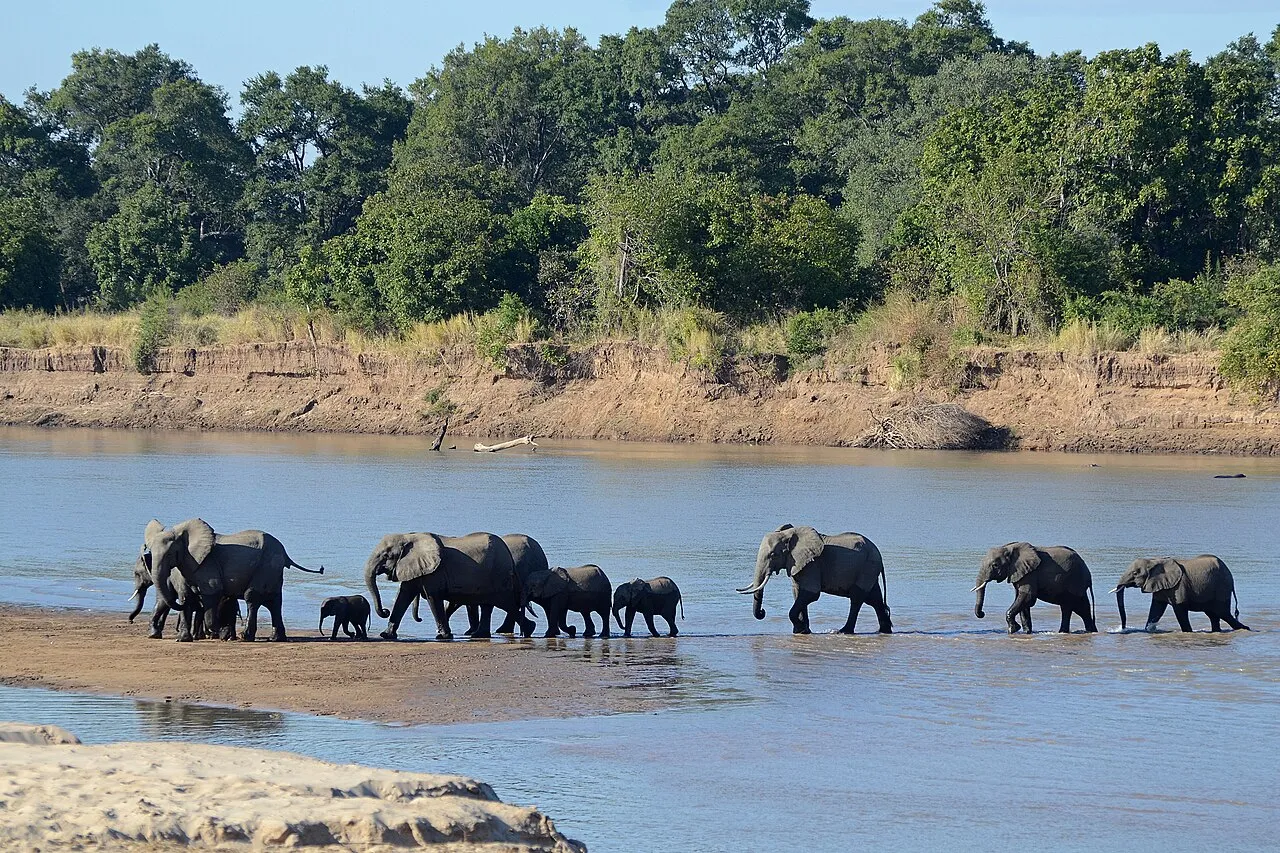
As you cross the bridge into the park there are usually between 30 and 70 hippos lounging in the river below. Further out on the plains, elephant herds reach up to 70 in number2, and buffalo are abundant throughout the valley.
The park has 14 antelope species2. The impala is the most numerous, and the puku, of similar size but much fluffier with a rich orange coat, is just as prolific. The valley also holds Cookson’s wildebeest and Crawshay’s zebra, which are endemic or near-endemic to the valley1.
Birds
About 400 of Zambia’s 732 bird species appear in the park, including 39 birds of prey and 47 summer migrants. Hundreds of carmine bee-eaters nest in the steep sandy banks of the river. Near the end of the dry season, as the river and oxbow lagoons begin to recede, hundreds of large waterbirds2 can be seen wading through the shallows.
Around the same time, just before the rains set in, in November, Palearctic and intra-African migrants arrive2. They include white storks, European swallows and Steppe eagles.
Walking safaris
On a mobile walking safari you walk with a guide from one overnight camp to another, through areas where there are no roads. Shorter nature walks usually last a few hours at a time2, with a qualified walking guide and an armed ranger.
Boat safaris
The river is best navigated in the rainy season2, when it is fuller, and hippos and crocodiles are everywhere.
Getting around
Mfuwe International Airport is the hub for air travel2. Proflight Zambia flies there from Lusaka all year, more often in high season, and all lodges do transfers to and from the airport.
By road, the usual route is from Chipata: a 123 km drive of about two hours to Mfuwe on a good road, if a little corrugated. In a robust 4×4 from Lusaka you can take a short cut from the Great East Road at Petauke, up alongside the Luangwa River, but only well into the dry season and only if you are a very competent and experienced driver. Just below Mpika, a road runs down the Munyamadzi Corridor between North and South Luangwa, and it is generally only open between August and October2 and only for 4WD.
If you’re in your own vehicle, get a map at the entrance and follow the graded loop roads in the park. Many lodges offer morning and afternoon game drives; morning drives usually start before sunrise2, and afternoon drives often continue until shortly after dark.
When to go
The dry season begins in April and intensifies through to October, the hottest month, when game concentrations are at their height close to the remaining water. May to August bring warm sunny days and chilly nights2. The sunny dry season is best for spotting animals, especially July to October3, when the park is busy and high-season rates apply.
Rains arrive as the wet season begins in November, the leaves turn green, and the season lasts until the end of March, with migrant birds arriving in droves during the rains. Each lodge stays open for as long as access is possible2, and several lodges in the central area of the park stay open all year.
Where to stay
Most of the accommodation is along the Luangwa River’s edge, with options from tented camps to luxury safari lodges. The lodges are unfenced, and elephants, hippos, giraffes and baboons are often known to wander within their grounds2. The Mfuwe area gets very busy3.
Day trips
Kawaza village, home to the Kunda people, lies just outside the park, and you can stay in a simple thatched hut there. The village is a past winner of the British Guild of Travel Writers’ Silver Otter Award for the best overseas tourism project. Tribal Textiles has a large shop and workshop on the road between Mfuwe airport and the park2.