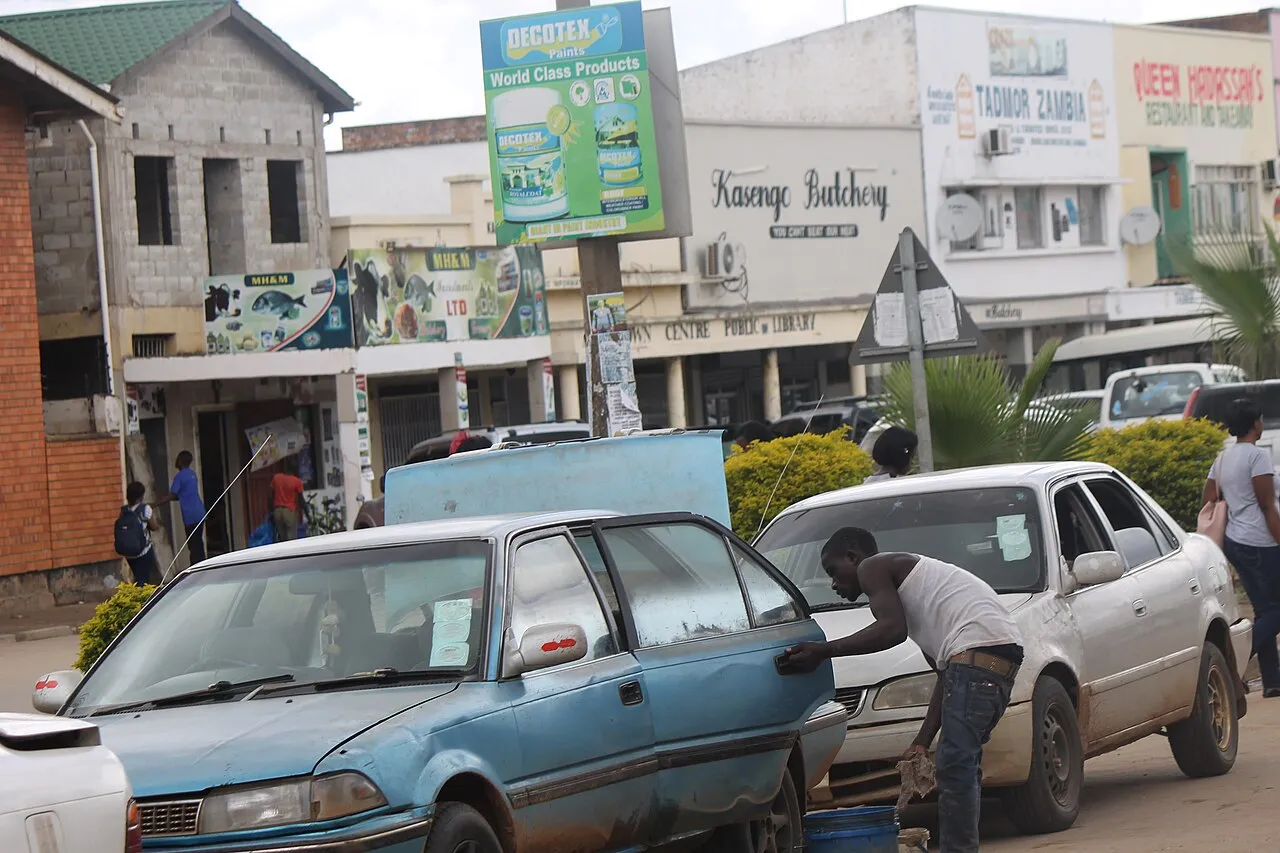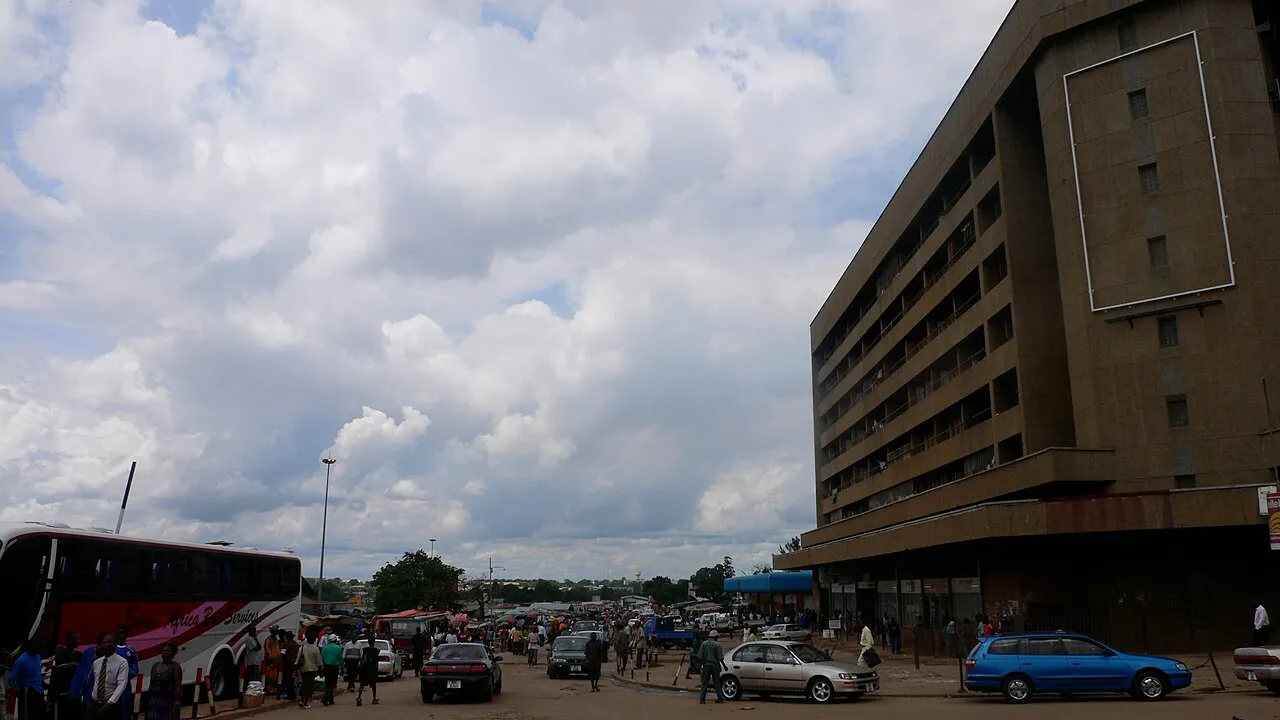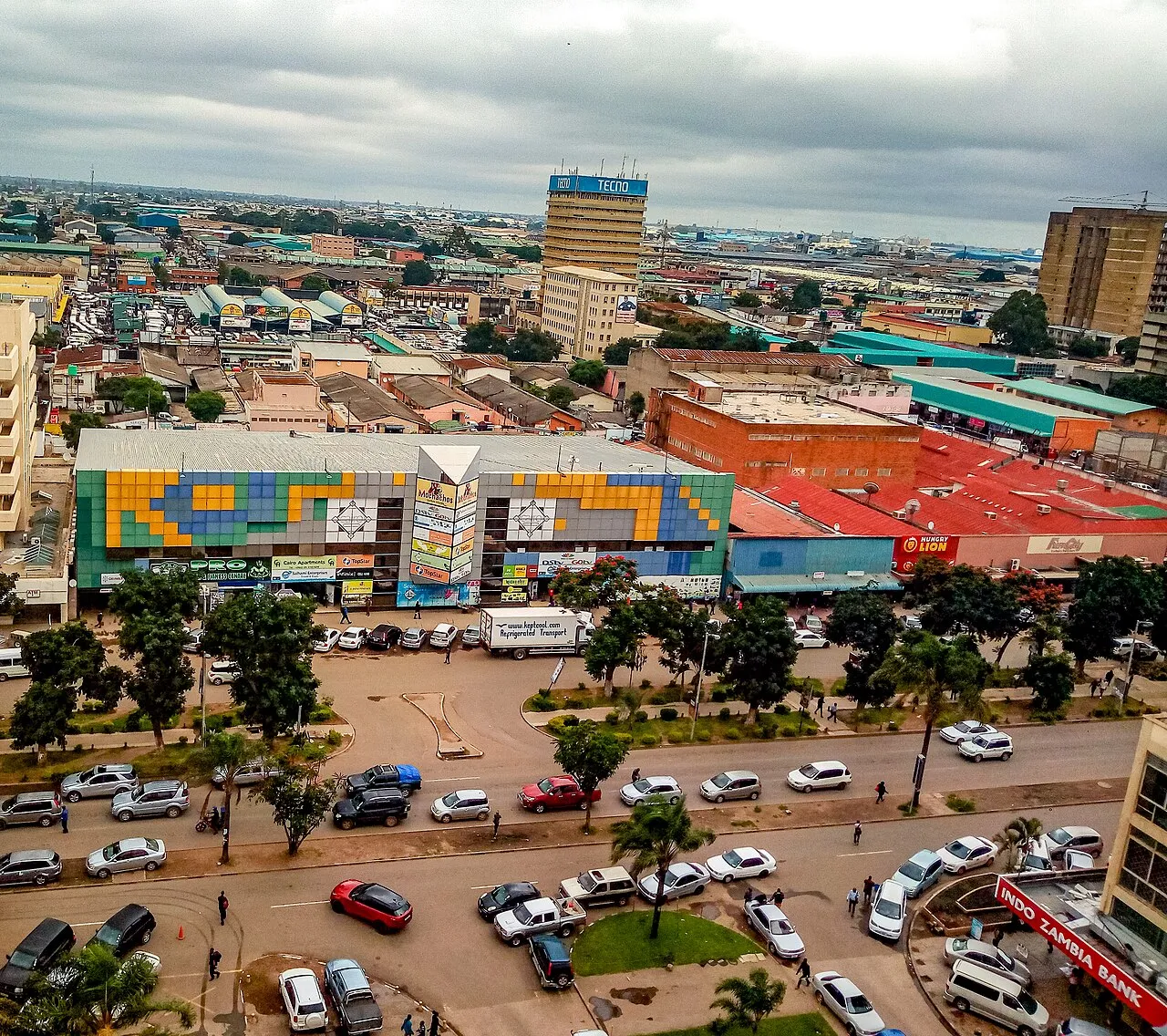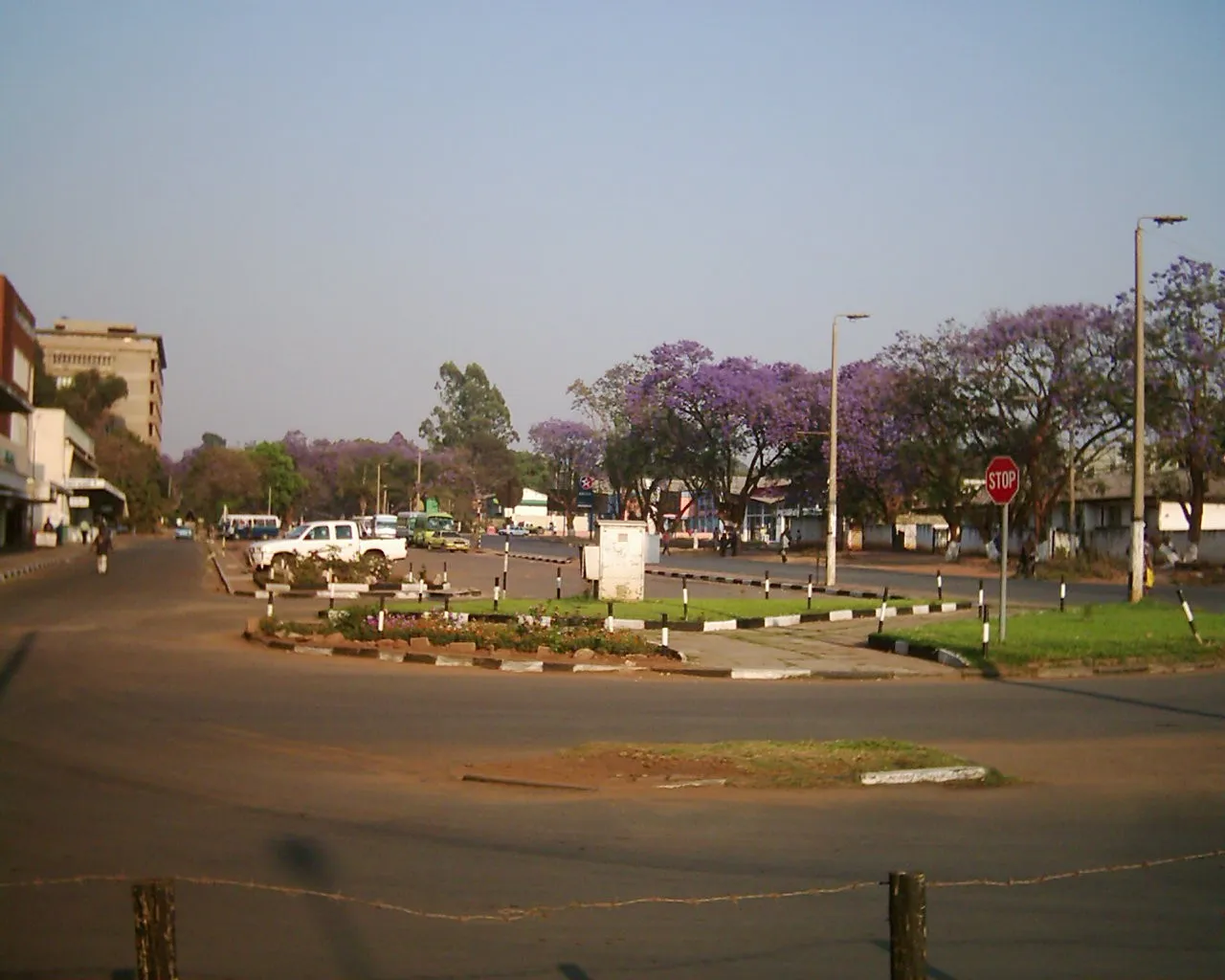
Ndola is the industrial and commercial center of the Copperbelt, Zambia’s copper-mining region, and the capital of Copperbelt Province. In the 2022 census2 it ranked as the country’s third-largest city, after Lusaka and Kitwe. Zambia Tourism calls it the gateway to the mineral-producing region of the country, yet there are no mines in Ndola itself1: the city has established itself as a commercial and light industrial centre3 and the junction and distribution centre for the Copperbelt complex. Come for a slice of twentieth-century history and a working African city.
The town was founded in 19043, starting as a boma and trading post, and the railway main line reached it in 1907. Once the largest industrial centre of Zambia, Ndola saw its economy shrink significantly between 1980 and 20001, and many closed factories still stand empty.
Getting oriented
Ndola lies some 320 km north of Lusaka and 10 km from the border4 with the Democratic Republic of Congo. Modern factories, offices and shops line the central business district. The city’s neighbourhoods1 include Kansenshi, Northrise, Itawa, Masala, Chifubu, Kabushi and Twapia. The Tazama oil pipeline from Dar es Salaam in Tanzania ends its 1,700 km3 journey at the Ndola refinery.
Highlights
Dag Hammarskjöld Crash Site Memorial
Dag Hammarskjöld was the second Secretary-General of the United Nations5, serving from 1953 until his death in 1961. On 18 September 1961 his aircraft crashed on approach to Ndola and all on board were killed. The memorial lies outside town off the Ndola-Kitwe Dual Carriageway3, with a garden and a small museum4 dedicated to his life and the role of the UN. If you only have time for one sight in Ndola, make it this one.
Copperbelt Museum
The Copperbelt Museum in Buteko Avenue3 houses items found in the area dating back to the Stone Age6. Give it an hour if the region’s past interests you.
Mupapa Slave Tree and Lake Chilengwa
The Mupapa Slave Tree in Makoli Avenue is the tree under which Swahili traffickers used to meet. Lake Chilengwa is about 300 m deep3.
Trade fair and football
A big attraction in Ndola is the annual Zambia International Trade Fair3 (ZITF). The city is also home to Zambia’s first modern stadium, the Levy Mwanawasa Stadium, which seats 50,0001 and is the home of Zesco United, a top-flight team in the Zambia Premier League.
Getting around
Simon Mwansa Kapwepwe International Airport lies about 15 km west of the city centre, next to the Hammarskjöld memorial, and serves both Ndola and Kitwe. It started operations on 7 October 20217, replacing the old airport in the Itawa suburb. There are scheduled domestic flights from Lusaka8, and international flights generally arrive from South Africa, Kenya, Mozambique and Ethiopia.
By road, take the Great North Road8 from Lusaka to Kabwe, Kapiri Mposhi, then Ndola, about a 4- to 5-hour drive on a well paved road with many buses. The T3 road1 runs on to Kitwe as a dual carriageway, and the M4 heads north to Mufulira. Zambia Railways runs the once-weekly Zambezi train4 from Livingstone via Lusaka; Ndola railway station is northeast of downtown.
Where to stay by area
Budget listings updated in 2022 and 2023 put guesthouses on Masala Road, on Chipulukusu Road, off the airport cargo road and near the Kafubu shopping mall on President Avenue. The same listings place Ndola Square Mall in the city centre on the T3 highway with a Choppies supermarket, and the Standard Chartered Bank there has a Visa and MasterCard ATM. Staying near the centre puts you close to the Copperbelt Museum, which is downtown4.
Day trips
Kitwe, 58 km away4, is a 45-minute bus ride and the obvious day out. Luanshya is the site of the oldest copper mine in Zambia and is known as the garden town of the Copperbelt; its Collier Monument marks where William Collier discovered copper in 19028. There is little of interest to tourists there, but it makes a good stopover.