Why go
Matobo National Park is the oldest national park in Zimbabwe, set aside in 1926 from a bequest by Cecil Rhodes, and it still looks like nowhere else in the country. The park covers 424 square kilometres2 of granite that began forcing its way to the surface more than 2 billion years ago, weathering since into smooth whaleback domes and stacks of balancing boulders that stretch across a wider 3,100-square-kilometre hill region. UNESCO added the Matobo Hills to the World Heritage List in 20031, recognising a landscape that has been continuously sacred to the people living around it for centuries, not just a scenic backdrop.
That combination is the draw: rock formations unlike the rest of southern Africa, one of the richest concentrations of San rock art on the continent, a dedicated rhino sanctuary, and a graveside that still divides opinion in Zimbabwe. It sits close enough to Bulawayo to work as a day trip, but rewards a full day or an overnight stay if you want to add a game drive to the hills and caves.
What you will see
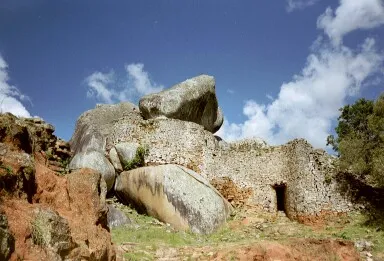
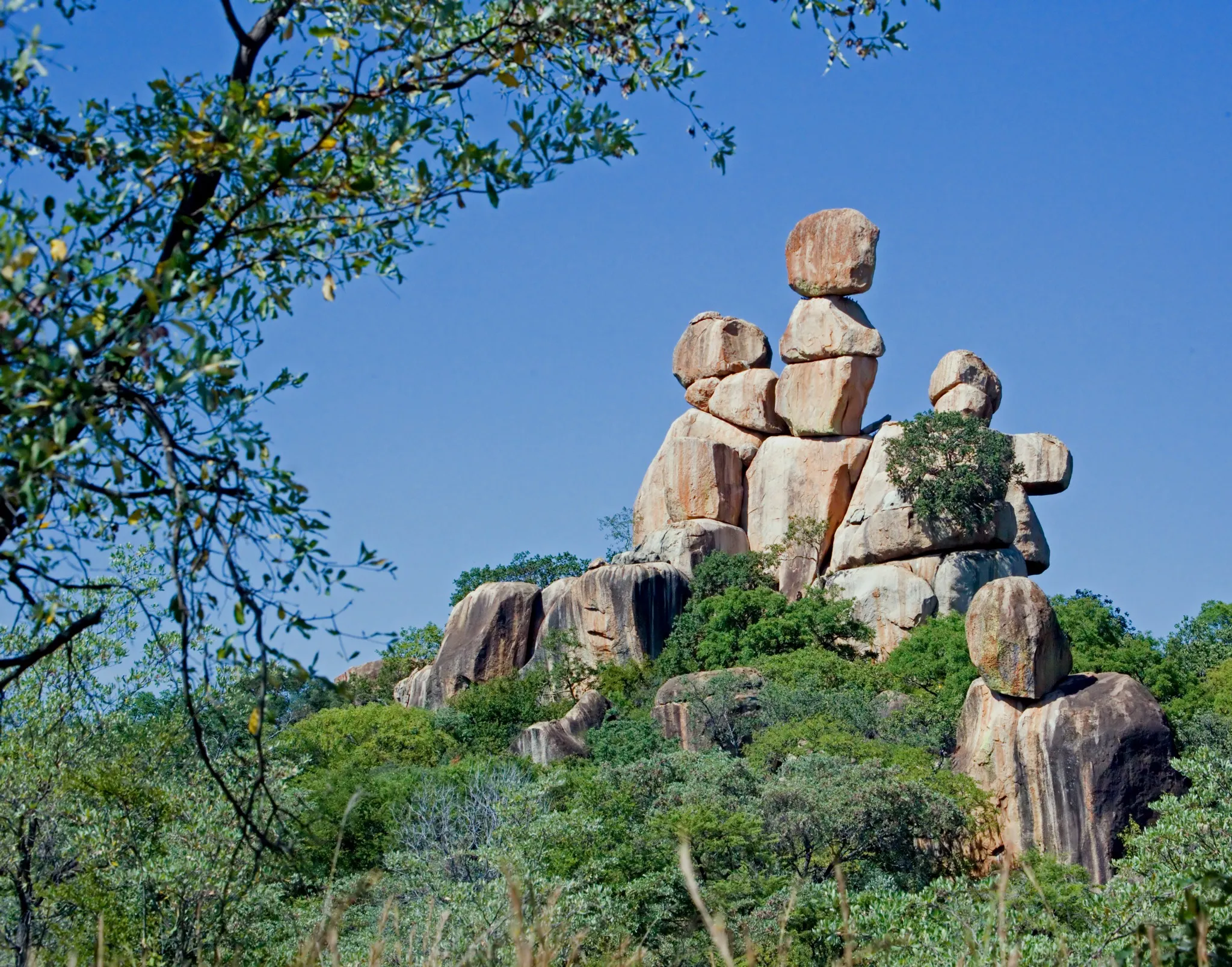
The hills themselves are the first exhibit. Erosion has carved the granite into two distinct forms: rounded “dwalas,” bare whaleback domes with almost no vegetation, and broken kopjes where giant boulders balance on top of each other, some seemingly too precarious to stay put. The park’s rangers can point you to viewpoints where both forms sit side by side.
Rock art is the park’s deepest layer of history. Matobo holds more than 3,000 registered rock art sites, most of it painted between the 4th and 5th centuries CE, though the earliest archaeological evidence of people in the hills goes back roughly 300,000 years1. Caves such as Nswatugi and Pomongwe hold the clearest painted panels and are included on most guided visits; a licensed guide is worth hiring here, since the art is easy to miss or misread without someone trained to explain it.
A separately fenced game area inside the park has been restocked with black and white rhino, alongside sable antelope, impala, giraffe, zebra, wildebeest, hippo and hyena. The hills are also known for holding the world’s densest leopard population and the highest concentration of black eagles and breeding pairs anywhere, a result of the cover the kopjes give predators and the hyrax colonies that make up roughly half of the local leopards’ diet. Birdwatchers have a long list to work through more broadly: the park records 175 bird species against 88 mammal species1, and the vegetation includes over 200 tree species2, among them mountain acacia and paperbark acacia on the hillsides.
The most visited single site is Malindidzimu, known to English speakers as World’s View, a granite summit where Cecil Rhodes and two of his companions are buried, alongside a separate monument to 35 British soldiers2 killed in the Shangani Patrol during the 1893 war against the Ndebele. The Ndebele king Mzilikazi is also buried in the hills, on a different site, and the hills hosted the 1896 indaba that ended the Second Matabele War1. Rhodes’s grave remains a contested landmark in Zimbabwe: for some visitors it is a striking viewpoint, for others a reminder of colonial rule on ground that was, and still is, sacred to Ndebele and Shona communities. Go with that context in mind rather than treating it as a simple scenic stop.
Visiting: hours, admission, booking
The facts box above has the current non-resident day-visitor admission fee for Matobo, set by the Zimbabwe Parks and Wildlife Management Authority (ZimParks), which manages the park. ZimParks prices the conservation (entry) fee by residency and by whether you are staying overnight, and a separate vehicle entry fee applies on top of the per-person fee; check the current rate schedule on the ZimParks site before you go, since fees are revised periodically. Pay at the park gate; there is no indication of advance online booking for day entry.
Rhino tracking and guided rock-art walks are normally arranged through the park office or a tour operator in Bulawayo rather than booked independently, since both require a ranger or licensed guide. If you want to see the game area with any reliability, build a half-day around a booked drive rather than expecting to self-drive to the rhinos. Bring binoculars and a camera for the wildlife and viewpoints, and come prepared for gravel roads: some internal park routes need a high-clearance 4x42, particularly after rain.
Getting there
The park entrance lies about 35 km south1 of Bulawayo on a tarred road, close enough that most visitors drive down for the day rather than stay inside the park. There is no scheduled public transport to Matobo, so a hire car, taxi or an organised tour from Bulawayo is the practical way in; most Bulawayo hotels can arrange a transfer or a half-day safari. Fly into Joshua Mqabuko Nkomo International Airport in Bulawayo and continue by road from there.
Nearby
Pair Matobo with Bulawayo itself for the railway and natural history museums, or with Khami Ruins, the Torwa dynasty’s stone capital on the opposite side of the city, for a second half-day built around a different piece of the region’s history. Travellers continuing east can compare Matobo’s rock art and hills to Great Zimbabwe’s stone walls near Masvingo, though that is far enough to need its own day rather than a stop on the way through.
_1qw0PE.webp)
_Tg7jU.webp)