Why go
Hwange is Zimbabwe’s largest national park, covering about 14,650 km²1 of northwestern Zimbabwe between Bulawayo and Victoria Falls. It began as the Wankie Game Reserve, set aside in 1928 and upgraded to full national park status in 19612. What sets it apart from Zimbabwe’s other parks is water, or the lack of it: Hwange has no permanent natural rivers, so its wildlife depends on pumped boreholes and artificial pans, a system that concentrates animals around a known, limited set of waterholes rather than scattering them across a river system. For a visitor on a game drive, that makes the sightings more predictable than in a park built around a river.
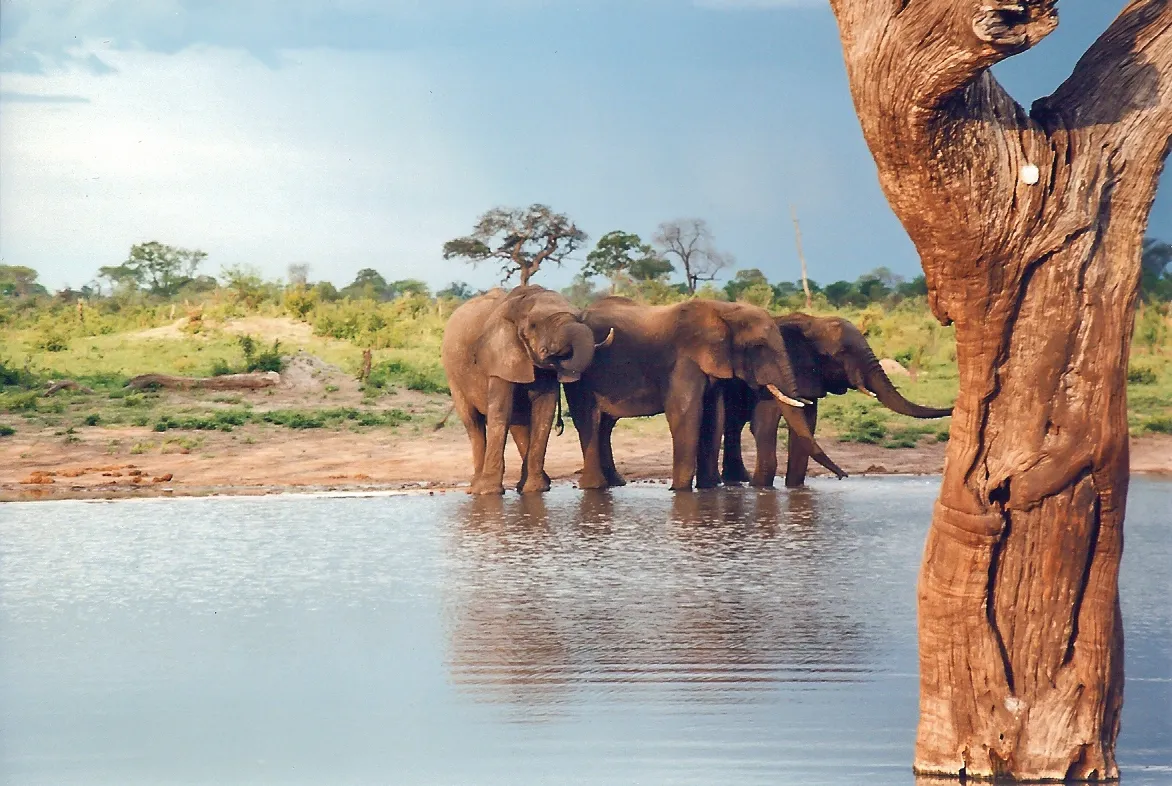
The payoff is scale. Hwange holds the largest elephant population in Zimbabwe, with herds that conservationists say have grown well beyond what the park’s waterholes can naturally support, and it carries Africa’s largest surviving population of African wild dog1, one of the continent’s more endangered predators and one most visitors never see on a standard safari circuit. Four of the “big five” live here (elephant, lion, leopard and buffalo; Hwange has no rhino), spread across more than 100 mammal species and nearly 400 bird species2. Go in the dry season if sightings matter most to you: as the pans beyond the pumped waterholes dry up through the year, game concentrates ever more tightly around the places rangers can show you.
What you will see
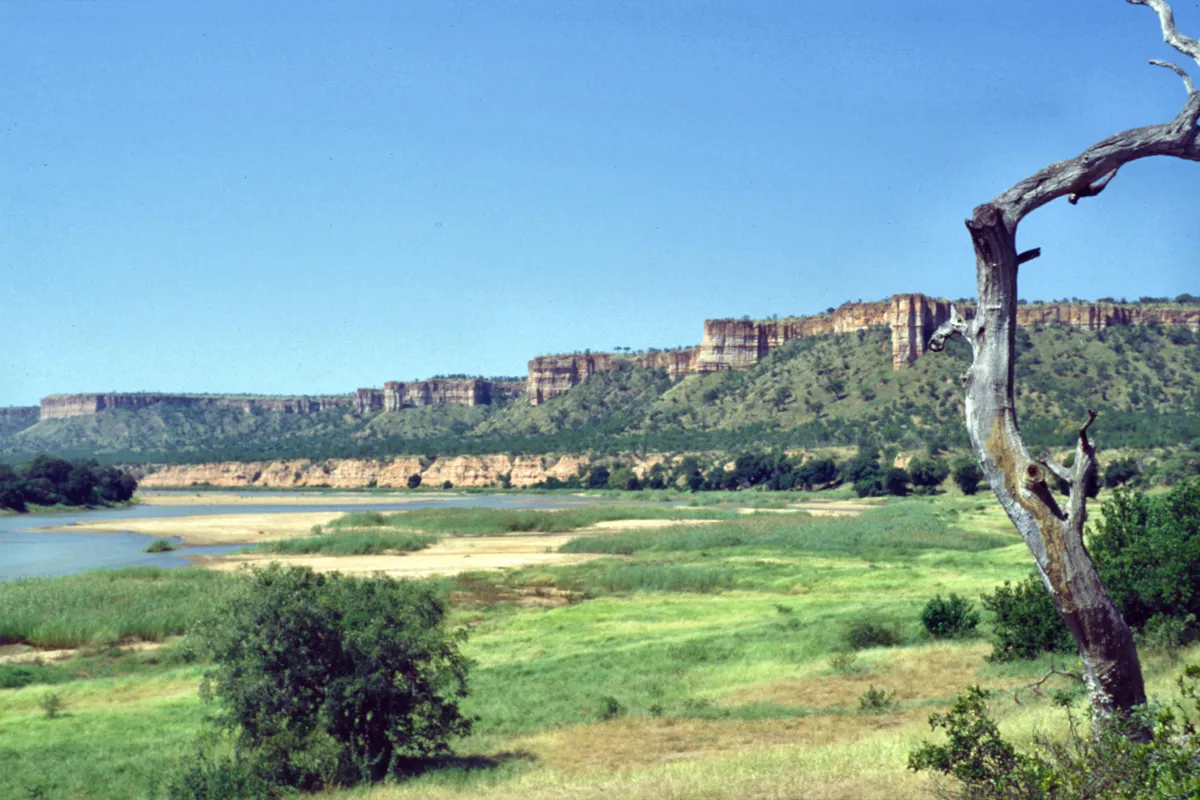
The landscape changes as you move through the park. The south runs on Kalahari sand and teak woodland, open enough for long sightlines across grass pans; the north shifts into mopane forest, denser and better suited to browsers like elephant and kudu. Seasonal pans fill during the rains and dry out through the year, while the pumped waterholes run year-round and become the reliable draw for game drives from around mid-year onward.
Three main camps anchor the park and give it three distinct characters. Main Camp1, on the park’s southeastern boundary closest to Hwange town, is the busiest and most developed, with the widest choice of lodges and the shortest transfer from Victoria Falls. Robins Camp, in the north, and Sinamatella, on a hilltop overlooking its own stretch of pans, sit further from the main tourist routes and see fewer vehicles, which suits visitors who want a quieter park experience over convenience. Beyond the big cats and elephant herds, keep an eye out for roan and sable antelope, two handsome, less common species that Hwange is a reliable place to find, and for the giraffe, zebra and buffalo herds that gather at the pumped pans alongside the elephants.
Hwange’s wild dog packs are the park’s quiet specialty. They range widely and are never guaranteed, but a guide who knows a pack’s current territory has a real shot at finding them, and seeing a hunting pack here is one of the more memorable sights in African safari travel precisely because it is uncommon elsewhere.
Visiting: hours, admission, booking
The facts box above carries the current conservation fee for a foreign day visitor. ZimParks, the Zimbabwe Parks and Wildlife Management Authority that runs the park, prices that fee by entrance, by residency and by whether you are staying overnight inside the park, so the figure you pay can differ from camp to camp; check the current rate schedule on the ZimParks site or with your lodge before you travel, since the fees are revised periodically. Pay at whichever gate you enter through; there is no indication that day entry can be booked online in advance.
Game drives, night drives and walking safaris are arranged through your lodge or a licensed safari operator rather than independently, and it is worth confirming that an operator is registered with the Safari Operators Association of Zimbabwe before booking, since wild-animal encounters on guided activities have injured and killed visitors elsewhere in the country3. Self-driving inside the park is possible if you have a high-clearance vehicle and know the road network, but most first-time visitors are better off with a guide who knows where the wildlife has been moving that week. See the country’s where-to-stay guide for the range of ZimParks camps and private lodges inside and around the park, and the things-to-do guide for how Hwange compares with Zimbabwe’s other parks.
Getting there
By road, Main Camp sits roughly 306 km from Bulawayo and 195 km from Victoria Falls: the highway that connects the two cities as far as the Cross Mabale turnoff, then 23 km on tar into the park, with the small town of Hwange sitting right at the park’s southeastern edge. Most visitors fly into Victoria Falls Airport, about 100 km1 from the park, then continue by road transfer or light charter; Main Camp and Robins Camp each have their own airstrips for charter flights booked through a lodge. Self-driving from Victoria Falls or Bulawayo is straightforward on tarred roads as far as the park boundary, after which the internal network turns to gravel and benefits from a high-clearance vehicle, particularly after rain. There is no scheduled public transport to any of the park’s gates, so a hire car, organised transfer or charter flight is the practical way in.
Nearby
Hwange town itself holds little for visitors beyond fuel, supplies and the airstrip, but it is the closest settlement to Main Camp and a common staging point before or after a safari. Victoria Falls, with the waterfall itself and Zimbabwe’s main adventure-tourism industry, pairs naturally with Hwange as the other half of a northwest Zimbabwe itinerary, and the road between the two is the same highway that reaches Main Camp. Visitors building a longer wildlife circuit sometimes continue on to Matobo National Park near Bulawayo for granite hills and rhino tracking, a very different kind of park from Hwange’s flat woodland and waterholes, though the distance is enough to need its own travel day rather than a stop along the way. Check the country’s safety guide for the malaria precautions and wildlife-safety points that apply to any Zimbabwe safari before you go.
_Tg7jU.webp)