Why go
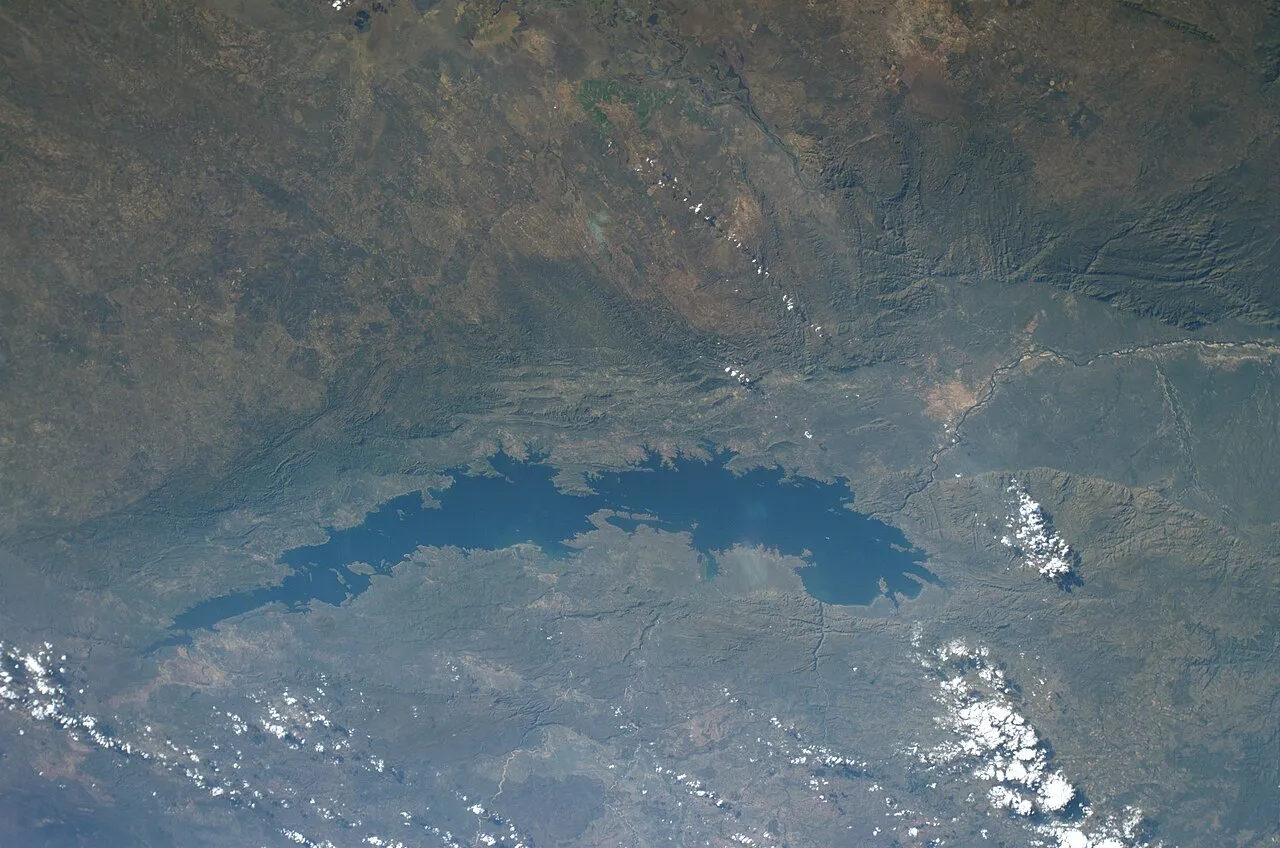
Lake Kariba is the reason the town of Kariba exists at all: the Kariba Dam backed up the Zambezi River to create the world’s largest reservoir by volume1, and the lake itself, not the dam wall, is what most visitors have actually come for. At full supply level it stretches roughly 220 km long and up to 40 km wide, covering a surface area of around 5,400 km² and holding about 180 km³ of water2 — a scale that makes a single boat trip feel like a visit to an inland sea rather than a lake.
The Zimbabwean shore and its surrounding wildlife areas are managed by the Zimbabwe Parks and Wildlife Management Authority (ZimParks)1 as the Lake Kariba Recreational Park, which covers the shoreline closest to Kariba town and its jetties. Most people experience the lake from a houseboat or a sundowner cruise rather than from land, since the shore itself is mostly bush and drowned forest rather than a beach.
What you will see
The dominant feature on the water is the drowned forest: dead trees standing out of the shallows, a legacy of the valley that was flooded when the dam closed the Zambezi, now used as fish-attracting structure and as photogenic silhouettes at sunset. Hippos and crocodiles are common along the shoreline, and the lake is well known among anglers for tiger fish and bream, both frequent targets on a half-day charter out of Kariba town.
The lake’s size also means its character changes a great deal depending on where you are on it. Near Kariba town the water is busy with houseboats, fishing charters and the ferry to Mlibizi; further west, along the shore of Matusadona National Park, it is quieter and wilder, with elephant and buffalo coming down to drink at the water’s edge. A cruise booked from Kariba typically covers only the eastern end nearest the dam, so a trip into the Matusadona shoreline needs a separate, longer booking.
Visiting: hours, admission, booking
The facts box above has the current non-resident day-visitor conservation fee for the Kariba area, set by ZimParks. ZimParks prices the fee by residency and by whether you are staying in accommodation inside the recreational park rather than just visiting for the day, and a separate vehicle entry fee applies on top of the per-person rate; check the current rate schedule on the ZimParks site before you go, since fees are revised periodically. There is no indication of advance online booking for day entry: pay at the gate or through the lodge or operator arranging your visit.
Houseboat charters, fishing trips and sundowner cruises are arranged through operators based in Kariba town or through your lodge rather than booked independently at a park gate, since the lake itself has no single entrance. Most trips run from a half-day sundowner cruise up to multi-night houseboat charters that sleep on board; book ahead in the dry season (May to September)3, when demand from Zimbabwean and South African visitors is highest.
Getting there
Kariba town is the practical base for the lake: it has its own airport, named in the facts box of the Kariba page above, and is also reachable by road. From the town, jetties and operator offices along the lakeshore are a short drive or walk from most lodges, and your boat trip, whatever its length, starts from one of them. A ferry also crosses the lake from Kariba to Mlibizi, a practical option for travellers heading on toward Victoria Falls without a long drive back through Harare.
Nearby
Kariba town itself, with the dam wall and the story of Operation Noah’s wildlife rescue, is the obvious pairing for a lake visit, and most visitors base themselves there before or after time on the water. Matusadona National Park, reached only by boat along the lake’s western shore, extends the same trip into a wilder stretch of shoreline for travellers who want a safari element added to the houseboat or cruise.
_Tg7jU.webp)